Pogo pins are spring-loaded electrical contacts used wherever a device must connect and disconnect repeatedly without a bulky plug. Their main applications are TWS earbud charging cases, smartwatches and wearables, smartphone and tablet accessories, medical devices, test and programming fixtures, battery packs and chargers, industrial handhelds, robotics, and drones.
Open the lid of a charging case, drop a smartwatch onto its dock, or clamp a circuit board into a factory test jig, and there is a good chance a small, spring-loaded pin is doing the work. It is one of the least glamorous parts in a bill of materials and one of the first to cause trouble when it is chosen badly.
This guide walks through where pogo pins are actually used, what each application demands, and how to match a pin to the job. It is written for engineers designing them in and for buyers who have to source them, and it supports our main pogo pin connectors page, where you can see the range in full.
What Is a Pogo Pin, and Why Does It Matter?
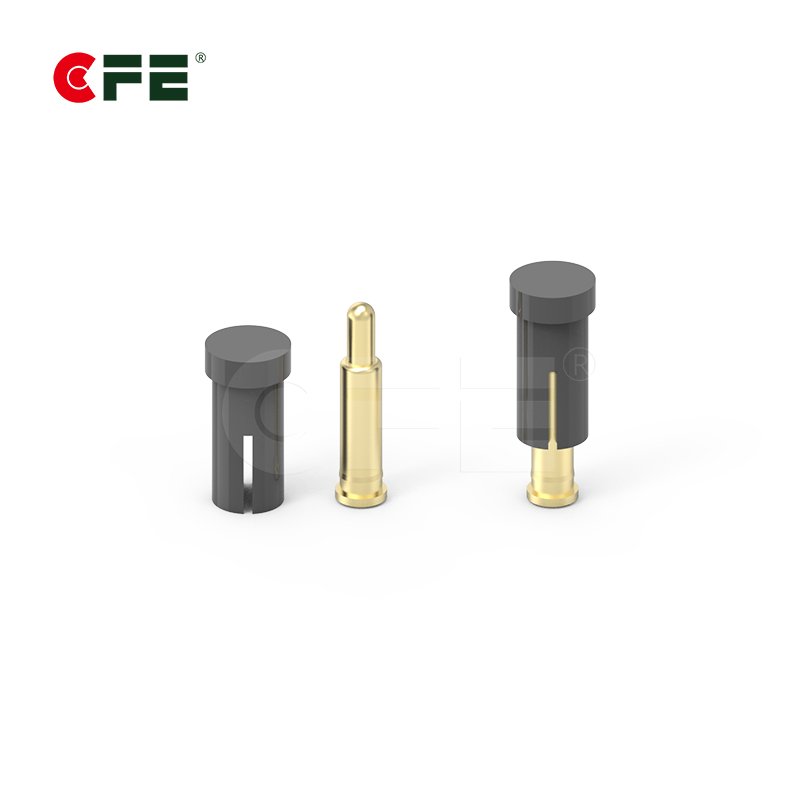
A pogo pin (also called a spring-loaded pin or spring probe) is a small contact built from three parts: a plunger that touches the mating surface, a barrel that holds everything together, and an internal spring that pushes the plunger outward. When the mating pad presses down, the spring compresses and keeps steady force on the contact. Lift the device away and the plunger springs back.

That simple mechanism is the whole appeal. Because the spring supplies the contact force, the pin tolerates small misalignment, vibration and repeated cycling far better than a rigid contact would. The mating side is usually just a flat, gold-plated pad on a circuit board, which keeps the second half of the connection cheap and thin.
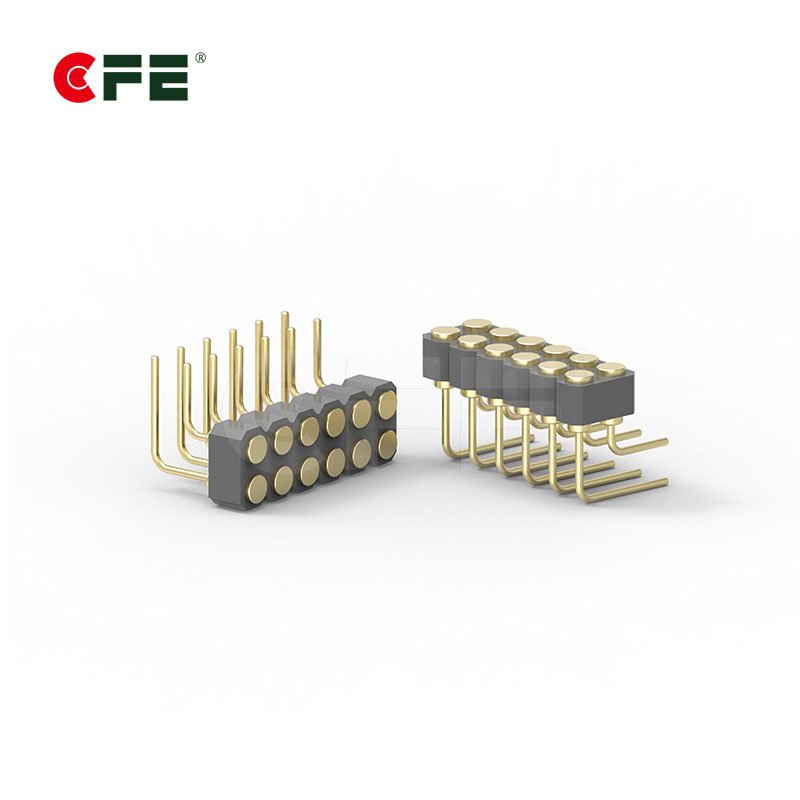
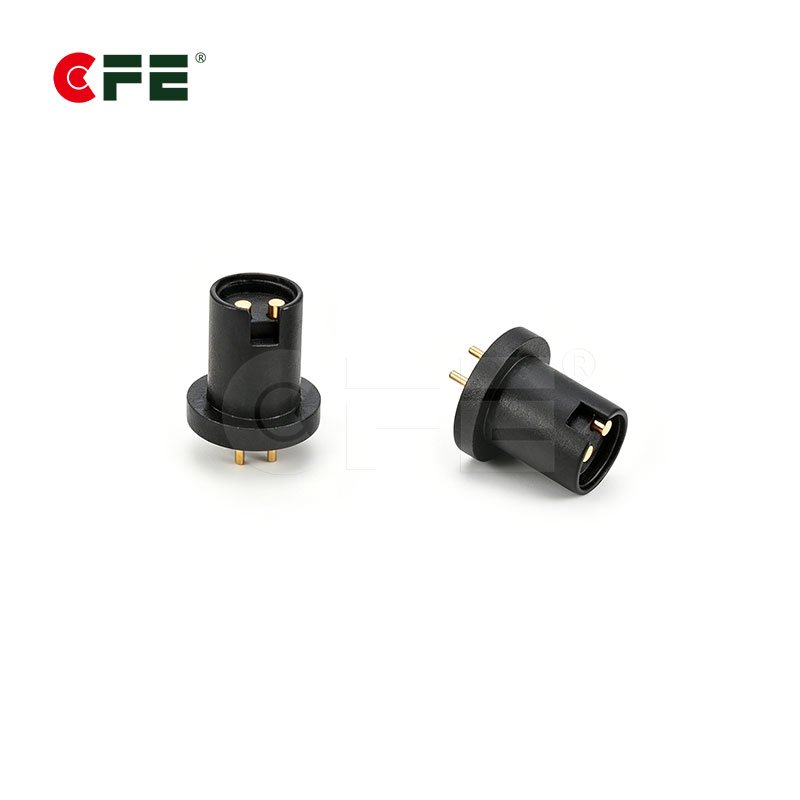
Pogo pins come in several forms. Vertical (top-contact) pins press straight down onto a pad. Side-contact pins are compressed sideways, which suits ultra-thin enclosures. Right-angle and SMT versions solder directly to a PCB, while others are crimped or press-fit into a housing. Many come in multi-pin housings with two to a dozen or more positions, and some combine power and data lines in one block.
Understanding this anatomy makes every application below easier to follow, because each one stresses a different part: stroke, current path, plating, spring force or sealing.
Why Engineers Choose Pogo Pins Over Other Connectors
Nobody picks a pogo pin because it is fashionable. They pick it because a standard plug-and-socket connector fails a requirement, usually size, sealing, durability or user experience. Consider a sweat-exposed fitness band: a USB port needs an opening, a gasket, and a user willing to line up a plug every night. A pair of pogo pads needs neither.
| Factor | Pogo pin | Standard plug/socket | Soldered wire or FPC |
|---|---|---|---|
| Repeated mating | Designed for it (thousands to tens of thousands of cycles, depending on design) | Rated for a set cycle count | Not designed for repeated mating |
| Enclosure openings | Can sit behind a sealed surface | Requires a port cutout | None, but fixed |
| Alignment tolerance | Forgiving, thanks to stroke and pad size | Needs precise insertion | Not applicable |
| Height profile | Very low with side-contact styles | Usually taller | Low |
| Serviceability | Easy to replace | Easy to replace | Rework required |

The trade-off is that a pogo connection relies on contact force alone. It does not lock mechanically, so designers pair it with guides, magnets or a snug cradle to hold the mating parts in place. That is why you often see pogo pins and magnets together, a combination we cover in our article on magnetic connectors.
Typical ranges vary widely between products, so treat the figures above as directional. Always confirm cycle life, current rating and contact resistance against the manufacturer’s datasheet for the exact part number you plan to use.
TWS Earbuds and Charging Cases
True wireless stereo earbuds are probably the most familiar home for pogo pins. Each earbud sits in a charging case, and two tiny contacts inside the case touch two pads on the bud to deliver charge. Every time a user drops a bud into the case, that connection is made, so a pair of earbuds can easily see several thousand mating cycles over its life.

The design challenges are specific. Space is extremely tight, so pins are small, often with a very short stroke. Current is modest, typically a few hundred milliamps, but the contact has to stay reliable while the earbud is jostled in a pocket or bag. Sweat, skin oils and dust attack the contact surfaces, so plating quality matters a great deal. Gold over nickel is the common choice for this reason.
Spring force is a balancing act. Too light, and a bud that shifts slightly loses charge. Too heavy, and the bud is pushed out of its cradle or the user feels resistance when seating it. Engineers often tune the force alongside a small magnet that pulls the bud into position.
Buyers should look at plating thickness, tested cycle life, and consistency between batches. A single pin with slightly weaker spring force can cause the complaint that only the left earbud charges, which is precisely the type of problem that generates returns. For a deeper look at this segment, see our design guide on pogo pin connectors in TWS earbuds and wearables.
Smartwatches, Fitness Bands and Wearables
Wearables push the same logic further. A smartwatch or fitness tracker needs to be water and sweat resistant, so designers avoid open ports wherever they can. A set of pogo pads on the back, mating with a magnetic charging puck, gives a sealed body and a charging routine that takes a second.

Here the pin often faces the harshest chemistry. The contacts sit against skin, exposed to sweat, lotion, sunscreen and water. Corrosion is the main risk, so the plating stack and the choice of base material deserve attention. Some designs use the pad on the device as a flat gold surface and put the pogo pins on the charger, so the pins that wear are on the replaceable accessory.
Data lines add another consideration. Some wearables use the same contacts for charging and for factory programming or diagnostics, which means signal integrity and low contact resistance matter as well as current capacity. Multi-pin blocks with three or four positions are common.

The IP rating of the finished product also depends on how the pins are seated. Water resistance is defined by the IEC 60529 standard, and you can read a plain-language summary on the IEC IP ratings page. A pogo pin is not waterproof by itself. The seal comes from how the housing, gasket or potting is designed around it, so involve your connector supplier early in that discussion.
For sourcing teams, wearables usually mean high volumes and tight cosmetic tolerances, so check that the supplier can hold pin height and coplanarity across large production runs.
Smartphones, Tablets and Docking Accessories
Phones themselves rarely use exposed pogo pins today, but the accessories around them do. Tablet keyboard covers, docking stands, smart cases, camera mounts and battery cases frequently use pogo connections to pass power and data between the device and the accessory.
Docks and keyboard covers are a good example of how pogo pins solve a mechanical problem. The user snaps the tablet into place, magnets align it, and a row of pins bridges the gap. There is no cable to bend, no port to wear out, and the user does nothing except place the device.
These connections tend to carry more than simple charging. A keyboard cover might carry power and a data bus in the same small block, so the pin pitch is fine and the signal lines need clean, low-resistance contacts. Height accuracy matters, because a pin that sits proud by a fraction of a millimetre can cause intermittent contact or scratch the mating surface.
Durability expectations are high. Consumers dock and undock tablets daily, and they notice when a connection turns flaky after a year. Look for pins with a proven cycle rating that comfortably exceeds the expected life of the product, not just the warranty period.
- Typical needs: fine pitch, multi-pin power plus data, low contact resistance
- Common risks: misalignment on a loose cradle, wear on the mating pad
- Good practice: use magnets or mechanical guides, and specify a hard gold plating on the pad
Medical and Healthcare Devices
Medical electronics value pogo pins for a slightly different reason: cleanliness. Wearable monitors, connected patches, handheld diagnostic tools and docking stations for portable equipment all benefit from sealed, wipeable surfaces with no open port where fluid or debris can collect. Hospitals disinfect devices repeatedly, so smooth housings are an advantage.
Pogo pins also let a device be quickly snapped into a charging cradle between patients, or attach a reusable electronics module to a single-use sensor. That second use case is a real design pattern: the disposable part carries pads, the reusable part carries the pins.
Safety note: This article is general engineering information, not regulatory or clinical advice. Medical devices must comply with applicable regulations and standards in each market, such as the requirements administered by the U.S. FDA, and biocompatibility, electrical safety and risk management remain the responsibility of the device manufacturer. Consult your regulatory team before selecting connector materials for patient-contact products.
From a component point of view, medical projects usually ask for documented materials, traceability and consistent plating, along with RoHS compliance. The EU’s RoHS directive overview explains the restricted substances that suppliers must control. Ask your supplier what certification documents they can provide, and request them before you commit to a design.
Contact stability at low signal levels is another concern. A wearable that measures small biosignals cannot tolerate a noisy contact, so contact resistance and its variation over the pin’s life deserve testing in the real assembly, not only on a bench.
Test Fixtures and Programming Jigs
Before consumer devices reached the mass market, pogo pins were already working in electronics manufacturing. Look inside a production test fixture, often called a bed-of-nails, and you will find hundreds of spring probes pressing onto test points on a circuit board, checking that every net behaves as expected.
Test probes and connector pogo pins are cousins, but their demands differ. Test probes are built for very high cycle counts, since a fixture might touch thousands of boards, and they come with a range of tip shapes: crown, spear, flat or serrated, each suited to a pad type, solder residue or plated hole. Programming jigs, which flash firmware onto a board at the end of the line, use the same idea with a smaller number of pins.
Because the fixture makes contact through the board’s test pads, pitch and tip geometry decide everything. Fine-pitch boards may need probes with pitches under one millimetre, and the tip must pierce flux residue without damaging the pad. Replaceable probes with receptacles allow a technician to swap a worn pin in minutes instead of scrapping the fixture.
- Pick the tip for the pad: crown tips for plated holes and leads, flat tips for soft pads, spear tips for oxidised surfaces
- Plan for wear: use receptacles so probes can be replaced individually
- Watch the force: total spring force across hundreds of pins can flex a board, so calculate the sum
That last point catches teams out. A few grams per pin adds up across a large fixture, and a thin board can bow under the load, causing false failures.
Battery Packs, E-Bikes, Power Tools and Chargers
As current rises, pogo pins move from signal-and-trickle-charge duty into real power delivery. Cordless tool batteries, e-bike and e-scooter packs, portable power stations, and robot vacuum docks all use high-current pins to transfer energy across a separable interface.
Current rating is the headline number here. Where a small earbud pin might carry well under one amp, power-oriented designs range from several amps up to tens of amps, using larger barrels, thicker plating, and often multiple pins in parallel. Our guide on high-current pogo pin selection explains how to read those ratings.
Heat is the enemy. Every contact has some resistance, and current squared times resistance becomes heat at the interface. If the contact gets dirty or the spring force weakens, resistance rises and so does temperature, which can soften plastics or damage cells nearby. For this reason, engineers derate the published current, place temperature sensors close to the contact, and avoid running pins at their limit.
Safety-related design is the manufacturer’s responsibility. Battery products are subject to transport, safety and product standards, and a connector is only one part of a compliant system. Involve your compliance team early, and validate the whole assembly under realistic conditions.
For buyers, the questions to ask are simple: what current was the rating measured at, what temperature rise was allowed, and how many cycles were tested under load? Ratings quoted without test conditions are hard to compare.
Industrial Equipment, Robotics and Handheld Terminals
Industrial environments are unforgiving. Handheld scanners, point-of-sale terminals, rugged tablets and warehouse robots live with vibration, dust, temperature swings and rough handling. Pogo pins suit these devices because they combine a sealed enclosure with a fast, tool-free docking action.

A warehouse scanner is a good picture. The worker drops it in a cradle at the end of a shift, and it charges and syncs without anyone plugging in a cable. Multiply that by hundreds of devices and thousands of docking events per year, and the value of a tolerant, durable contact becomes obvious. The same applies to autonomous mobile robots and cleaning robots that dock themselves: the pins must find their pads reliably even when the robot arrives slightly off target.
For these uses, longer stroke and higher spring force help absorb misalignment and shock. Corrosion resistance matters where humidity or cleaning chemicals are present, and some designs specify thicker gold or alternative platings for harsh environments. Contamination is a constant problem, so wiping or self-cleaning contact motion, and protective covers when undocked, can extend life.
Robotics also raises the question of mating-pad wear. Because the pins press on the same spots repeatedly, the pad plating is often the first thing to fail. Specify hard gold on the pad, and treat the pad as part of the connector design rather than a leftover PCB feature.

IoT Sensors, Drones and Emerging Uses
Beyond the big categories, pogo pins appear wherever engineers need a quick, reliable, removable connection. Modular IoT sensors use them to swap payload modules. Drone makers use them for battery contacts and payload interfaces. Smart-home devices such as sleep masks, trackers and small appliances rely on them for compact charging without an open port.

Modular product design is a growing driver. A base unit with a standard pogo interface can accept different accessories, such as a sensor pack, a battery extension or a communication module, without redesigning the housing. The pin block becomes a small, sealed bus between modules.
Aerospace, defence and automotive applications exist as well, but they carry far stricter qualification requirements for vibration, temperature range and traceability. If your project sits in one of these sectors, ask suppliers for their test data and qualification history instead of relying on general claims. Automotive and aerospace programmes also usually involve extended validation timelines, so raise connector questions early in the schedule.
The common thread across all of these is that the pogo pin removes a moving, wear-prone plug from the user experience while keeping the connection serviceable.
Application Comparison at a Glance
The table below summarises what each application typically asks of a pogo pin. The values are indicative ranges to help you frame a conversation with a supplier, not specifications for any particular part.
| Application | Typical current | Main requirement | Common style |
|---|---|---|---|
| TWS earbud case | Low (hundreds of mA) | Small size, sweat resistance, cycle life | Short-stroke vertical or side-contact |
| Smartwatch / band | Low | Sealing, corrosion resistance | Multi-pin blocks, magnetic dock |
| Tablet dock / keyboard | Low to medium | Fine pitch, power plus data | Multi-pin, low profile |
| Medical device | Low to medium | Traceability, cleanability, stable contact | Sealed housings, gold plating |
| Test fixture | Signal level | Cycle life, tip geometry, fine pitch | Replaceable probes with receptacles |
| Battery pack / charger | Several amps to tens of amps | Low resistance, thermal margin | Large barrel, parallel pins |
| Industrial / robotics | Medium to high | Misalignment tolerance, durability | Longer stroke, higher force |
If you only remember one thing from this table, remember that current, stroke and environment decide the pin. Size and price come after those three.
How to Choose a Pogo Pin for Your Application
With the applications in mind, a selection process becomes straightforward. Work through the questions below in order, and you will usually narrow the field to a handful of candidates before you ever request samples.
- Define the electrical load. Note continuous and peak current, voltage, and whether data or signals share the connection. Derate the published current rating for temperature and safety margin.
- Set the mechanical envelope. Measure available height, pitch, and the alignment tolerance your product will realistically experience, including tolerance stack-up between the two halves.
- Choose the stroke and spring force. The working stroke should sit comfortably within the pin’s range so the spring never bottoms out or sits nearly extended in normal use.
- Match the plating to the environment. Sweat, humidity, cleaning chemicals and mating frequency all point to different plating specifications, and the mating pad needs the same attention.
- Confirm the mounting style. SMT, through-hole, press-fit, crimp or wire-lead: pick what your assembly line can handle reliably.
- Verify life and compliance. Ask for tested cycle life under load and the relevant compliance documentation, such as RoHS.
- Prototype in the real assembly. Bench data is useful, but the true test is the finished product, in a pocket, on a desk, and in a warehouse.

For buyers, the same list works as a supplier checklist. A good manufacturer will happily answer each point with data and will discuss customisation if a standard part does not fit. If you are comparing options, browse our pogo pin connectors range and share your requirements with the team.
Common Design Mistakes to Avoid
Experienced engineers still trip over the same handful of issues, and most are avoidable.
Ignoring mating pad design
The pin gets the attention, yet the pad is where most failures start. A thin or soft plating layer wears through quickly under repeated contact. Specify plating and pad size deliberately, and keep the pad clear of solder mask and vias.
Running the spring at its extremes
A pin compressed to its limit loses spring life, and one barely compressed makes unreliable contact. Aim for the middle of the stroke in normal operation, so tolerances in either direction still leave you a working connection.
Skipping the alignment strategy
Pogo pins do not lock. Without magnets, guides or a well-shaped cradle, the connection depends on the user placing the device perfectly. Design the alignment first and the electrical interface second.
Trusting a rating without conditions
Current and cycle-life figures depend on test conditions such as temperature rise, load and mating speed. If a datasheet omits those conditions, ask for them. Comparing numbers measured differently leads to poor decisions.
Testing only on the bench
Real users drop devices, sweat on them and charge them in cars. Field-like testing, including humidity, vibration and cycling, catches problems before they reach customers.
Conclusion
Pogo pins earn their place wherever a connection has to be quick, repeatable and low-profile: earbud cases, wearables, tablet accessories, medical devices, test fixtures, battery systems and industrial equipment. Each application leans on a different strength, whether that is sealing, misalignment tolerance, current capacity or cycle life, which is why the right pin for one product can be the wrong pin for the next.
The reliable approach is simple. Start with the electrical load and mechanical envelope, choose stroke, force and plating to suit the environment, design the mating pad and alignment with the same care as the pin itself, and validate in the real assembly. Do that, and the small spring-loaded contact becomes the part you never have to think about again.
If you would like help matching a pin to your product, explore our pogo pin connectors or contact the CFEConn team with your requirements.
Need a pogo pin for your design? Share your current rating, pitch, stroke and environment with our team, and we will suggest suitable options. View pogo pin connectors
Frequently Asked Questions
What are pogo pins used for?
Pogo pins are used to make repeatable electrical connections in compact products. Common uses include charging contacts in TWS earbud cases and smartwatches, docking connections for tablets and handheld terminals, battery pack and charger interfaces, medical device docks, and spring probes in production test fixtures. They are chosen when a plug or port would be too large, too fragile or hard to seal.
How many cycles can a pogo pin last?
Cycle life depends on the design, plating, spring force and operating conditions, so published figures range from thousands to well over a hundred thousand cycles. Consumer charging pins are often specified in the thousands to tens of thousands, while test probes are built for higher counts. Always ask the supplier for the test conditions behind a rated number, such as load, mating speed and temperature.
Are pogo pins waterproof?
A pogo pin is not waterproof on its own. Water resistance comes from the way the pin is sealed into the product with gaskets, potting or a housing design, and it is rated using the IEC 60529 IP code. Designers of wearables and outdoor products validate the finished assembly rather than relying on the pin alone.
How much current can a pogo pin carry?
Small signal and earbud pins carry well under one amp, while power-oriented designs range from several amps up to tens of amps, using larger barrels, thicker plating or parallel pins. Published ratings should be derated for temperature rise and safety margin, and verified in your real assembly, because contact resistance and heat determine the practical limit.
What is the difference between a pogo pin and a spring probe?
The terms overlap, since both use a plunger, barrel and spring. Pogo pin usually refers to connector contacts built into a product for repeated mating, while spring probe or test probe usually refers to contacts used in test fixtures, with tip styles chosen for test pads and very high cycle counts. Many manufacturers use the words interchangeably, so check the datasheet.