Introduction
The global technology landscape is evolving at an unprecedented pace, and at the centre of this transformation lies the explosive rise of smart home devices and wearable technology. From smart thermostats in London flats to fitness wearables tracking heart rates in New York and Berlin, connected devices have become an integral part of everyday life. As adoption accelerates across the UK, Europe, and the USA, the demand for reliable, compact, and high-performance electronic connectors is growing just as fast.
Smart homes and wearables rely on seamless connectivity, uninterrupted power delivery, and robust data transmission. Behind every smart speaker, smart lock, smartwatch, or health tracker is a complex ecosystem of connectors enabling devices to communicate, charge, and function efficiently. This article explores the market growth of smart home and wearable devices, the technological drivers behind this expansion, and the increasing connector demands shaping the future of electronics manufacturing.
Understanding Smart Home & Wearable Devices
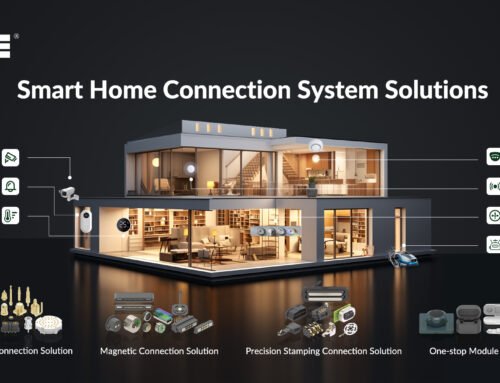
Smart home devices include connected products such as smart lighting systems, security cameras, video doorbells, smart plugs, voice assistants, and energy management systems. These devices are designed to enhance comfort, security, energy efficiency, and automation in residential spaces.

smart home solution
Wearable devices, on the other hand, are compact electronics worn on the body. Popular examples include smartwatches, fitness trackers, medical monitoring devices, smart rings, and augmented reality glasses. In the USA and Europe, wearable technology is increasingly used not only for fitness but also for remote healthcare, elderly monitoring, and workplace safety.

smart wear
Both categories depend heavily on advanced connectors to support charging, data transfer, miniaturisation, and long-term durability.
Key Drivers Behind Market Expansion
Several factors are fueling the rapid growth of smart home and wearable devices:
- IoT Ecosystem Expansion
The Internet of Things (IoT) is the backbone of smart homes and wearables. Increased IoT adoption across the UK, Europe, and USA has led to a surge in connected devices that require reliable internal and external connectors. - Advancements in Wireless Technology
While wireless communication reduces cable clutter, it does not eliminate the need for connectors. Devices still require connectors for charging, internal data transfer, antenna connections, and sensor integration. - Rising Health & Fitness Awareness
Wearable devices are widely adopted for health tracking, especially in the USA and Europe. Medical-grade wearables require highly reliable, secure, and durable connectors to ensure accurate data transmission. - Consumer Demand for Compact & Stylish Devices
Miniaturisation is a major trend. Smaller devices mean smaller, high-density connectors that can handle power and data without compromising performance. - Regulatory & Safety Standards
Strict quality and safety regulations in Europe and the UK require connectors that meet high compliance standards, driving innovation in connector design and materials.
The Critical Role of Connectors in Smart Devices
Connectors are often overlooked, yet they are essential components in smart homes and wearable technology. Their primary roles include:
- Power delivery and charging
- Data transmission between components
- Device-to-device communication
- Sensor connectivity
- Firmware updates and diagnostics
In smart homes, connectors link control boards, sensors, cameras, and communication modules. In wearables, they must withstand sweat, motion, temperature changes, and repeated charging cycles.
Rising Connector Demands & Technical Requirements
As smart devices become more advanced, connector demands are evolving rapidly.
Miniaturisation & High Density
Wearables require ultra-compact connectors that fit into tight spaces while maintaining signal integrity. Board-to-board and micro connectors are increasingly popular.
Durability & Reliability
Smart home devices installed in outdoor or semi-outdoor environments require connectors resistant to moisture, dust, and temperature fluctuations, especially in European climates.
High-Speed Data Transfer
With video streaming, real-time health monitoring, and AI-driven automation, connectors must support high-speed data protocols.
Standardisation & USB-C Adoption
USB-C is becoming the standard across the UK, Europe, and USA due to its versatility, fast charging, and data capabilities.
Sustainability & Materials
European regulations are pushing manufacturers towards eco-friendly materials and longer product lifecycles, impacting connector design and manufacturing processes.
Impact on the Global Connector Market
The surge in smart home and wearable devices has created significant opportunities for connector manufacturers. Companies are investing in:
- Custom connector solutions for wearables
- Waterproof and rugged connectors for smart homes
- Flexible printed circuits (FPC) and flat flexible connectors (FFC)
- High-frequency connectors for IoT applications
The UK and Europe are seeing increased demand for locally compliant connector solutions, while the USA remains a leader in innovation and volume production.
Challenges Facing the Industry
Despite strong growth, several challenges remain:
- Supply chain disruptions
- Rising raw material costs
- Balancing miniaturisation with durability
- Meeting regional compliance standards
Addressing these challenges requires close collaboration between device manufacturers and connector suppliers.
Future Outlook
The future of smart homes and wearable devices looks promising. Emerging trends such as AI-powered home automation, remote healthcare, smart ageing solutions, and immersive wearables will further increase connector complexity and demand.
In the UK, Europe, and USA, investment in smart infrastructure and digital health will continue to drive innovation. Connector technology will play a critical role in enabling smaller, smarter, and more reliable devices.
FAQs
Q1: Why are connectors important in smart home devices?
Connectors ensure reliable power delivery, data transfer, and communication between components in smart home systems.
Q2: What connectors are commonly used in wearable devices?
Wearables often use micro connectors, board-to-board connectors, flexible connectors, and USB-C interfaces.
Q3: How is the European market influencing connector design?
Strict safety, quality, and sustainability regulations in Europe are pushing manufacturers to develop compliant and eco-friendly connectors.
Q4: Is wireless technology reducing connector demand?
No. Even wireless devices require connectors for charging, internal connections, and diagnostics.
Q5: What is the future of connector demand in the USA?
With continued innovation in smart homes, fitness, and healthcare wearables, connector demand in the USA is expected to grow steadily.
Conclusion
The rise of smart home and wearable devices across the UK, Europe, and the USA is reshaping the electronics industry. As these technologies become more integrated into daily life, the importance of high-quality, reliable, and innovative connectors cannot be overstated. From enabling compact wearable designs to supporting robust smart home systems, connectors are the silent enablers of the connected future. Manufacturers that invest in advanced connector solutions will be well-positioned to thrive in this rapidly expanding market.