Introduction
In modern electronics manufacturing, reliable connectivity is essential for maintaining performance, durability, and efficiency. Among the many connection solutions available today, pogo pin connectors have become a preferred choice for industrial applications due to their compact design, high durability, and dependable electrical contact.
Whether used in automated testing systems, medical devices, automotive electronics, telecommunications, or consumer electronics, pogo pin connectors provide a highly efficient method of creating temporary or semi-permanent electrical connections.
This comprehensive guide explains what a pogo pin connector is, how it works, its benefits, industrial applications, available types, and how to choose the right pogo pin connector for your project.
What Is a Pogo Pin Connector?
A pogo pin connector is a spring-loaded electrical connector designed to establish a reliable electrical connection between two components.
The term “pogo pin” comes from the internal spring mechanism that allows the pin to compress and rebound, similar to the movement of a pogo stick.
A typical pogo pin connector consists of:
- Plunger (Tip): Makes contact with the mating surface
- Spring: Provides compression force
- Barrel (Housing): Encases internal components
- Tail/Terminal: Connects to the circuit board or wire
When pressure is applied, the spring compresses, allowing the plunger to move inward while maintaining electrical contact.
This design makes pogo pin connectors ideal for repeated connection cycles.
How Does a Pogo Pin Connector Work?
The working principle of a pogo pin connector is based on spring-loaded contact pressure.
Here’s how it works:
1. Contact Alignment
The pogo pin aligns with the contact pad or mating surface.
2. Compression
When force is applied, the plunger compresses into the barrel.
3. Electrical Contact
The spring pushes the plunger against the contact point, ensuring stable conductivity.
4. Disconnection
When the force is removed, the spring returns the plunger to its original position.
This mechanism ensures:
- Low contact resistance
- Reliable signal transmission
- Resistance to vibration
- Long operational life
Key Features of Pogo Pin Connectors
Industrial applications demand connectors that are both durable and precise.
Spring-Loaded Design
Maintains constant contact force.
High Cycle Life
Many pogo pins withstand 10,000 to 1,000,000 mating cycles.
Compact Size
Ideal for miniaturized electronics.
Reliable Conductivity
Gold-plated contacts enhance conductivity.
Self-Cleaning Action
The sliding movement helps remove oxidation and contaminants.
Shock and Vibration Resistance
Perfect for harsh industrial environments.
Benefits of Using Pogo Pin Connectors in Industrial Applications
1. High Reliability
Industrial systems require connectors that maintain performance under repeated use.
Pogo pin connectors provide stable electrical contact even in dynamic environments.
2. Reduced Wear and Tear
Traditional connectors often degrade due to repeated plugging and unplugging.
Pogo pins minimize mechanical stress.
3. Easy Integration
Their compact design allows easy installation in:
- Tight spaces
- Miniature PCBs
- Portable devices
4. Fast Connection and Disconnection
Ideal for automated production lines and testing fixtures.
5. Excellent Electrical Performance
They offer:
- Low resistance
- Stable current transfer
- Minimal signal loss
6. Design Flexibility
Available in multiple:
- Shapes
- Sizes
- Current ratings
- Mounting styles
Common Industrial Applications of Pogo Pin Connectors
1. PCB Testing
Pogo pins are extensively used in bed-of-nails test fixtures.
They allow rapid electrical testing of printed circuit boards during manufacturing.
Benefits include:
- Fast diagnostics
- High accuracy
- Reusable testing setup
2. Medical Devices

Medical electronics require precision and reliability.
Applications include:
- Patient monitoring devices
- Portable diagnostic tools
- Surgical instruments
Pogo pins ensure secure contact while supporting sterilizable designs.
3. Automotive Electronics

Modern vehicles rely heavily on electronic systems.
Pogo pin connectors are used in:
- ECU testing
- Battery management systems
- Infotainment modules
- Charging interfaces
Their vibration resistance is crucial for automotive environments.
4. Consumer Electronics
Common examples include:
- Smartwatches
- Charging docks
- Wireless earbuds
- Smartphones
Their compact footprint makes them ideal for sleek product designs.
5. Aerospace and Defense
Used where reliability is mission-critical.
Applications include:
- Navigation systems
- Communication equipment
- Portable field electronics
6. Industrial Automation
Manufacturing systems use pogo pins for:
- Robotics interfaces
- Automated inspection systems
- Sensor connectivity
7. Telecommunications Equipment
They are used in:
- Network testing tools
- Modular communication hardware
- Signal transmission systems
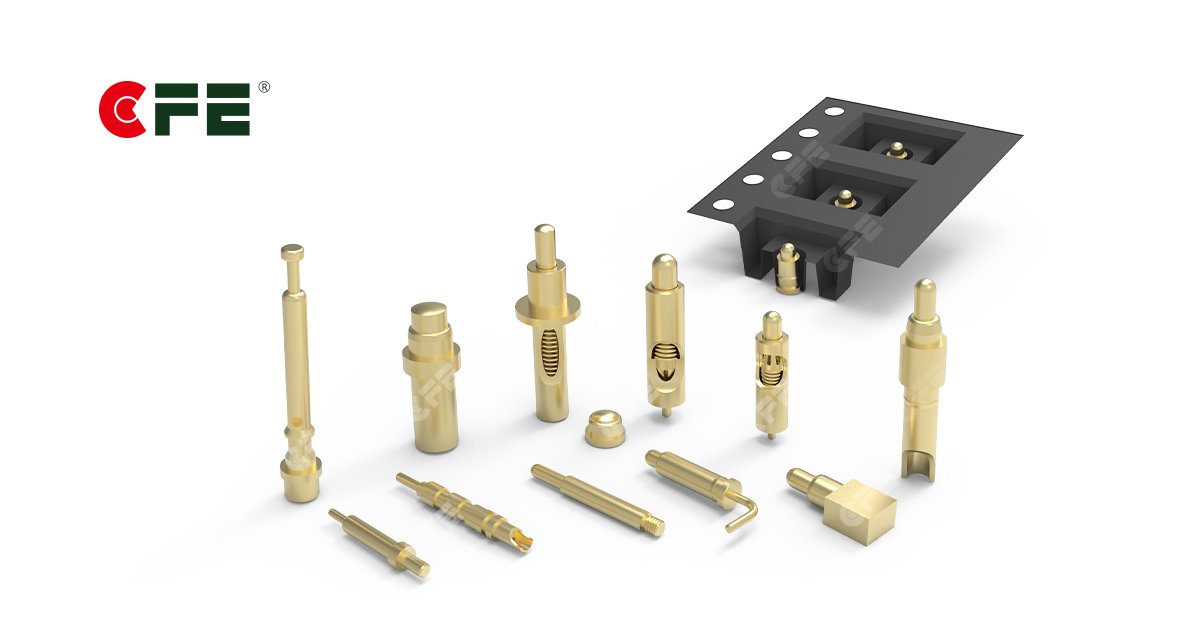
Types of Pogo Pin Connectors
Understanding available types helps in selecting the right connector.
Through-Hole Pogo Pins
Mounted through PCB holes.
Best for:
- Strong mechanical support
Surface Mount Pogo Pins
Mounted directly on PCB surfaces.
Best for:
- Compact assemblies
Right-Angle Pogo Pins
Designed for side-contact applications.
Best for:
- Limited vertical clearance
Double-Ended Pogo Pins
Spring-loaded on both ends.
Best for:
- Bridge connections
High-Current Pogo Pins
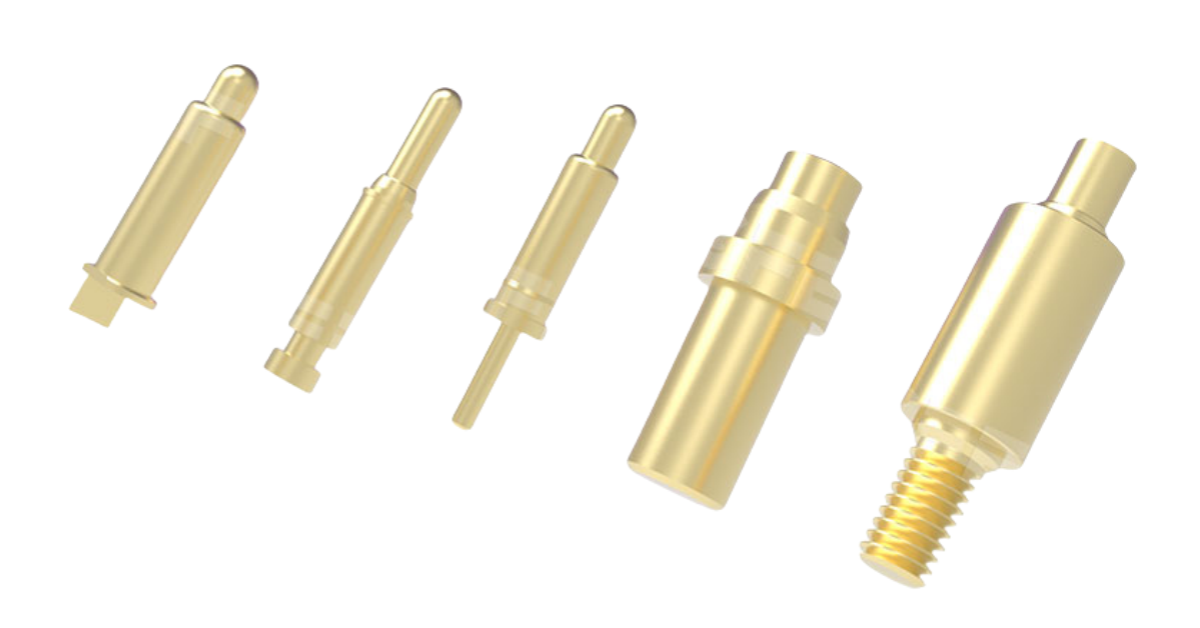
Designed for power-intensive applications.
Best for:
- Charging systems
- Battery connections
Materials Used in Pogo Pin Connectors
Material selection impacts performance.
Brass
Common for barrels and plungers.
Benefits:
- Good conductivity
- Cost-effective
Beryllium Copper
Used for springs.
Benefits:
- High elasticity
- Excellent durability
Gold Plating
Applied to contact surfaces.
Benefits:
- Corrosion resistance
- Enhanced conductivity
How to Choose the Right Pogo Pin Connector
Selecting the correct connector depends on several factors.
1. Current Rating
Ensure it matches your application requirements.
2. Operating Environment
Consider:
- Temperature
- Humidity
- Vibration
- Dust exposure
3. Mechanical Life Cycle
Choose based on expected insertion cycles.
4. Contact Resistance
Lower resistance improves signal integrity.
5. Size Constraints
Miniaturized applications require compact designs.
6. Mounting Style
Choose between:
- Through-hole
- Surface mount
- Custom assembly
Future Trends in Pogo Pin Connector Technology
The connector industry continues evolving.
Key trends include:
Miniaturization
Smaller connectors for compact devices.
Higher Current Capacity
Supporting fast charging technologies.
Improved Materials
Enhanced durability and conductivity.
Smart Connectivity
Integration with IoT and advanced sensors.
FAQs
What is a pogo pin connector used for?
A pogo pin connector is used for creating temporary or repeated electrical connections in testing systems, charging devices, medical electronics, and industrial automation.
Why are pogo pin connectors gold-plated?
Gold plating improves conductivity, reduces oxidation, and increases durability.
How long do pogo pin connectors last?
Depending on quality, they can last from 10,000 to over 1 million cycles.
Are pogo pin connectors waterproof?
Some specialized pogo pin connectors are designed with waterproof sealing for harsh environments.
Can pogo pin connectors carry high current?
Yes, high-current variants are specifically designed for power delivery applications.
Conclusion
Pogo pin connectors are an essential component in modern industrial electronics.
Their spring-loaded reliability, compact design, high durability, and flexible applications make them ideal for industries ranging from automotive and medical to telecommunications and aerospace.
As electronic devices continue becoming smaller, smarter, and more sophisticated, pogo pin connectors will remain a critical solution for dependable electrical connectivity.
Choosing the right pogo pin connector ensures better performance, longer lifespan, and improved efficiency for your industrial applications.