MATERIAL SELECTION GUIDE
Which metal
belongs inside
your pogo pin?
PlungerBarrelSpringTail
Brass
Cost-effective default
Beryllium Copper
Highest spring strength
Phosphor Bronze
Wear and corrosion balance
cfeconn.com
Ask three engineers which metal belongs in a pogo pin and you will often hear three confident answers. Brass, beryllium copper and phosphor bronze all work, and each one fails when it is used in the wrong place. For B2B buyers, the useful question is not which alloy is best. It is which alloy fits your current, your cycle life, your environment and your budget.
CFE has manufactured pogo pins and magnetic connectors since 2009 and supplies more than 1,000 customers. This guide uses that background, plus published alloy data, to help you brief an engineering team or write a sharper RFQ.
Quick answer: Brass is the cost-effective default for most barrels and plungers. Beryllium copper is chosen where spring force must stay stable under heat and heavy cycling. Phosphor bronze suits designs that need wear resistance and corrosion tolerance at a moderate price. Whatever the base metal, the gold-over-nickel plating decides most of your contact resistance and corrosion life.
- Lowest cost, easiest to machine: brass
- Strongest and most stable spring behavior: beryllium copper
- Balanced durability for moving parts: phosphor bronze
A pogo pin is several materials, not one
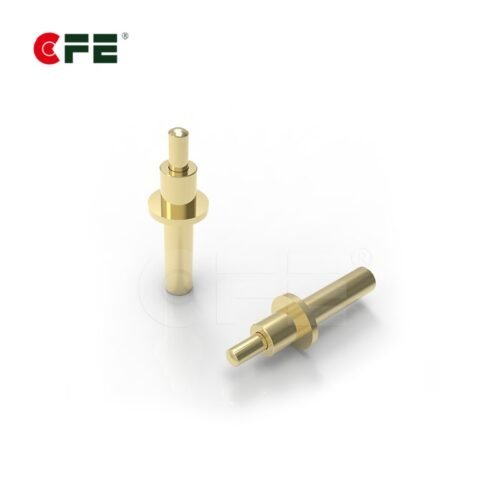
Before comparing alloys, it helps to remember that a pogo pin is an assembly. A plunger moves in and out, a barrel guides it, and a spring pushes it back. Each part sees a different kind of stress, so the “material” question really has three answers.
The barrel and plunger are usually turned or drawn from a copper alloy and then plated. The spring is often a separate spring alloy, such as music wire, stainless steel or beryllium copper, depending on the design. Published CFE pin data, for example, describes gold over nickel on a brass base, with the plating specification adjustable per customer.

Why does this matter at the buying stage? Because a datasheet that says “brass” tells you little about the spring, and a spring is usually what wears out first. If you want to see how these details show up on paper, our guide on how to read a pogo pin connector datasheet walks through them.
Brass: the practical default
Brass is a copper-zinc alloy that machines cleanly, costs less than the alternatives and conducts well enough for most signal and moderate-power pins. The common free-cutting grade, C36000, has a published conductivity of about 26% IACS and a tensile strength of roughly 70 to 90 ksi (about 480 to 620 MPa), according to Mill-Max property data.
That combination explains its popularity. Brass turns into tight-tolerance barrels at volume, takes plating well and keeps unit cost predictable. For consumer wearables, docking contacts and many charging pins, it is the sensible starting point.
The limits are worth knowing. Brass is not a spring material, so it relies on a separate spring for force. It is softer than the other two options, so poor plating shows up quickly as wear. In humid or ammonia-rich environments, zinc-bearing alloys can corrode from the inside, which is another reason plating integrity matters. Finally, free-cutting brass contains lead. RoHS allows up to 4% lead by weight in copper alloys, but some buyers still specify lead-free grades, so say so in your RFQ.
Beryllium copper: when the spring has to work harder
Beryllium copper (BeCu), commonly C17200, is a precipitation-hardened copper alloy valued for very high strength and stable spring behavior. After heat treatment it reaches about 175 to 205 ksi (roughly 1,200 to 1,400 MPa) and a hardness near 36 to 43 HRC.
Here is the point buyers often miss: BeCu is not a conductivity upgrade. C17200 sits near 22% IACS after heat treatment, slightly below brass. You choose it for mechanical reasons. Published data shows about 96% of stress remaining after 1,000 hours at 100 °C, and about 70% after 1,000 hours at 200 °C, with continuous use suggested up to roughly 150 °C.
That makes BeCu attractive for pins that cycle thousands of times, run warm, or must hold a consistent contact force over years. The trade-offs are cost, tougher machining, and the handling controls covered in the safety section below.
Phosphor bronze: the durable middle path
Phosphor bronze is a copper-tin alloy with a small amount of phosphorus, known for fatigue resistance, wear performance and good corrosion behavior. A common pin grade, C54400, is listed at about 19% IACS and 70 to 80 ksi tensile strength. Across the wider family, conductivity generally runs lower, roughly 13% to 20% IACS depending on the grade.
Designers reach for it when brass feels too soft and BeCu feels like overkill. It handles repeated flexing well and resists wear on sliding surfaces, which suits plungers that move often. It also tends to tolerate damp conditions better than zinc-bearing brass.
The cost is conductivity. In a high-current path, lower conductivity means more heat for the same amperage. If your design pushes toward 10A or more, check the temperature rise before assuming phosphor bronze will behave like brass.
Side-by-side comparison
The table below summarizes the typical published figures discussed above. Use it for first-pass screening, then confirm against your supplier’s material certificate.
| Property | Brass (C36000) | Beryllium copper (C17200) | Phosphor bronze (C54400) |
|---|---|---|---|
| Conductivity | About 26% IACS | About 22% IACS (heat treated) | About 19% IACS |
| Tensile strength | 70-90 ksi (480-620 MPa) | 175-205 ksi (1,200-1,400 MPa) | 70-80 ksi (480-550 MPa) |
| Hardness | 80-90 HRB | 36-43 HRC | About 83 HRB |
| Spring behavior | Limited | Excellent | Good |
| Machinability | Excellent | Fair, needs controls | Good |
| Relative cost | Lowest | Highest | Middle |
Strength, conductivity and hardness figures: Mill-Max published alloy properties. Spring behavior, machinability and cost rows are general industry comparisons.
Plating matters as much as the base metal
You rarely touch the base metal. Your signal or power passes through the plating, which is why contact resistance and corrosion life depend so heavily on it.
The usual stack is nickel underplate followed by a gold finish. Nickel acts as a barrier that slows copper and zinc from migrating into the gold, and it gives the thin gold layer a harder surface to sit on. Gold then keeps the contact surface stable and low in resistance. Thicker gold generally survives more mating cycles, but it also adds cost, so the right thickness is a design decision rather than a default.
Two CFE guides go deeper on this. Pogo pin gold plating: microinches vs. microns explains how to read thickness callouts, and salt spray testing for pogo pins covers how corrosion resistance is verified. If a supplier quotes a base metal but stays vague on plating, ask for both in writing.
Choosing a material for waterproof and high-current designs
Two requirements change the material conversation more than any other: water and amperage.
For wet environments, remember that an IP rating describes how a sealed assembly keeps water out, not how well an alloy resists corrosion. If contacts can still get wet, as with exposed charging points, the base metal and plating become your corrosion defense. CFE covers the design side in its page on waterproof pogo pins and magnetic connectors for 5A to 30A designs, including the wet-contact problem designers tend to overlook. Its waterproof spring-loaded pin, BP77031, is listed at 12 V and 10 A with a spring force of 175 g ±20% at 1.8 mm working stroke.

For high current, conductivity of the whole path, contact force and heat rise matter more than tensile strength. Heat is the quiet enemy of springs, which is where BeCu’s relaxation data becomes relevant. Also keep in mind that parallel pins do not simply add up, a point explained in why 4 × 5A pogo pins don’t make a 20A connection. CFE lists a 30A pin, BP38111, in its 5A-30A high current pogo pin family, and the board matters too, as covered in PCB design for 30A pogo pins.
Safety and compliance notes for buyers
This article is general engineering guidance and does not replace advice from your compliance or safety team.
The main safety topic is beryllium. According to OSHA’s beryllium guidance, the standard sets a permissible exposure limit of 0.2 µg/m³ as an 8-hour average, because inhaled beryllium can cause chronic beryllium disease. OSHA also notes that manufactured articles the employer does not process fall outside the rule, while machining or grinding brings the standard into play. In plain terms, the concern sits with dust and fumes during manufacturing, not with finished parts in a product. Ask any BeCu supplier how they control exposure.
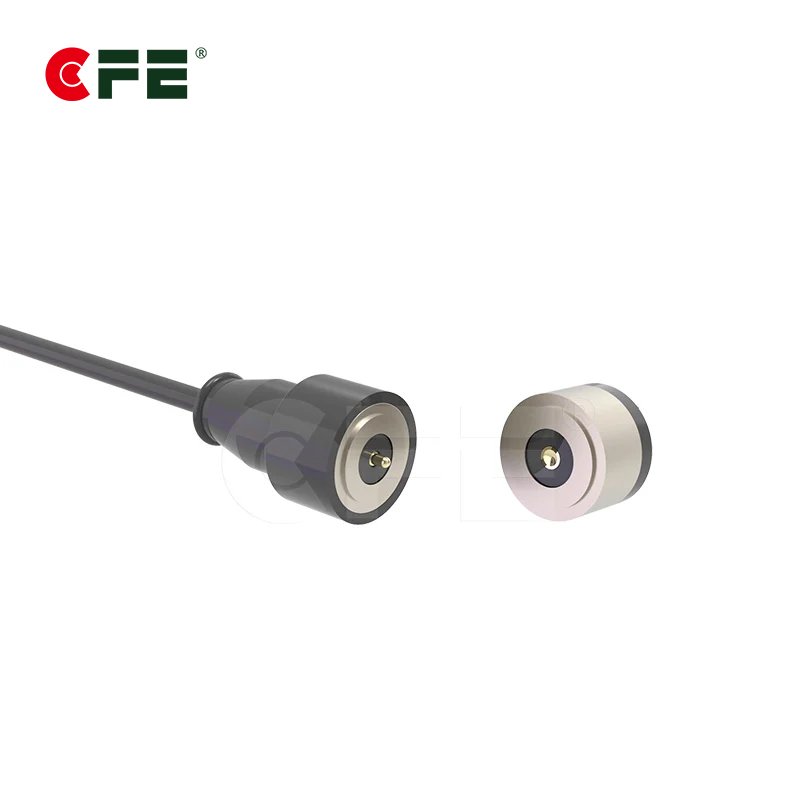
For substances, request RoHS and REACH declarations for the exact part number. CFE’s MXA-0010 magnetic connector datasheet, for example, states RoHS, REACH and HF compliance. Do not assume that one part’s declaration covers a different alloy or plating.
How buyers should specify the material
The best RFQs describe the job, not just the metal. A short brief lets the supplier recommend a material you might not have considered.
- Electrical load: continuous current, peak current and voltage.
- Mechanical life: required mating cycles and working stroke.
- Contact force: target force at the working height. Our working height guide explains the stroke terms.
- Environment: temperature range, humidity, salt exposure and water contact.
- Plating: gold thickness and underplate.
- Compliance: RoHS, REACH and any lead-free requirement.
- Volume and timeline: annual quantity and launch date.
Whatever you decide, request sample lots and test them under real conditions. Cycle the pins, run them at your actual current, then inspect the plating afterward. A few samples cost far less than a field return, and they show you how the material and finish behave together rather than on paper.
If a standard part does not fit, CFE builds custom pogo pin connectors, with adjustable pin count, pitch, housing and plating. Early failures are also worth studying before you finalize a design, so see why pogo pins fail.
Frequently asked questions
Is beryllium copper better than brass for pogo pins?
It is better for spring strength and stability under heat and heavy cycling, not for conductivity or cost. Brass is usually the better value when the load is moderate and the spring is a separate component.
Which pogo pin material has the best conductivity?
Of the three, brass has the highest published figure at about 26% IACS, followed by beryllium copper near 22% and phosphor bronze near 19%. The differences are modest, so plating and contact force often have a bigger effect on real contact resistance.
Is phosphor bronze good for waterproof pogo pins?
It resists wear and generally tolerates damp conditions well, but no alloy makes a pin waterproof. Waterproofing comes from the seal and housing design, and the alloy and plating govern corrosion if the contacts get wet.
Is beryllium copper safe to use in electronics?
Finished solid parts are generally not the concern. OSHA’s attention is on airborne dust and fumes created by machining or grinding, so ask your supplier about their exposure controls.
Can CFE customize the material and plating of a pogo pin?
CFE lists plating specification as adjustable per customer and offers custom pogo pin connectors. Send your current, cycle and environment requirements through the contact page so the engineering team can confirm material options for your part.
Conclusion
There is no single winning alloy. Brass wins on cost and machinability, beryllium copper wins on spring stability under demanding conditions, and phosphor bronze wins where wear and corrosion tolerance matter more than peak conductivity. The plating, the spring and the operating environment then decide whether the choice holds up in the field.
Start with your electrical load and cycle life, then work backward to the material. If you are designing around 5A to 30A, the CFE page on waterproof pogo pin and magnetic connectors is the best next read.
Need help choosing a material? Share your current, cycle life and environment with the CFE engineering team and request a quote and samples through the contact page, or email cfe@cfeconn.com.