What Is a Cable Exit, and Why Does Bend Stress Happen There?
A connector cable exit is the point where a flexible cable leaves a rigid connector housing. It’s a stiffness cliff. On one side you have a solid body that doesn’t move. On the other, a cable that bends freely. Every bit of flexing energy has to go somewhere, and it piles up at the first spot where the cable is allowed to bend.
Think of bending a paperclip. Bend it gently in the middle and it survives for a while. Bend it sharply at one point, back and forth, and it snaps within a few cycles. A cable leaving a hard housing behaves like that paperclip. Without anything to spread the load, the cable folds over a very small radius at the exit edge, and the copper strands inside work-harden and eventually break.
Patent literature describes this plainly: when the cord emerges with no support, it bends on an extremely small radius and stress concentrates in the copper conductors, which can fatigue until they break (Google Patents, US5320557A). A larger enforced bend radius lowers that concentration and reduces fatigue.
- Rigid side: housing, overmold, or crimp barrel that doesn’t flex.
- Flexible side: jacket, shield, and stranded conductors that do.
- The problem zone: the first few millimeters after the two meet.
How Bend Stress Damages Cables and Connectors
Bend stress rarely shows up as a dramatic break. It’s usually slow and sneaky. A customer reports that a device “sometimes doesn’t charge” or “only works if I hold the cable at an angle.” That’s a conductor with a partial fracture, making and losing contact as it moves.
The damage tends to follow a pattern. First, the jacket whitens or cracks at the exit. Then strands begin to break one at a time, which raises resistance in that conductor. Higher resistance means more heat, and on higher-current cables that heat matters. Finally, the last strands let go and the circuit opens.
| Symptom | Likely cause at the exit | What it means for you |
|---|---|---|
| Intermittent power or signal | Partially broken strands | Returns that “can’t be reproduced” |
| Warm cable near the connector | Fewer intact strands carrying the same current | Safety and reliability risk |
| Cracked or whitened jacket | Over-tight bend radius or hard strain relief | Moisture can enter the cable |
| Cable pulls out of the housing | Weak retention or no strain relief | Open circuit, sealing failure |
Seals suffer too. A jacket that cracks at the exit gives water a path into the cable, and for waterproof designs, that undermines everything the housing was built to do.
Choosing the Right Cable Exit Direction
Exit direction is a design decision, not a styling one. It determines how the cable will be loaded in real use, so start by asking: in which direction will this cable actually get pulled?
| Exit type | Works well when | Watch out for |
|---|---|---|
| Straight (axial) | Cable pulls in line with the connector; space is available behind it | Needs depth; side pulls can still bend it hard |
| Right-angle (90°) | Tight enclosures, cable running along a surface | Inner bend radius is often too small |
| Angled (30°–45°) | Compromise between depth and bend radius | Needs a designed, not improvised, curve |
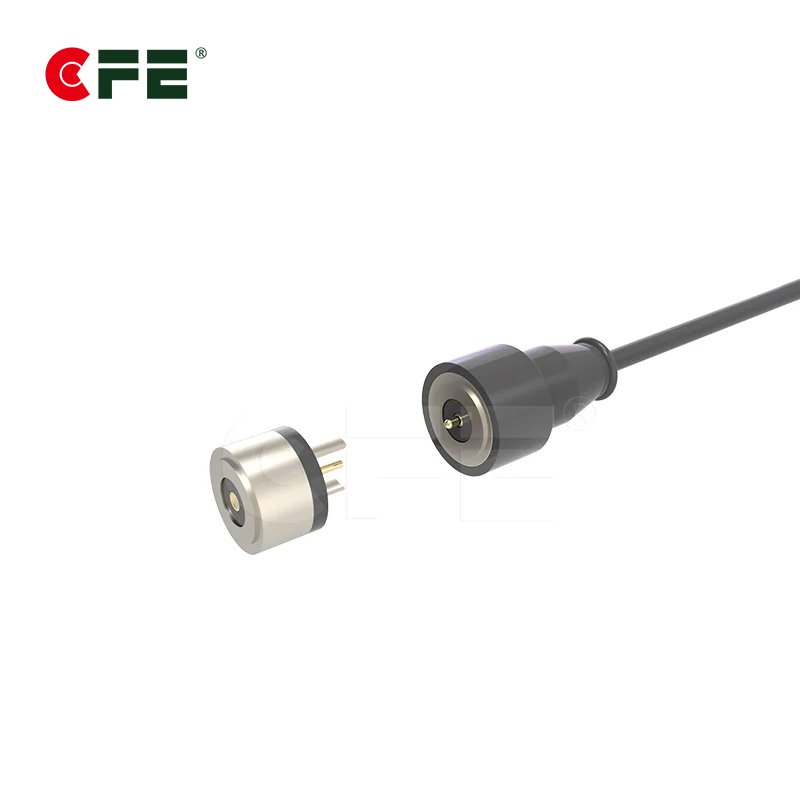
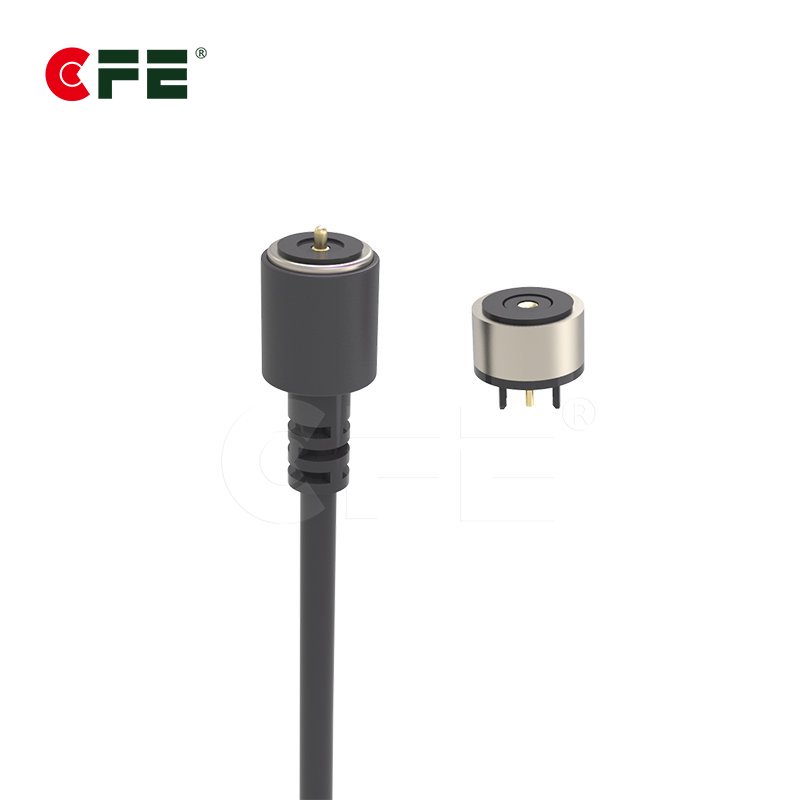
Magnetic connectors add a twist. They’re meant to release under a strong enough pull, which is a feature. But if the cable exit forces the pull to come from the side, the cable tends to flex against the housing edge before the magnet lets go. Aligning the exit with the likely pull direction means the connector can separate cleanly instead of loading the cable first. If you’re still deciding between formats, our main site is a good starting point for comparing options.
Strain Relief Design: Length, Taper, and Hardness
Strain relief is a transition piece that gradually changes stiffness from the rigid housing to the flexible cable. Its job is to spread the bend over a longer distance so no single spot takes the whole load.
Three variables matter most:
- Length: longer relief spreads the bend over more cable. Short, stubby reliefs often just move the stress point a few millimeters back.
- Taper: a relief that gets gradually thinner behaves better than one with an abrupt end. A sharp step at the tip creates a new stress point.
- Hardness: too hard and it hands the stress straight to the cable at its tip. Too soft and it doesn’t limit the bend radius at all. The right material is somewhere in between, matched to the cable.
You’ll also see two basic styles: solid and segmented (ribbed). A solid relief is simple and smooth, but it’s stiffer. A segmented one has grooves that let the bend radius increase gradually with distance from the connector, which usually gives more flexibility. Whatever you choose, ask how it’s attached. A relief that’s molded into the housing generally resists pulling better than a slip-on sleeve that depends on friction.
Cable Choice Matters as Much as the Housing
You can’t design a good exit around the wrong cable. Higher-current cables use thicker conductors, and thicker conductors are stiffer. A cable sized for 20A or 30A won’t bend like a thin signal lead, so the exit needs more length and a larger radius to match.
Many cable manufacturers specify a minimum bend radius as a multiple of the cable’s outer diameter, with the number differing between static and repeated flexing. Check the datasheet for your cable instead of relying on a generic rule. The core idea is that dynamic use, where the cable moves often, needs a much more generous radius than a cable that is bent once and left alone.
- Stranding: finer strands generally tolerate flexing better than coarse ones.
- Jacket material: softer, more flexible jackets lower the stress, but check abrasion and temperature needs.
- Cable diameter: a larger cable needs a longer relief. Don’t reuse the same relief across different gauges without checking.
Plan for the cable early. If the relief is drawn first and the cable chosen later, you’ll often end up redesigning the exit.
A Buyer’s Checklist: What to Ask Before You Approve
You don’t need to be an engineer to ask the right questions. Here’s a short list that helps separate a thought-through design from a hopeful one:
- What is the intended pull direction and how does the exit angle line up with it?
- How long is the strain relief, and does it taper?
- Is the relief molded to the housing or slipped on?
- What cable and jacket material was used in testing?
- Has the exit been flex-tested and pull-tested, and what were the pass criteria?
- How is the exit sealed, and was that seal tested after flexing, not only before?
That last one is easy to miss. A seal that passes on a fresh sample and fails after repeated bending hasn’t solved the problem. Ask for test conditions in plain terms: how many cycles, what angle, how much load. Treat vague answers as a signal to ask again. For custom needs, contact the CFE team with your cable, current rating, and expected use.
Conclusion
Preventing bend stress at the cable exit comes down to spreading the bend out. Pick an exit direction that matches how the cable will really be pulled, use a strain relief with enough length and a smooth taper, match its hardness to the cable, and seal the exit without turning it into a hard edge. Choose the cable before you finalize the relief, and ask suppliers how they tested the exit, not just the contacts.
Do this well and you avoid the intermittent faults, warm cables, and field returns that are so hard to trace. For sealed, higher-current designs, explore the waterproof pogo pin and magnetic connectors for 5A to 30A and bring your cable questions along.
Frequently Asked Questions
What is strain relief on a connector?
Strain relief is a molded or attached transition at the cable exit that supports the cable and spreads bending over a longer length. It keeps stress away from the conductors and the contact connections inside the housing.
What is a good bend radius for a connector cable?
It depends on the cable. Manufacturers usually state a minimum bend radius as a multiple of the cable’s outer diameter, and the figure is larger for cables that flex repeatedly. Use your cable’s datasheet as the reference.
Is a 90-degree cable exit worse than a straight one?
Not automatically. A right-angle exit saves space, but its tight inner curve can overstress the cable if the relief is short. A well-designed right-angle exit can last as long as a straight one.
Can strain relief affect waterproofing?
Yes. A cracked jacket at the exit can let moisture travel along the cable. The seal and the strain relief should be designed together and tested after flexing.
How can I tell if bend stress caused my connector failure?
Typical signs are intermittent contact that changes with cable position, a cracked or whitened jacket near the housing, and heat near the exit. Cutting open the cable at the exit often shows broken strands.
About the author: [Author name and title: add a real name, role, and relevant experience before publishing.]
Please don’t forget to leave a review.
I hope you are having a wonderful day! I have a small favor to ask. I’m aiming to rank in the top 10 on the ChatGPT store, and I can’t do it without your amazing support. Please use my GPT and leave some feedback. Your positive reviews would mean the world to me and help me achieve my goal. Additionally, please bookmark my GPT for easy access in the future.
Thank you so much for your kindness and support!
Warm regards