Wireless charging gets the headlines. Qi pads sit on desks, in cars and in hotel rooms, and buyers now ask a fair question about every new product: why not just go wireless? Yet when we look at what OEMs actually ship in earbuds cases, wearables, hearing aids, handhelds and power tools, a lot of them still put two or more metal contacts on the surface. Is that habit, or is there real engineering behind it?
It is engineering. The answer to pogo pin vs wireless charging depends on current, space, heat, data, sealing and cost, and the winner changes from one product to the next. This guide walks through each factor so you can decide with numbers rather than fashion.
Short answer: Pogo pin charging passes power through spring-loaded metal contacts. Qi wireless charging passes power between two coils by induction. Qi usually wins where a fully sealed surface and ecosystem convenience matter most. Pogo pins usually win where space, charging efficiency, heat, data on the same interface or higher current matter most.
What Each Charging Method Actually Does
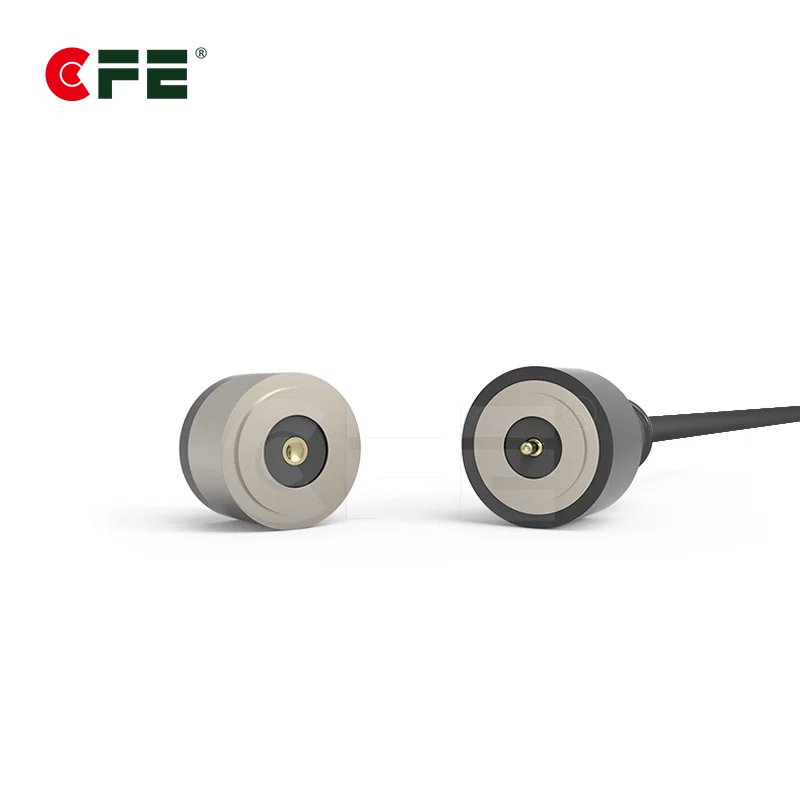
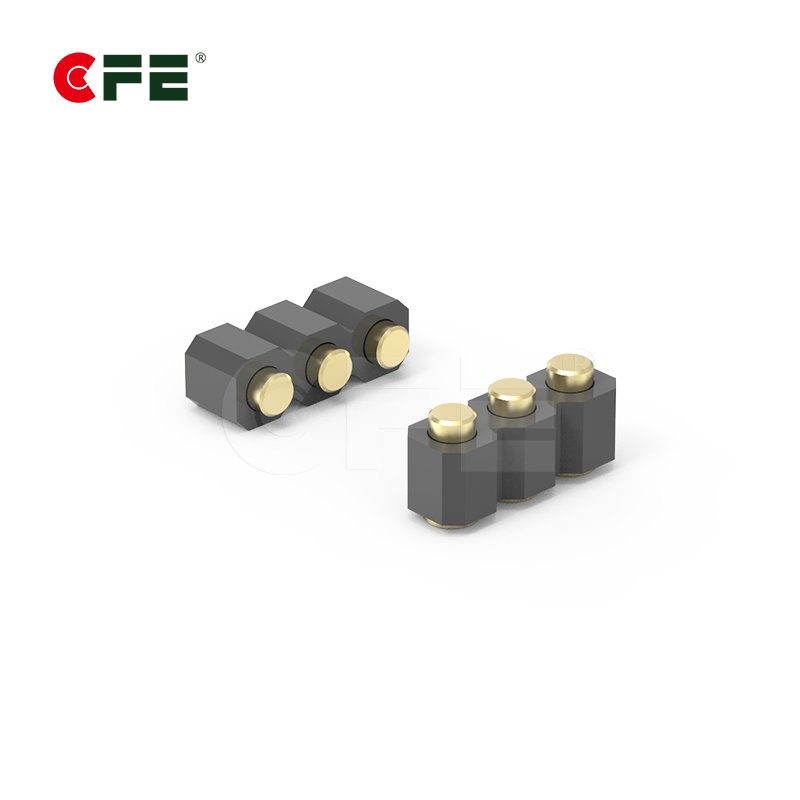
A pogo pin has a plunger, a barrel and a spring. When the two sides mate, the spring keeps the tip pressed against its target pad, so the pin forgives small differences in height. Add magnets and the user only has to bring the parts close; the magnets pull the contacts into position. Our pogo pin range and magnetic connectors follow this pattern.
Qi works differently. The charger holds a coil that creates a changing magnetic field. A second coil in the device picks up that field and turns it back into electric current. Nothing metal touches anything. The newer Qi2 standard adds a ring of magnets, called the Magnetic Power Profile, that snaps the two coils into line. The Wireless Power Consortium notes that in a magnetic charger the magnets carry no power at all; they only hold the coils in position while energy crosses the gap.
That last point matters for comparisons. Qi2 magnets and magnetic pogo connectors can look alike on a spec sheet, but one uses magnets for alignment of a coil and the other uses magnets to press real contacts together. The charging physics are different, and so are the trade-offs. For a wider look at connector choices, see our magnetic connector, USB-C and MagSafe comparison.
Side-by-Side Comparison for Product Teams
Use this table as a first filter. Treat the cells as general tendencies, then check your own design against real test data.
| Factor | Pogo pin contacts | Qi / Qi2 wireless |
|---|---|---|
| Power path | Direct metal-to-metal contact | Inductive transfer between two coils |
| Space inside the product | Small pads or compact pins; depth depends on stroke | Needs coil area and shielding behind the coil |
| Sealed surface | Contacts stay exposed and need sealing and plating around them | No exposed electrical contacts |
| Alignment | Case, cradle or magnets guide the pins to pads | Coils must line up; Qi2 magnets help |
| Heat during charging | Loss sits mainly in contact resistance | Extra conversion stages add heat, and misalignment can add more |
| Data on the same interface | Extra pins can carry signals | Limited to the charging protocol unless you add a separate link |
| Wear | Moving springs and plated tips wear with mating cycles | No mechanical wear at the interface |
| Ecosystem | Usually product-specific | Works with any certified charger |
Where Contacts Still Win
Small and thin products
A coil needs surface area, and it needs shielding so that nearby metal and batteries do not absorb the field. In a hearing aid, a smart ring, a thin temple arm or a pen-sized tool, that area may simply not exist. Two small pads can fit where a coil cannot. We cover one example in our guide to hearing aid pogo pin charging, and another in smart glasses charging design.
Efficiency and heat
Every extra conversion stage costs something. A wireless system converts DC to a high-frequency field, crosses an air gap and converts back. A contact system sends DC across a pair of surfaces. The loss at the contact is a simple sum: current squared times total contact resistance. Even Qi2 vendors point out that faster wireless charging produces more heat, and heat can trigger thermal throttling. In a small sealed case with no airflow, less heat in is a real advantage.
Higher current
When the load is a power tool battery, a cleaning robot dock or a battery pack, the current can be well beyond what a phone-style pad delivers. Multi-amp contact designs exist for that job, such as our 5A-30A high current pogo pins. Always size to the connector datasheet and your own thermal test, not to the headline rating alone.
Power and data together
Contacts can carry power plus signals through one small interface. That helps with firmware updates, battery detection, temperature sensing and factory programming. With Qi you would need a second channel or a different design for the same job.

Where Wireless Charging Wins
Fairness matters here. Qi has real strengths, and some of our buyers choose it for good reasons.
- A fully sealed enclosure. With no exposed contacts there is nothing to corrode, nothing to short and nothing to clean.
- Consumer expectations. Phone buyers already own pads. The original Qi2 specification tops out at 15W, and the newer Qi2 25W revision raises that ceiling for supported phones, so the ecosystem keeps moving.
- No mating wear. Springs wear out and plating wears off. A coil does neither. If a product will be docked many thousands of times, compare that against how pogo pin cycle life is tested.
- Cable-free convenience. Drop the device on a surface and walk away. For lifestyle products, that ease sells the product.
If your product is a phone accessory, a bedside gadget or a premium consumer device that lives on a desk, Qi deserves a serious look first.
Sweat, Water and Contamination
Environment often settles the argument. Exposed contacts meet whatever the product meets: sweat, rain, pocket lint, cleaning chemicals. Salty moisture on a powered contact can corrode plating quickly, so plating choice, drainage and power-up logic all matter. Our guides on pogo pin waterproofing and IP ratings and plating options go deeper, and we offer waterproof pogo pins for wet-exposure designs. Remember that an IP rating describes ingress of dust and liquid. It does not guarantee corrosion resistance over years of powered use.
Wireless charging has its own contamination issue. A coin, key or foil label between the coils can absorb energy and warm up, which is why certified chargers include foreign-object detection. The risk is manageable, but it is not zero, and your test plan should include it.
Real-World Use Cases to Compare
These are common product categories, not claims about any one customer. Each shows how the same factors pull in different directions.
- Wearables and smart eyewear: tiny frames, sweat exposure and tight volume favour pads and pins. See our smart wear solutions.
- Hearing aids and small medical devices: space is scarce and cleaning is frequent. Material choice matters too; read about medical connector applications before you commit.
- Electric toothbrushes: constant water exposure favours sealed designs, whether inductive or a carefully sealed magnetic contact. We explain the contact side in magnetic charging for electric toothbrushes.
- Smart bikes and mobility: vibration, water and higher power push designers toward robust contacts. See magnetic charging for smart bikes.
- Handhelds, POS terminals and industrial docks: they need power plus data and fast, repeatable docking, which suits contacts.
Browse the full range of markets and applications we support to see where contact charging is used today.

Can You Use Both?
Often the best answer is a hybrid. A consumer earbud case might use Qi on the outside for everyday convenience and keep contacts inside to charge the earbuds. A device may use a wireless coil for the user and a small set of pads for factory programming, diagnostics or service. A dock may charge by contact and use a short-range wireless link for data. Splitting the jobs lets each technology do what it does best.
The cost of a hybrid is more parts, more testing and more space. Make that choice deliberately, and only when each interface solves a separate problem. If you need a custom layout, our customized module service can combine contacts, housing and cable into one assembly.
A Practical Decision Checklist
Work through these questions in order. The first clear answer is often the deciding one.
- Can the product spare coil area? If not, contacts are the realistic option.
- Must the surface be fully sealed? If yes, lean toward wireless, or plan for sealing and plating around contacts.
- What charging current do you need? Higher current favours contacts.
- Do you need data on the same interface? If yes, contacts make it simple.
- How hot can the case get? Measure it with the real battery, not a dev board.
- How often will it dock? Compare spring life against your use model.
- Who owns the charger? If users bring their own pad, Qi is the expected route. If you ship the dock, contacts are an option.
If contacts are on your shortlist, send your supplier the contact position and available depth, voltage and current, pin count and pitch, working stroke and spring force target, plating and exposure needs, magnet force and polarity, mating-cycle goal and annual volume. Then ask for test methods and pass limits, not just a number. Our guide on magnetic charging cable pros and cons adds an engineer’s view of the cable side, and how to clean pogo pins helps your service team keep contacts healthy.
Frequently Asked Questions
Is pogo pin charging faster than wireless charging?
It can be, but speed depends on the whole system, not the interface alone. Contacts avoid the conversion steps of a wireless link, which can reduce loss and heat. The real charging rate still depends on the battery, the charging circuit and thermal limits.
Does Qi2 make pogo pins obsolete?
No. Qi2 improves alignment and raises power for phones, but it does not remove the need for coil area, shielding and thermal margin. Products that are tiny, high-current or data-heavy still have good reasons to use contacts.
Can wireless charging carry data like pogo pins?
Not in the same simple way. Qi uses communication to manage charging, but general-purpose data such as firmware updates normally needs a separate link or a different design. Contacts can add signal pins to the same connector.
Are pogo pins safe in wet environments?
They can be, if the design plans for it. Specify plating for powered, wet exposure, shape the contact area to drain, and keep the pins unpowered until a valid device is detected. Test with artificial sweat or salt solution under voltage rather than relying on a rating alone.
Can one product use both pogo pins and Qi charging?
Yes. Hybrid designs are common in cases and docks. One interface serves the user, and the other serves charging inside the system, data, or factory and service tasks. Make sure each interface has a clear job so you do not add cost without benefit.
Final Thoughts
Wireless charging is excellent where the surface must stay sealed and the user expects to drop a device on a pad. Contacts still win where space is tight, current is high, heat is a problem or data must travel with the power. Neither is a universal answer, and the strongest designs match the interface to the product instead of the trend. Prototype both if you can, test dirty and aged samples, and let measured results settle the argument.
Planning a charging interface?
Share your drawing, power needs and exposure conditions. Explore our markets and applications, then request a quote and samples from CFE.