Search for a waterproof pogo pin and you will meet datasheets that say IP67, IPX8, or just “waterproof”. As a buyer, you are left with a fair question: what does that claim promise, and what does it leave out? This guide gives you the answer in plain terms, so you can specify the right rating and read any supplier’s test claim with confidence.
Short answer: a standard pogo pin is not waterproof. Waterproofing comes from the assembly around it: seals, housing, and the way the connector mounts and mates. An IP rating records how a finished part performed in a defined test. It is not a property of the pin itself.
Short answer: are pogo pins waterproof?
A standard pogo pin is a plunger, a barrel and a spring, and it is built to move. Movement needs clearance, and clearance is a path for liquid. Waterproof performance has to be added around the pin through the housing, the seals and the mounting.
So the useful question is not whether pogo pins are waterproof. It is whether one specific connector, in one specific mating condition, passed one specific test. That is what an IP rating records, and it is why two products that both say “waterproof” can behave very differently in the field.
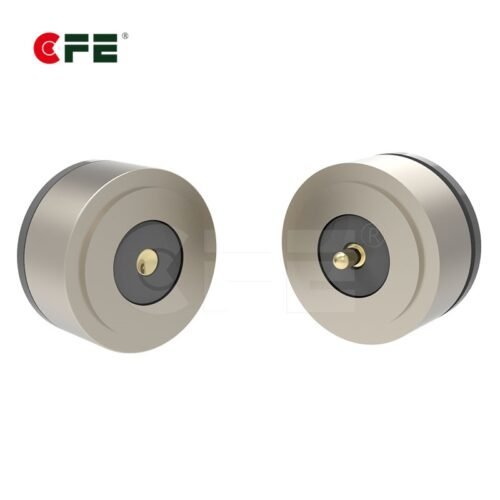
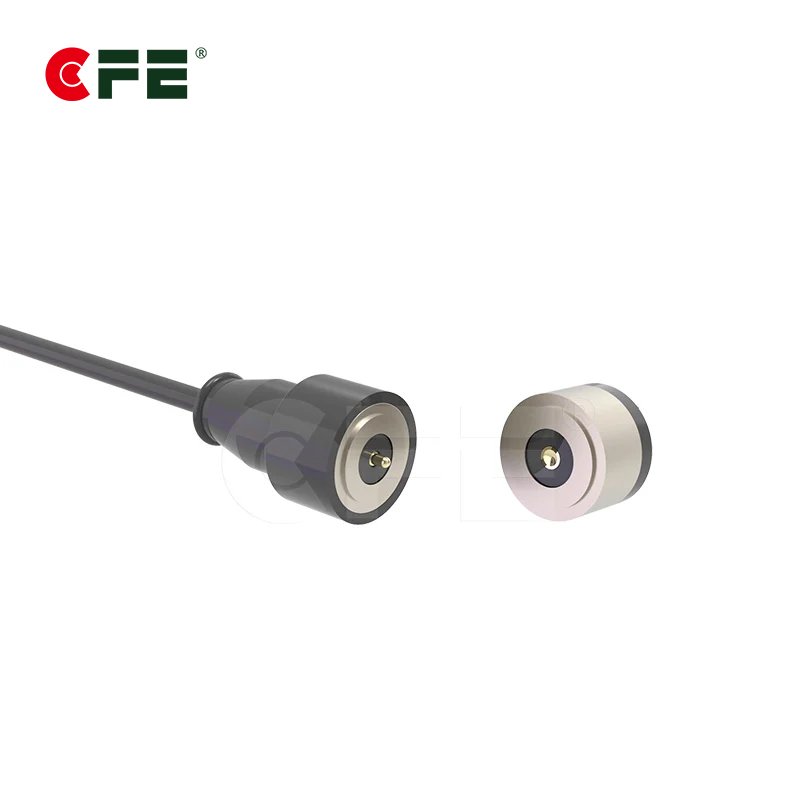
CFE builds sealed spring-loaded designs for this reason. You can see the range on our waterproof pogo pin page. The rest of this guide shows you how to judge any claim, ours included.

Why a bare pogo pin lets water through
The plunger slides inside the barrel, so a small gap has to exist between them. Liquid can creep through that gap, and it can also follow the barrel along the housing wall. A sealed design has to close each of these paths:
- The plunger-to-barrel gap, where the moving part meets the fixed one.
- The barrel-to-housing interface, where the pin sits in plastic.
- Housing seams and exits, including the PCB side, solder joints and cable outlets.
Engineers close these in different ways. One approach described by ConnectorSupplier reverses the pin direction in the housing and adds a rubber sheet, so the dock-side connector can resist seepage.
Temperature adds another path. When a sealed device warms up and cools down, the air inside expands and contracts, which can pull moisture past a marginal seal. This is why thermal cycling belongs in any serious waterproof test plan.
The lesson for buyers is simple. Waterproofing is a system property. Ask about the whole assembly, not the pin plating or spring force.
What an IP rating actually measures
IP stands for Ingress Protection. The code is defined in IEC 60529, with regional versions such as EN 60529 in Europe and ANSI 60529 in the US. The first digit covers solids and the second covers liquids. An X means that side was not rated. Same Sky offers a good primer on the full scale.
| Digit | First digit: solids | Second digit: liquids |
|---|---|---|
| 5 | Dust protected: some dust may enter, not enough to affect operation | Water jets from a 6.3 mm nozzle, any direction |
| 6 | Dust-tight | Powerful jets from a 12.5 mm nozzle |
| 7 | Not defined | Temporary immersion, up to 1 m for up to 30 minutes |
| 8 | Not defined | Immersion deeper than 1 m, conditions set by the manufacturer |
| X | Not rated | Not rated |
An IP code is a test result, not a quality grade. Jets and immersion are different stresses, and a part rated for immersion is not automatically promised to survive jets unless the label shows both codes. Check the exact marking.
Common IP ratings compared: what the difference means on a purchase order
| Code | Dust | Water | What to ask |
|---|---|---|---|
| IP67 | Dust-tight | Up to 1 m for 30 minutes | Mated or unmated? |
| IP68 | Dust-tight | Deeper than 1 m, continuous immersion | What depth and how long? |
| IPX8 | Not stated | Deeper than 1 m, continuous immersion | Is dust protection needed? |
IP68 is the code where the supplier sets the test conditions. Two parts can both be labelled IP68 after very different tests, one at a shallow depth for a short time and one far deeper for far longer. Without the numbers, you cannot compare them.
Here is a quick example. A supplier quotes an “IP68 waterproof pogo pin” for a sports watch. You ask for the report, and it shows 1.5 m for 30 minutes, unmated, on new samples. That is a legitimate IP68 result, yet it says nothing about the watch sitting on its charging dock after six months of sweat. The claim is not false. It is simply narrower than the headline.
IPX8 differs from IP68 in one way: no dust rating is claimed. That can be fine for a charging contact that sees sweat and rinsing, but not for a bike that sees mud. CFE’s published waterproof magnetic connector designs reach IPX8, and we encourage you to ask for the depth and duration behind any IPX8 figure.
Mated versus unmated: the detail buyers miss
Many ratings apply to only one state. Same Sky points out that a connector rated on its own is not designed to stay waterproof once a plug is inserted. LCSC’s selection guide warns designers to check whether a datasheet rating describes the mated or the unmated condition.
Pogo pin systems add a twist because they have two halves. The device-side contacts are usually sealed into the product, while the dock or cradle side is often not. Ask which half carries the rating, and test three states:
- Unmated: the device alone, in rain or in a pocket.
- Mated: the device on its charger, with water at the interface.
- During mating: wet contacts coming together under power.
The third state is rarely covered by an IP code, yet it drives short-circuit risk. Our guide to preventing short circuits in multi-pin connectors covers it in depth.

How sealed pogo pin designs reach their rating
CFE’s waterproof magnetic connector design guide lists five sealing structures. Each suits a different product, volume and budget.
| Method | How it seals | Buyer consideration |
|---|---|---|
| In-mold molding | Plastic is molded directly around the contact | Tooling cost, best at volume |
| Waterproof ring | A compressed ring seals between parts | Depends on groove design and ageing |
| Waterproof glue | Potting fills voids around the pins | Needs cure control, hard to rework |
| Ultrasonic welding | Housing halves are fused together | Needs compatible plastics |
| Welding plus sealing ring | A welded seam plus a gasket | Extra margin at extra cost |
Each structure delivers a different waterproof level, which is why a single “waterproof” label says little. Housing material also matters, so read our comparison of LCP and high-temperature PA housings. For higher current needs, see our waterproof pogo pin and magnetic connectors from 5A to 30A.

What an IP rating does not tell you?
IP covers whether water gets in. It says nothing about what happens to the contacts afterwards, and this is where many field failures start. A connector can stay perfectly sealed and still lose performance if the contact surface degrades over months of sweat, cleaning chemicals or salt air. Look for four more data points:
- Corrosion: IP tests use clean water, but sweat, salt and cleaners attack contacts. Salt spray is the relevant test, and CFE lists 48 to 120 hours for some magnetic power cable connectors.
- Contact material and plating: the base metal changes spring life and corrosion behaviour. See our guide to brass, beryllium copper and phosphor bronze.
- Contact resistance: one CFE four-pin waterproof magnetic connector lists up to 50 mΩ at 1A and 12V.
- Cycle life: some CFE four-pin waterproof magnetic connectors are tested for 20,000 mating cycles.
Seals are usually tested when new. Ask whether the IP test was repeated after mating cycles and temperature swings, because a seal that passes once can relax with use.
Questions to ask a supplier before you accept an IP claim
Send the same list to every supplier so the answers are comparable:
- What is the exact code, written in full: IP68 or IPX8?
- For IPX7 or IPX8, what were the depth, duration and water conditions?
- Is the rating for the unmated part, the mated pair, or both?
- Which part number was tested, and how many samples?
- Was the test run in-house or by an independent lab, and is a report available?
- Was it repeated after mating cycles and thermal cycling?
- What are the salt spray hours and the plating specification?
- Which sealing structure is used, and how does it affect cost at volume?
Ask for the report itself, not a summary. A good report names the sample, the test setup, the pass criteria and the date, and it lets your own engineers repeat the check on incoming lots.
A supplier who answers these quickly and with numbers is usually one you can trust. Vague answers are a signal in themselves.
Matching exposure to the rating
Start with how the product is used, then choose the test level. Overspecifying adds cost, and underspecifying adds returns.
| Product | Typical exposure | Ask about |
|---|---|---|
| TWS earbud cases | Sweat, rain, pocket debris | Corrosion and plating |
| Smart wearables | Sweat, showers, swimming | Immersion depth and time |
| E-bikes and smart bikes | Rain, mud, vibration | Dust rating and jets |
| Medical wearables | Cleaning agents, repeated wiping | Chemical and cycle durability |
Treat this table as a starting point for the conversation with your supplier, not a specification. Your own use cases, cleaning routines and warranty terms should set the final test plan.

How CFE approaches waterproof pogo pin design
We treat the seal and the contact as one design problem. That means choosing the sealing structure, housing material and plating together, then agreeing the test conditions with you before sampling. Our quality system backs that process, and our pogo pin range covers the formats you are likely to need.
Send us your drawing, target exposure and cycle count, and we will recommend a structure. Request a quote and samples to start the conversation.
Conclusion
A pogo pin is not waterproof on its own, and an IP rating is a test result for a defined condition. Read the code in full, confirm the depth and duration for IP68 and IPX8, check whether the rating is mated or unmated, and look beyond ingress to corrosion and cycle life. Do that, and “waterproof” becomes a specification you can verify.
If you are comparing suppliers right now, start with the eight questions above and put the answers side by side. The differences usually show up fast.
Frequently asked questions
Are pogo pins waterproof?
Not by themselves. The plunger must move inside the barrel, so a gap exists. Waterproofing comes from the housing, seals and mounting around the pin, and it is confirmed by an IP test on the finished connector.
What IP rating should a waterproof pogo pin connector have?
It depends on exposure. IP67 suits rain, splashes and brief dunking. IP68 or IPX8 suits longer immersion, but you must confirm the test depth and duration. Match the rating to real use rather than the highest code.
What is the difference between an X rating and a full IP rating?
An IPX8 part claims immersion beyond 1 m but makes no dust claim. An IP68 part makes the same immersion claim and also states that it is dust-tight. In both cases the supplier sets the depth and duration.
Does an IP rating apply when the connector is mated?
Not always. Many ratings describe the unmated part only. Always ask whether the figure covers the mated pair, the unmated part, or both.
Does waterproof mean corrosion proof?
No. An IP test shows water ingress protection. Corrosion depends on plating, base metal and exposure to salt or sweat, so ask for salt spray hours and the plating specification as well.