If you buy connectors for a living, you have probably heard both sides argued with total confidence. One engineer swears by pogo pins for their cycle life. Another points to a stamped contact that costs a fraction as much. Both are right, which is why the debate never ends. This guide gives B2B buyers a practical way to settle it for a specific product, with real application examples and an RFQ checklist at the end.
The Short Answer: Which Lasts Longer?
In a pogo pin vs spring contact comparison, pogo pins usually last longer when the contact is mated and unmated thousands of times. Stamped spring contacts usually last longer when the contact is pressed once and held under steady load, such as a battery contact or an internal board link. The right answer depends on your mating pattern, current load, environment and available space.
- Frequent docking, charging cradles, test fixtures: pogo pins tend to win on cycle life.
- Static contact, battery compartments, internal links: stamped spring contacts tend to win on cost, and often on durability.
- High volume at a tight price: a stamped contact usually wins the total cost calculation.
- Tight space plus vibration: it depends on the exact design, so test both.
The rest of this article explains why, so you can write a better RFQ and avoid paying for lifespan you will never use.
What Are Pogo Pins and Spring Contacts?
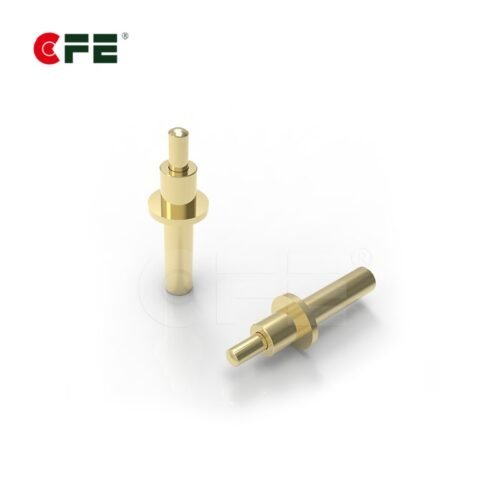
A pogo pin is a spring-loaded contact made of several parts: a plunger, a barrel and an internal coil spring. A spring contact (also called a leaf spring or stamped contact) is a single piece of formed metal that flexes to maintain contact pressure.
A pogo pin works like a tiny shock absorber. The plunger slides inside the barrel and the coil spring pushes it back out, so travel is smooth and predictable. If you want the basics first, read our guide What Are Pogo Pins?
A stamped spring contact has no sliding assembly at all. A strip of copper alloy is stamped, bent and plated into a shape that behaves like a spring. Think of a diving board: the board itself is both the spring and the contact point.
| Feature | Pogo pin | Stamped spring contact |
|---|---|---|
| Construction | 3 parts: plunger, barrel, spring | 1 formed metal part |
| Typical process | CNC machining and assembly | Progressive die stamping |
| Travel | Long, linear, consistent | Shorter, curved deflection |
| Spring force | Set by internal coil spring | Set by alloy, thickness and geometry |
| Unit cost | Higher | Lower, especially at volume |
| Tooling | Low to moderate | Higher upfront, very low per piece |
This construction difference drives everything else: how each contact wears, how it fails, and what it costs over the life of your product.
How Each Contact Fails (and Why It Matters for Lifespan)
Pogo pins most often fail from plating wear, spring fatigue or contamination inside the barrel. Stamped spring contacts most often fail from stress relaxation, where the metal slowly loses spring force, or from wear-through of the plating.
Lifespan is really a question of what breaks first. Here is how each type ages.
Pogo pin failure modes
- Plating wear on the plunger tip. Each mating cycle removes a little gold plating. When base metal shows, resistance climbs.
- Internal spring fatigue. After enough compressions the coil spring loses force and contact becomes intermittent.
- Barrel and plunger wear. The sliding interface creates friction and debris, which can cause sticking.
- Contamination. Liquids and dust can enter through the plunger gap unless the design addresses sealing.
Stamped spring contact failure modes
- Stress relaxation. Held compressed for years, the metal can take a permanent set and contact force drops. This is the quiet killer of static contacts.
- Overstress. Deflecting a leaf spring past its design range bends it permanently.
- Plating wear. Sliding contacts wear through plating just as pogo tips do.
- Fretting corrosion. Tiny vibration movements slowly wear away the surface layer.
Notice the pattern. Pogo pins age with motion: more cycles mean more wear. Stamped contacts age with time under load and deflection. That is why neither one is universally better.
Pogo Pin vs Spring Contact Lifespan: A Realistic Comparison
Quality pogo pins are commonly rated from about 10,000 up to 1,000,000 mating cycles. Stamped spring contacts vary more by design: a basic leaf spring may be rated for far fewer cycles, while a precision stamped connector can reach a similar range. CFE lists 50,000 to 1,000,000 cycles for its precision stamped connection solutions. Always confirm figures against the supplier’s datasheet and test report, because plating, force and geometry change the result dramatically.
You will see very different numbers online, and many are lab figures measured under ideal conditions. Treat any single cycle number as a starting point, not a promise. This table shows how the two typically compare by use case.
| Use case | Likely longer-lasting option | Why |
|---|---|---|
| Charging dock used daily | Pogo pin | High cycle count, forgiving of misalignment |
| Test fixture (thousands of boards) | Pogo pin | Built for heavy cycling |
| Battery contact, rarely swapped | Stamped contact | Low cycles, simple, low cost |
| Internal board link, static | Stamped contact | One piece, no moving parts to wear |
| Wearables with sweat exposure | Depends on sealing and plating | Corrosion matters more than cycles |
| High-vibration environment | Design-specific | Both work if force and geometry are right |
To compare two quotes fairly, ask both suppliers for the same data under the same conditions: cycles to a defined contact resistance limit, normal force at working height, and the plating specification. Test methods from the EIA-364 family and IEC 60512 give you a common language. A supplier who shows test reports against recognized methods is offering evidence, not just claims.
What Really Decides Contact Life
Plating, contact force, mating geometry, environment and current load often influence lifespan more than whether you pick a pogo pin or a spring contact.
A buyer compares two quotes, picks the pogo pin because it “lasts longer,” and later finds the real problem was thin plating or a rough mating pad. The contact type was never the weak link. These are the factors that matter most:
- Plating system. Gold over nickel is the standard for durability and low-level signals. Ask for plating thickness in microns, not just “gold plated.” Our guide to pogo pin gold plating explains the units.
- Contact force. Too little force gives unstable resistance. Too much accelerates wear. You want a designed range, not a maximum.
- Mating partner. A pogo pin pressing on a rough or thinly plated pad wears quickly. The mating surface is half of the contact system.
- Environment. Humidity, sweat, salt and dust attack contacts. In automotive and outdoor products, corrosion resistance often matters more than raw cycle count. Automotive programs also commonly reference USCAR-2 for connector systems.
- Current load. Higher current heats the contact and speeds up spring relaxation and oxidation. For power paths, look at our 5A-30A high current pogo pins.
- Alignment and travel. Operating outside the recommended working height shortens life for either type.
If you remember one thing from this section, make it this: specify the system, not just the part.
Where Stamped Spring Contacts Win
Stamped spring contacts win when you need low cost at high volume, a very low profile, a one-piece design with fewer failure points, or a custom shape that a round pogo pin cannot take.
Pogo pins get the spotlight, but stamped contacts quietly carry a huge share of the world’s electronics. They are cheap per piece, thin and easy to customize, because the shape comes from the tool rather than a stock barrel size.
The catch is that a stamped contact is only as good as the tooling and process behind it. Burrs, uneven thickness and inconsistent bending change spring force from piece to piece, and that is what shortens real-world life. CFE runs a vertically integrated process that includes in-house mold design and manufacturing, precision stamping and injection molding, so force consistency and burr control are managed at the die. See how it works on our precision stamping connection solution page.
CFE publishes the following technical parameters for its precision stamping connection solutions, which include shrapnel connectors, press-fit terminals and fuse holders:
| Parameter | CFE precision stamping |
|---|---|
| Life cycle | 50,000 to 1,000,000 times |
| Max current | 1 to 200A |
| Contact resistance | 15 mΩ or less |
| Salt spray | 600+ hours |
| Water and dust proof | IPX8 |
| Fire rating | UL94 V-0 |
| Safety approvals | CE / UL / CSA / VDE / CCC |
| Manufacture method | Cold pressing and injection molding |
Practical advantages of a stamped contact built on a controlled stamping line:
- Lower unit cost once tooling is paid off, which matters at millions of pieces.
- Custom geometry to fit odd spaces and mating pads.
- Fewer parts, so fewer assembly steps and fewer points of failure.
- Tuned spring force through alloy, thickness and shape.
- Tight consistency when the die and process are controlled.
Where Pogo Pins Win
Pogo pins win when the contact is mated often, when you need long and consistent travel, when alignment is imperfect, or when you want a standardized, replaceable part.
The internal spring gives a long, steady stroke, so the contact keeps pressure even if the mating surface is slightly off. The round, standard shape is also easy to place on a PCB. CFE offers a wide range of formats to match your assembly method:
- SMT/SMD pogo pins and DIP pogo pins for standard PCB assembly.
- Right angle and double head pogo pins for side-entry or board-to-board paths.
- Solder cup and thread pogo pins for wired or mechanically secured designs.
- Waterproof pogo pins and female pins for wet environments and mating partners.
- Pogo pin connectors in 1.27 mm, 2.0 mm, 2.54 mm and 3.0 mm pitch, plus custom versions.
Their weak points are cost and complexity. Three or more parts per contact means more machining, plating and assembly, which raises unit cost and creates more places for a defect to hide. For more on materials and lifecycles, read Why Do Pogo Pins Fail? Common Causes and How to Prevent Them. If you are also weighing flex connectors, see Pogo Pin vs. ZIF Connector, and for wet environments read Are Pogo Pins Waterproof?.

Where Magnetic Connectors Fit In
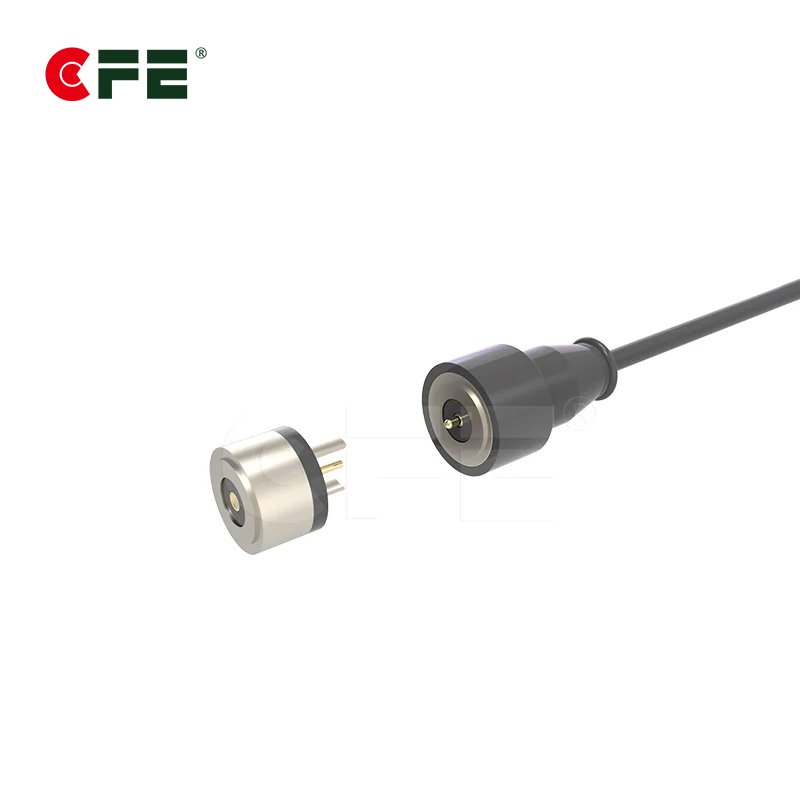
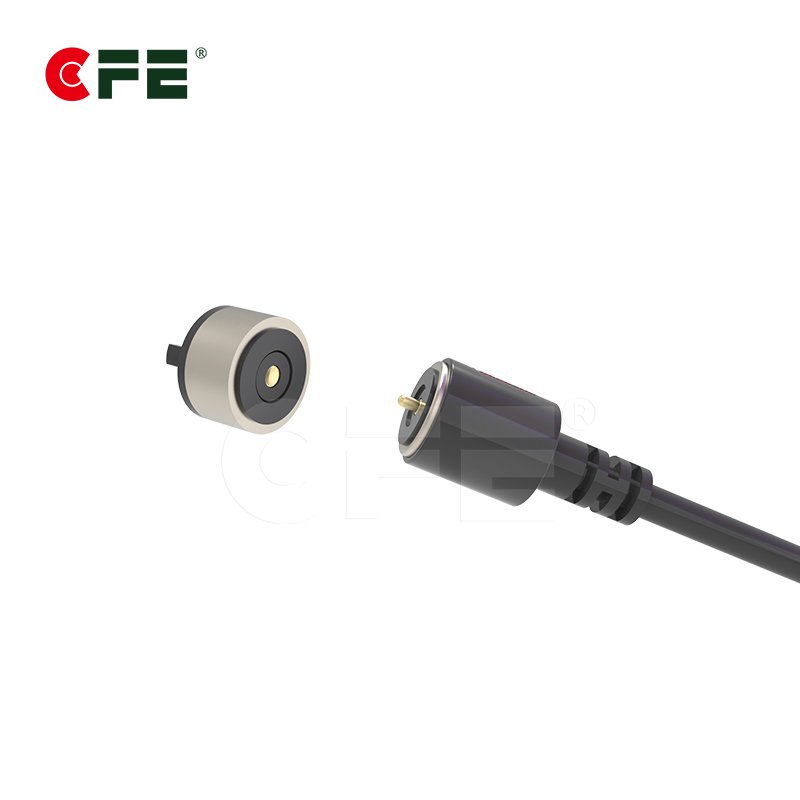
A magnetic connector pairs pogo pin contacts with magnets that guide and hold the mating halves, which reduces misalignment and protects the contacts from side loads.
Many buyers asking about pogo pin vs spring contact are really designing a charging or data interface that users plug in every day. Magnetic alignment removes the biggest cause of early wear: angled, forced insertion. CFE’s magnetic connectors are available from 2-pin to 8-pin and multi-pin formats, with 5-30A options for higher power. For cable-based designs, see our magnetic cables in 2-pin through 6-pin and multi-pin versions.
The same product used in a wearable and in a fixture will have different life requirements, which is why application context matters. That is the next topic.

Choosing by Application: Real-World Examples
The best contact depends on how the end product is used. Here is how the choice typically plays out across CFE’s main markets.

| Application | Typical need | Often a good fit |
|---|---|---|
| Automotive | Vibration, temperature range, long service life | Stamped contacts for static links; pogo pins for serviceable interfaces |
| Medical | Repeated docking, cleaning, reliability | Pogo pins, waterproof options where cleaning is frequent |
| Smart Bike | Vibration, moisture, charging ports | Waterproof pogo pins or magnetic connectors |
| TWS | Tiny space, daily charging cycles | Small SMT pogo pins in the charging case |
| Smart Wear | Sweat exposure, thin profile, daily charging | Magnetic pogo connectors; stamped contacts for internal links |
| Smart Home | Low cost, high volume, moderate cycles | Stamped contacts, or pogo pins for docking |
| LED Lighting | Heat, assembly speed, cost | Stamped spring contacts |
| POS Payment Terminal | Frequent docking, reliability, power transfer | Pogo pin connectors, including high current types |
A smart watch, for example, may use a magnetic pogo connector for daily charging and a stamped contact inside for the battery. Two different contacts, each chosen for how it is used. That is normal, and it is a good reason to work with a supplier that makes both.
Total Cost of Ownership: The Cheapest Contact Is Not Always the Cheapest
The best comparison for B2B buyers is cost per product lifetime, not cost per contact. Add unit price, failure rate, warranty cost and assembly cost together.
Imagine a charging contact. The stamped option costs a few cents less per unit. The pogo pin costs more but survives years of daily docking. If your product docks once a day, a contact rated for a few thousand cycles lasts years, and the cheaper part wins. If it is a test fixture docking hundreds of times a day, the stamped contact fails within weeks and the pogo pin wins easily.
- Estimate real mating cycles over the product’s life.
- Add a safety factor for abuse and environment.
- Compare supplier cycle data at that target.
- Spread tooling cost over your forecast volume.
- Include the cost of a field failure: returns, support and brand damage.
The last step is the one people skip. One field failure often costs more than a year of savings from cheaper contacts.
A Buyer’s RFQ Checklist
Before you approve either contact type, ask for cycle-life test data, plating thickness, contact force at working height, contact resistance limits and the test standards used.
- Target mating cycles and the failure criterion (for example, maximum contact resistance)
- Plating type and thickness in microns, on the contact and the mating pad
- Normal force at working height and at maximum travel
- Current rating and temperature rise data
- Environmental testing: salt spray, humidity, thermal cycling, vibration
- Test methods referenced (EIA-364, IEC 60512 or your own spec)
- Sample lot and first-article report
- Production consistency data for force and dimensions
- Lead time, tooling ownership and change control process
Also ask: can this supplier make both options? A manufacturer with only one type will naturally steer you toward it. A supplier with both pogo pin and stamping capability can recommend the better fit, or propose a hybrid with a stamped contact on one side and a pogo pin on the other.
Quick Decision Guide
| If your product… | Lean toward |
|---|---|
| Docks or charges daily for years | Pogo pin or magnetic connector |
| Has a contact pressed once at assembly | Stamped contact |
| Ships in the millions on a tight cost target | Stamped contact |
| Needs long, steady stroke and misalignment tolerance | Pogo pin |
| Has a very tight height budget | Stamped contact (often) |
| Is a test or programming fixture | Pogo pin |
| Faces vibration and moisture together | Test both |
When in doubt, prototype both and run your own cycle and environment tests. Sample cost is tiny compared with a wrong decision at mass production.
Conclusion
So, which lasts longer: a pogo pin or a spring contact? In frequent-mating applications, a well-made pogo pin generally lasts longer. In static or low-cycle applications, a well-made stamped contact often lasts as long as the product itself, at lower cost. The contact type matters, but plating, force, alignment and manufacturing control matter just as much.
The smartest move for a B2B buyer is to define real cycle needs first, then compare both options on total cost of ownership. CFE’s engineers work on both pogo pin and stamped contact programs. Explore our precision stamping connection solution, browse our pogo pin range, or send us your drawing and target cycle life and we will recommend a pogo pin, a stamped contact or a hybrid.
Frequently Asked Questions
Do pogo pins last longer than spring contacts?
Usually, yes, when the connection is mated and unmated often and the stamped contact is a basic leaf spring. Pogo pins are commonly rated from 10,000 up to 1,000,000 cycles. A precision stamped connector can also reach very high cycle counts, and in static applications a stamped contact can last the entire product life.
How many cycles can a pogo pin last?
The range is wide and depends on plating, spring force and the mating pad. Standard parts are commonly rated from about 10,000 cycles, and high-life designs are tested up to 1,000,000 cycles. Always request the supplier’s test report and the failure criterion behind the rating.
What is the main weakness of a stamped spring contact?
Stress relaxation. Held under compression for a long time, especially at high temperature, the metal can lose spring force. Good alloy choice, correct deflection and a controlled stamping process reduce this risk.
Are stamped spring contacts cheaper than pogo pins?
At volume, generally yes. After tooling cost is covered, a one-piece stamped contact usually has a lower unit cost than a multi-part machined pogo pin. For small runs, the tooling cost can reverse that.
Can one supplier provide both pogo pins and stamped contacts?
Yes. CFE offers pogo pins, pogo pin connectors, magnetic connectors and cables, precision stamping connectors and customized modules, so you can compare both options with one engineering team before committing to tooling.