Powered pogo pin contacts corrode in water because the water turns the gap between two live contacts into a small electrochemical cell. Current flows through the liquid, metal dissolves from the positive contact, and the damage keeps growing for as long as the contact stays wet and powered. The same pin sitting wet but unpowered usually survives far longer.
If you buy connectors for a charging dock, a wearable, a tool battery or an outdoor device, this matters more than any datasheet line. A contact that looks fine on day one can turn green, brown or pitted after a few wet charging cycles, and the result is a product that charges slowly, heats up or stops charging altogether. This article explains what actually happens at the pin, which conditions make it worse, and what to ask your supplier before you approve a design. It supports our guide to waterproof pogo pins and magnetic connectors for 5A to 30A designs.
What Does “Corrosion in Water” Mean for a Powered Pogo Pin?
Corrosion is the chemical or electrochemical breakdown of a metal surface. For a pogo pin, that surface is the plunger tip and the mating pad it touches. Ordinary rust-style corrosion needs only moisture and oxygen. Powered corrosion is different, and it is usually faster, because the supply voltage drives the reaction.
Picture a charging dock for a smartwatch. The dock has two exposed contacts, one positive and one negative. Someone sets the watch down with a few drops of sweat or rain on the contact area. For a moment those drops bridge the two contacts. If the dock is live at that moment, a small current passes through the water instead of through a clean metal-to-metal joint. That current is tiny, but it is steady, and metal ions leave the positive contact with every second it flows.
That is why buyers should separate three questions that often get mixed together:
- Can water reach the contact? This is a sealing and enclosure question.
- Is the contact live while wet? This is a circuit design question.
- Can the contact surface tolerate it? This is a plating and material question.
A part can pass an ingress rating and still corrode, because the contact face of a pogo pin is, by design, the one place that has to touch the outside world. The seal protects the inside of the device. It does not protect the tip.

The Three Mechanisms Behind Wet Corrosion
Most field failures come from one of three mechanisms, and they often occur together. Knowing which one dominates tells you what to change.
| Mechanism | What drives it | What you see |
|---|---|---|
| Electrolytic (anodic) dissolution | Supply voltage pushing current through water between live contacts | Pitting and material loss on the positive contact, deposits near the negative one |
| Galvanic corrosion | Two different metals touching in a conductive liquid, even with no power applied | Attack on the less noble metal, often at plating edges or exposed base metal |
| Crevice and chloride attack | Salt, sweat or cleaning agents trapped in small gaps around the pin | Discoloration around the barrel, sticky or rough plunger movement |
Electrolytic dissolution is the one most specific to powered contacts. It follows the same logic as electroplating run in reverse. The positive contact gives up metal ions into the water, the negative contact attracts them, and the contact surface slowly thins out. The higher the voltage and the longer the contact stays wet, the more material moves.
Galvanic corrosion needs no power. A pogo pin is a small assembly of several metals: a brass or copper-alloy barrel and plunger, a nickel underlayer, a gold surface, and a stainless steel spring. When water links them, the less noble metal can corrode first. This is why a pin can look fine in a dry bench test and fail in a wet environment.
Crevice attack is the quiet one. A pogo pin has a moving plunger inside a barrel, and any gap that holds salty or acidic liquid becomes a place where corrosion starts and then hides from view. If you want to see how this fits with other failure causes, our article on why pogo pins fail covers contamination, wear and heat alongside it.
Why the Positive Contact Takes the Damage
Buyers often ask why only one pin on a connector looks bad. The answer is polarity. In a DC circuit the positive contact acts as the anode, and the anode is where metal is lost. The negative contact usually looks cleaner, though it may collect deposits.
That has a practical meaning for design. If your connector has a power pin and a ground pin, the power pin carries the corrosion risk. The ground pin is not immune, since galvanic and crevice effects do not care about polarity, but it is rarely the first to fail. When you inspect returned units, check the positive contact first.
Four conditions make the damage faster:
- Higher voltage. More driving force means more current through the water and more metal removed.
- Longer wet time. A contact that dries in seconds suffers far less than one that stays damp in a closed dock.
- Dissolved salts. Pure water conducts poorly. Tap water, sweat and seawater conduct much better, so they drive more current at the same voltage.
- Constant bias. A contact that is powered even when nothing is connected has no rest period. It is live every time moisture arrives.
The fourth point is the one design teams most often miss. Many docks keep their contacts energised so the device wakes up the moment it docks. That convenience is paid for in exposed, live metal, and it is a common root cause of corrosion complaints.
Why Gold Plating Is Not a Complete Shield
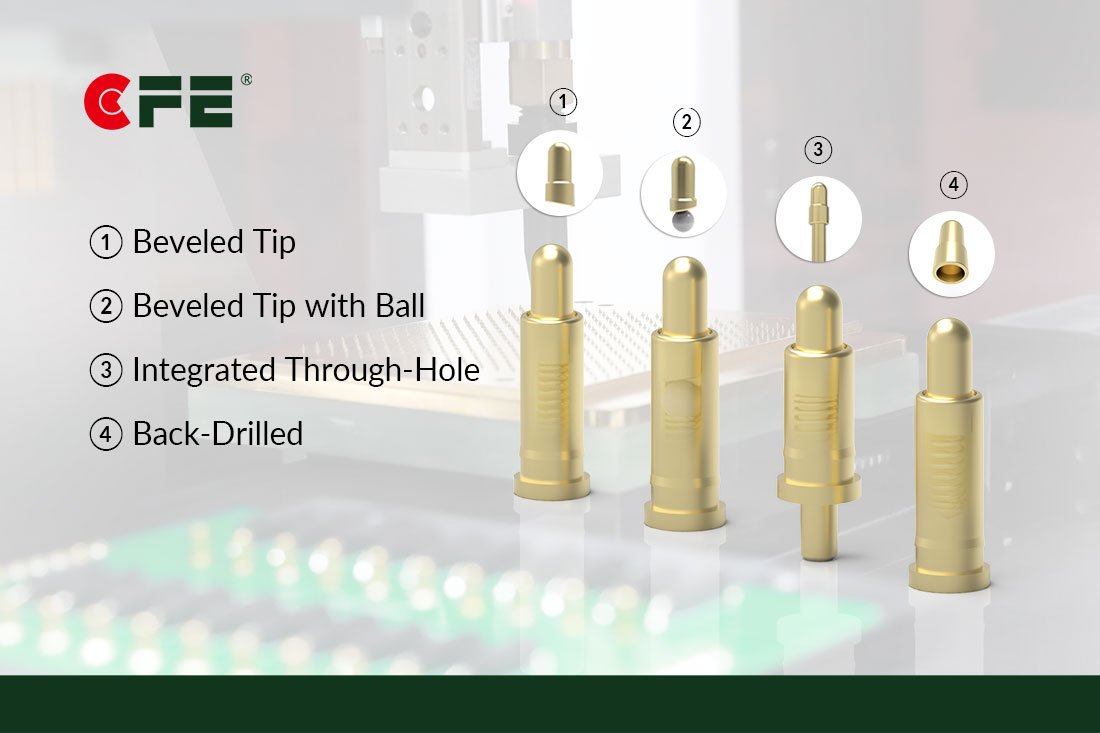
Gold is a noble metal, so a gold surface resists oxidation and wet corrosion well. That is why gold plating is the standard finish on pogo pins. The BP77031 waterproof spring-loaded pin, for example, is listed with a brass plunger and barrel finished with gold over nickel, and CFE notes that the plating can be adjusted to customer requirements.
But gold is only a thin layer, and “gold plated” does not mean “immune.” Four weak points deserve a buyer’s attention:
- Thickness. A very thin gold layer is more likely to have microscopic pores. Water and salts reach the nickel underneath through those pores, and the nickel corrodes below the surface.
- Wear. Every mating cycle slides the tip against the pad. Over thousands of cycles, thin plating wears through at the contact point, and base metal is exposed exactly where current flows.
- Edges and the barrel. The tip may be well protected while the barrel opening, plunger shoulder or solder joint is not.
- The mating pad. A pogo pin only works as well as the pad it touches. A cheap copper or thinly plated pad on the product side can corrode and drag the whole connection down.
So the buying question is not “is it gold plated?” but “how thick, over what underlayer, and rated for how many cycles in a wet environment?” Ask for the plating specification in writing, and ask whether it applies to the plunger, the barrel and the mating pad. Our guide on how to read a pogo pin connector datasheet lists the specifications worth checking before you compare quotes.

How the Type of Water Changes the Risk
Not all water is equally harmful. The dissolved ions in the liquid decide how easily current flows and how aggressively the metal is attacked. This is why a product that survives a rain shower may fail after a beach day or a gym session.
| Liquid | Relative risk to powered contacts | Why |
|---|---|---|
| Distilled or very clean water | Lower | Few ions, so little current flows |
| Tap or rain water | Moderate | Dissolved minerals raise conductivity; residues stay after drying |
| Sweat | High | Contains salts and acids; repeated exposure builds up residue |
| Sea or salt spray | Very high | High chloride content attacks metals aggressively |
| Cleaning agents and disinfectants | High | Harsh chemistry can attack plating and seals; relevant to medical and cleaning-robot products |
This table is a general guide, not a test result, and your actual risk depends on voltage, plating and design. What it should do is change the questions you ask. A smart-wear product worn during exercise sees sweat every day. A smart bike or outdoor tool sees rain and road spray. A device for a hospital sees disinfectants. Each one needs a different conversation with your supplier, and it is worth reviewing the relevant CFE pages for smart wear, smart bikes and medical applications to see how those environments differ.
Design Choices That Reduce Corrosion
The good news is that most wet-corrosion problems can be designed out. The most effective fixes are usually electrical and mechanical, and a thicker gold layer is rarely the first one to reach for.
Keep the contacts off until they are connected
The single most useful change is to leave the exposed contacts unpowered until the circuit confirms a proper mate. A low-voltage sense line, a resistor network or a small detection circuit can tell the charger that a device is really present. Only then does the full voltage switch on. If a drop of water bridges the contacts while nothing is docked, almost no current flows and almost no corrosion occurs.
Limit the current available to wet contacts
If the contacts must stay energised, use a current-limited or low-voltage standby state. A lower voltage and a small current budget slow electrolytic dissolution a great deal. Talk to your electronics team about this before the board layout is fixed, because it is far cheaper to add on paper than after tooling.
Choose the right sealing approach for the pin
Sealing keeps liquid out of the device and away from the spring and the PCB joint. It does not stop the exposed tip from getting wet. Our article on waterproof pogo pin connectors and IP ratings explained shows how sealed plungers, overmolded housings and gasket faces compare. For the rating itself, the IEC guide to IP ratings gives the official definitions, and it is worth remembering that a rating describes the tested assembly, not a loose part.
Design the surface to drain and dry
Geometry matters. A contact recessed in a deep well holds water. A contact on a slightly raised, sloped or vented surface sheds it. Small changes to the housing can shorten wet time, and wet time is one of the biggest drivers of damage.
Match plating to the environment
For wet or sweaty use, ask for a plating specification suited to the exposure and the target cycle life. Specify the plating on the mating pad too. CFE builds custom versions, so it is reasonable to request a different plating or structure through the custom pogo pin connector route when the standard part is not a fit.
Do not forget working height
Contact force and stroke affect how well a tip wipes through film and keeps resistance low. An over-compressed or under-compressed pin wears faster and corrodes sooner, so confirm the working height early. The guide on pogo pin working height explains how to set it.
What About Magnetic Connectors?
Magnetic connectors use the same spring-loaded contacts, so the same corrosion rules apply. Their advantage is that the magnets pull the two halves flat against each other, which can make the mated joint easier to seal and the contact faces easier to wipe clean. The trade-off is that exposed magnetic faces can attract metal debris, and a wet, debris-covered face is a poor place for a live contact.
For a comparison of the two approaches in charging products, read magnetic connectors vs. pogo pin connectors. The same electrical protections, such as detect-before-power, are worth including whichever style you choose.

A Buyer’s Checklist for Wet Environments
Most corrosion complaints could have been avoided with a few questions at the quoting stage. Copy this list into your request and send it with your drawing.
| What to tell the supplier | Why it matters |
|---|---|
| Supply voltage and whether contacts are live while exposed | Sets the electrolytic corrosion risk |
| Type of liquid: rain, sweat, salt spray, cleaners | Decides plating, seal and material choices |
| Expected wet time per day and drying conditions | Longer wet time means faster damage |
| Target mating cycles and product life | Determines how thick the plating must be to survive wear |
| Plating specification of the mating pad on your product | The weaker side sets the life of the pair |
| Current, duty cycle and acceptable temperature rise | Corrosion raises resistance, and resistance raises heat |
| Available space, pitch and mounting style | Fits the part to your housing and drainage plan |
If you are still choosing between options, the pogo pin connector selection checklist covers five more questions worth asking, and the high-current pogo pin selection guide helps when your design carries 5A to 30A.
Test Before You Commit
Datasheets do not capture your exact exposure, so test the real assembly. A useful plan has three parts. First, run repeated wet and dry cycles with the actual liquid your users will meet, including salt or sweat where relevant. Second, run those cycles with the contacts powered the way the finished product will power them, because an unpowered test will understate the damage. Third, measure contact resistance and temperature rise before and after, and inspect the positive contact under magnification.
Ask your supplier what testing they can support and what the sample stage looks like. It is far better to find a plating or circuit problem in a sample batch than in a returned shipment. Keep records of the exact conditions you used, so that a later design change can be tested the same way.
Where to Go Next
If your product has to survive wet conditions, start with the waterproof pogo pin range and the 5A-30A high current pogo pins, then read the full waterproof pogo pin and magnetic connector guide to see how sealing, current and magnets fit together. When you have your requirements, you can request a quote and samples and include the checklist above so the engineering team can recommend a suitable structure and plating the first time.
Frequently Asked Questions
Why do powered pogo pins corrode faster than unpowered ones?
Voltage drives current through any water that bridges the contacts, and that current removes metal from the positive contact. An unpowered pin can still suffer galvanic or crevice corrosion, but it lacks this extra driving force, so it generally lasts longer in the same conditions.
Is gold plating enough to stop corrosion in water?
Not by itself. Gold resists corrosion well, but thin plating can have pores and can wear through at the contact point. Water then reaches the nickel or base metal underneath. Ask for the plating specification, the underlayer and the rated cycle life, and check the mating pad as well.
Which pin corrodes first, positive or negative?
In a DC circuit the positive contact acts as the anode and normally loses metal first. The negative contact may collect deposits. Galvanic and crevice effects do not depend on polarity, so inspect both pins, starting with the positive one.
Does an IP rating protect the contact from corrosion?
No. An IP rating describes how well the tested assembly keeps water and dust out of the enclosure. The exposed contact tip still gets wet, so you also need electrical protection such as detect-before-power and a suitable plating.
How can I reduce corrosion without changing the connector?
Keep the contacts unpowered until a mate is detected, use a low-voltage standby state, and design the surface so liquid drains and dries quickly. These steps often cut the damage substantially, and your supplier can advise on which ones fit your circuit and housing.