Understanding the Electronics Supply Chain: Sourcing Spring-Loaded Connectors Reliably
Every connected device you rely on — your smartwatch, your wireless earbuds, your POS terminal — depends on a chain of components that has to move from raw material to finished product without a single weak link. Somewhere in that chain sits a small but critical part: the spring-loaded connector, more commonly known as a pogo pin. It’s easy to overlook a component this small, but when it fails, entire product lines stall. Understanding how the electronics supply chain works — and how to source spring-loaded connectors reliably within it — is essential for any engineer, procurement manager, or product designer building hardware today.
What Is the Electronics Supply Chain?
The electronics supply chain is the network of processes, suppliers, and logistics that turns raw materials into functioning electronic products. It typically includes:
- Raw material sourcing — metals like brass, beryllium copper, and precious metal platings such as gold
- Component manufacturing — where connectors, resistors, ICs, and other parts are produced
- Assembly and integration — where components are combined into subassemblies or finished devices
- Quality testing and certification — verifying parts meet electrical, mechanical, and environmental standards
- Distribution and logistics — getting the finished components to OEMs and contract manufacturers on time
Each stage carries risk. A shortage of raw brass, a factory delay, or a failed quality inspection can ripple downstream and delay an entire product launch. This is why sourcing decisions for even small components — like spring-loaded connectors — deserve the same scrutiny as sourcing for major chipsets.
Why Spring-Loaded Connectors Matter in Modern Electronics
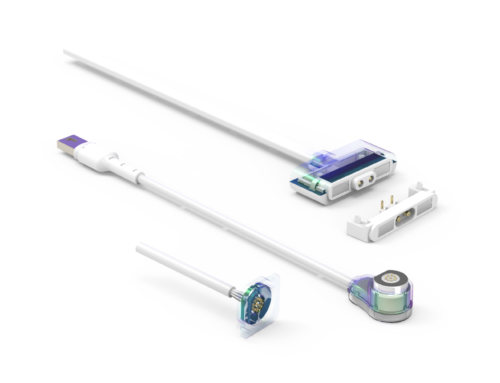
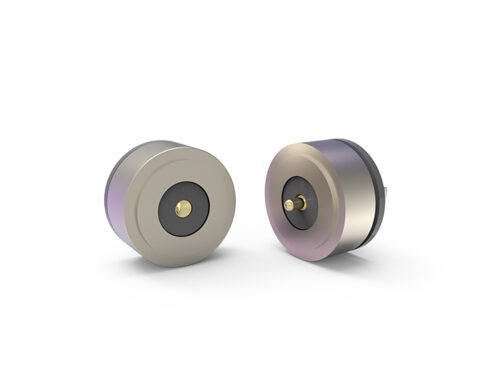
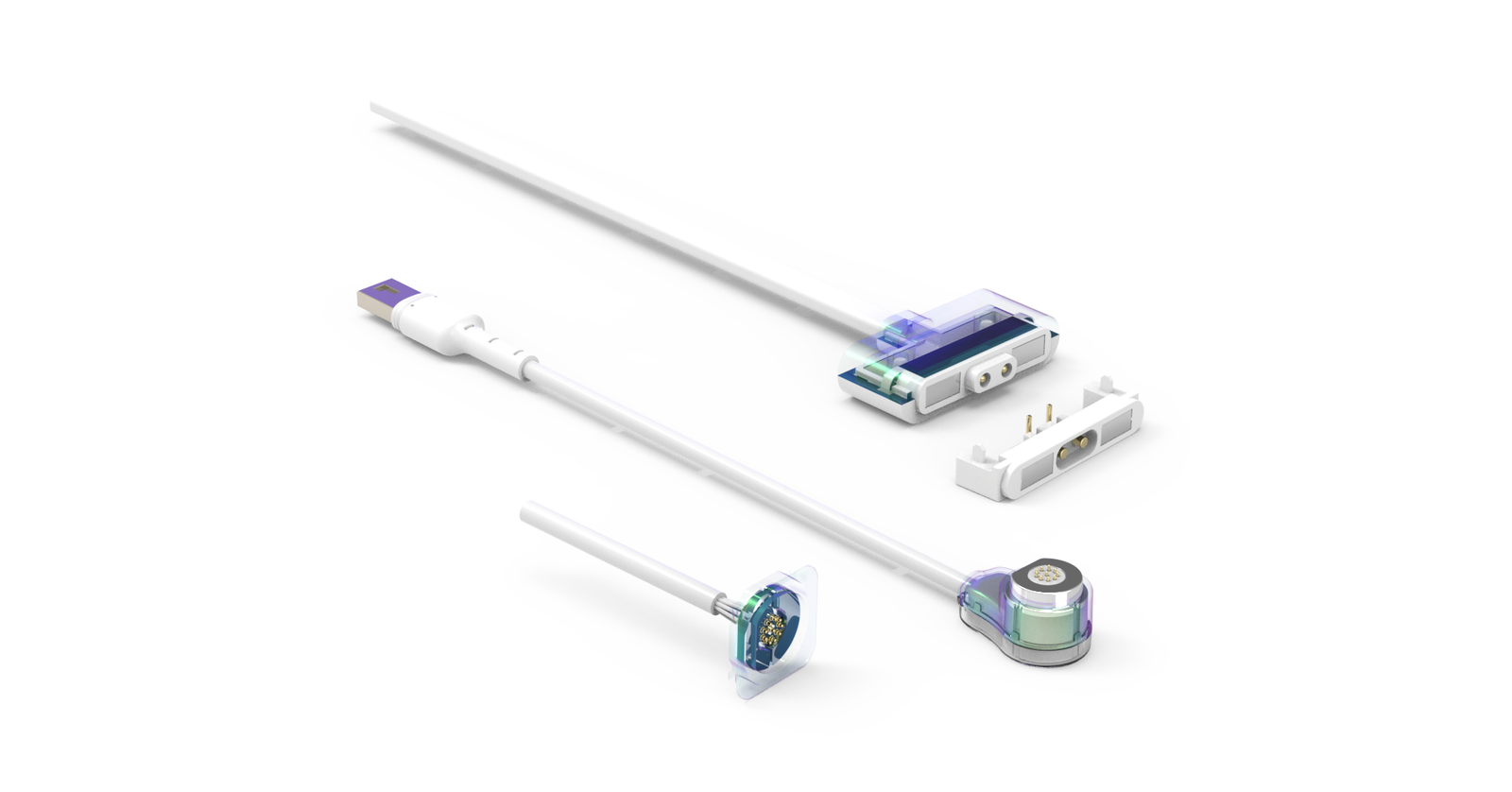
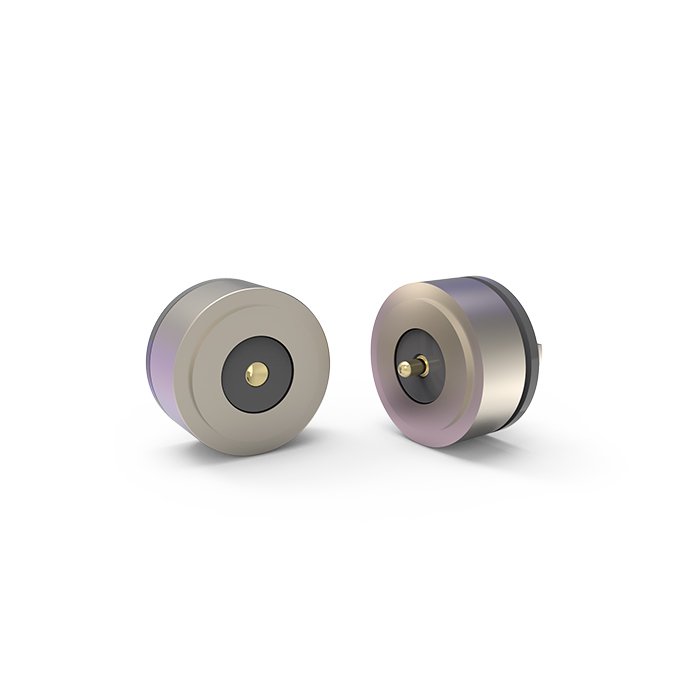
Spring-loaded connectors, or pogo pins, are compact interconnects built from three core parts: a barrel, a plunger, and an internal spring. When compressed, the spring maintains constant contact pressure, which allows the connector to transmit power, data, or signal reliably even under vibration, movement, or repeated mating cycles.
Their small footprint and durability make them indispensable in:
- Wearable devices such as smartwatches and smart rings
- True wireless earbud (TWS) charging cases
- Point-of-sale (POS) payment terminals
- AI glasses and other emerging smart devices
- Robotics and automated equipment
- Medical and industrial diagnostic tools

Because these applications often require thousands of mating cycles, moisture resistance, and stable low-resistance contact, the manufacturing tolerances involved are tight. A poorly sourced connector — even one that looks identical on a datasheet — can introduce intermittent connections, corrosion, or premature wear that’s difficult to diagnose after the product ships. This is precisely why sourcing reliability matters more for connectors like these than it might for larger, more forgiving components. You can browse a full range of engineered options on CFE Connector’s pogo pin connector product line to see how these design variables translate into real part specifications.
Key Stages of Sourcing Electronic Components Reliably
1. Define Electrical and Mechanical Requirements Early
Before contacting any supplier, nail down current rating, working height, stroke length, contact resistance, and expected mating cycle life. Spring-loaded connectors are often application-specific, so vague specifications lead to costly redesigns later.
2. Vet Manufacturing Capability, Not Just Price
A low unit price means little if a supplier can’t hold tolerance across production runs. Ask about in-house tooling, plating processes (gold vs. nickel), and whether the manufacturer can support both standard and custom pin designs — including SMT, DIP, right-angle, and solder cup mounting styles.

3. Confirm Quality Certifications
Reliable suppliers should be able to demonstrate compliance with recognized quality and environmental standards. This is especially important for connectors headed into automotive, medical, or industrial applications where failure isn’t an option.
4. Test Samples Under Real Operating Conditions
Datasheets tell part of the story. Before committing to a supply agreement, test samples under the vibration, temperature, and humidity conditions your product will actually face.
5. Evaluate Supply Chain Resilience
Ask about lead times, minimum order quantities, and whether the supplier has redundant manufacturing capacity. A supplier with a single production line is a single point of failure for your entire product.
6. Build a Long-Term Relationship, Not a One-Time Purchase
Connectors that perform well in prototype runs need to perform identically at scale. Working with a manufacturer that supports you from prototyping through mass production reduces the risk of last-minute requalification.
Common Challenges When Sourcing Spring-Loaded Connectors
Even experienced buyers run into friction points when sourcing pogo pin connectors:
- Inconsistent plating quality leading to increased contact resistance over time
- Spring force variance between production batches, which affects mating reliability
- Limited customization from suppliers who only offer catalog parts
- Long lead times for non-standard designs
- Insufficient environmental protection for outdoor, wearable, or waterproof applications

Working with a manufacturer that controls its own tooling and production — rather than outsourcing to third parties — significantly reduces these risks, since design changes and quality checks stay in-house rather than passing through multiple intermediaries.
What to Look for in a Reliable Pogo Pin Connector Supplier

When evaluating potential partners in the electronics supply chain, prioritize suppliers who offer:
- A broad catalog of mounting styles (SMT, DIP, solder cup, right-angle) alongside custom design capability
- High-current options for applications demanding up to 30A
- Waterproof and dust-resistant variants for wearables and outdoor equipment
- Documented certifications and traceable quality control processes
- Responsive engineering support for custom or non-standard designs
- Proven experience across industries — consumer electronics, medical, automotive, and industrial
CFE Connector’s spring-loaded connector solutions are engineered to address exactly these requirements, offering both standard and fully custom pogo pin designs manufactured under controlled, certified processes.
Real-World Applications Driving Demand
The rise of compact, connected devices has pushed demand for spring-loaded connectors higher than ever. A few examples show why:
- Wearables: Smartwatches and smart rings rely on pogo pins for daily charging cycles that must withstand years of repeated docking.
- TWS Earbuds: Charging cases use tiny, precisely positioned pogo pins to make reliable contact every time the earbuds are placed inside.
- POS Terminals: Payment devices need connectors that hold up under constant handling and frequent docking/undocking in retail environments.
- Robotics: Automated systems depend on connectors that maintain contact integrity despite continuous motion and vibration.
- AI Glasses: As wearable AI devices grow, ultra-compact, low-profile connectors are becoming essential for charging and data transfer in increasingly small form factors.

Each of these use cases demonstrates why “good enough” sourcing isn’t good enough — the connector has to perform flawlessly, cycle after cycle, in the exact environment the product will live in.
The Role of Certification and Quality Assurance

A trustworthy link in the electronics supply chain will always be able to show its work. Reliable connector manufacturers document material sourcing, plating thickness, spring force testing, and environmental resistance ratings, and they maintain certifications that verify their processes meet recognized industry benchmarks — similar to the standards maintained by organizations like IPC, which sets widely recognized guidelines for electronics manufacturing quality. Asking a supplier for this documentation upfront — rather than after a failure occurs — is one of the simplest ways to reduce sourcing risk.
Why Partner with CFE Connector
CFE Connector has spent years focused specifically on spring-loaded connector design and manufacturing, offering a full range of mounting styles, current ratings, and waterproof options to match nearly any application. Whether you need a standard catalog part or a fully custom pogo pin engineered to your product’s exact constraints, their pogo pin connector solutions are built to support both prototyping and full-scale production — with the documentation and quality control that reliable sourcing demands.
FAQs
Q1: What is a spring-loaded connector used for?
Spring-loaded connectors (pogo pins) are used to create reliable electrical connections in compact spaces, commonly for charging, data transfer, and signal transmission in wearables, earbuds, POS devices, and industrial equipment.
Q2: How do I know if a pogo pin supplier is reliable?
Look for documented quality certifications, in-house manufacturing and tooling capability, sample testing support, and a track record across multiple industries rather than a single niche application.
Q3: Can spring-loaded connectors handle high current applications?
Yes. Specialized high-current pogo pin designs can support ratings up to 30A, making them suitable for power delivery in industrial and high-drain consumer devices.
Q4: Are spring-loaded connectors customizable?
Most reputable manufacturers offer both standard catalog parts and fully custom designs, adjusting pin size, spring force, plating, and mounting style to match specific product requirements.
Q5: Why does the electronics supply chain matter for small components like connectors?
Because even small components can become a bottleneck. A delay or quality issue with a single connector type can stall an entire production run, making reliable sourcing just as critical for small parts as it is for major components.
Conclusion
The electronics supply chain is only as strong as its weakest link — and for many devices, that link is a component as small as a spring-loaded connector. Understanding how sourcing works, what to look for in a manufacturer, and why certification and testing matter puts engineers and procurement teams in a far stronger position to avoid costly delays and reliability issues down the line. For teams looking to source dependable, application-specific spring-loaded connectors, exploring CFE Connector’s pogo pin connector range is a solid starting point for building a resilient, reliable supply chain from the ground up.