Pogo Pin Test Probes vs. Standard Pogo Pin Connectors: Which Do You Need?
Meta Description: Compare pogo pin test probes vs. standard pogo pin connectors—design, lifespan, and best use cases—to choose the right spring contact.
Introduction
If you’ve ever shopped for spring-loaded contacts, you’ve probably run into two terms that sound almost identical but do very different jobs: pogo pin test probes and standard pogo pin connectors. Both use the same core mechanism — a spring-loaded plunger housed in a barrel — but they’re engineered for opposite goals. One is built to survive millions of quick, light touches during electronic testing. The other is built to stay connected for years, carrying real power and signal inside a finished product.
Choosing the wrong one doesn’t just hurt performance — it can mean failed connections, voided warranties, or products that don’t pass certification. In this guide, we’ll break down exactly how pogo pin test probes and standard pogo pin connectors differ, where each one belongs, and how to decide which fits your project. If you’re currently sourcing spring-loaded connectors for a new design, CFE Connector’s pogo pin connector lineup is a good place to see the range of standard options available.
What Are Standard Pogo Pin Connectors?
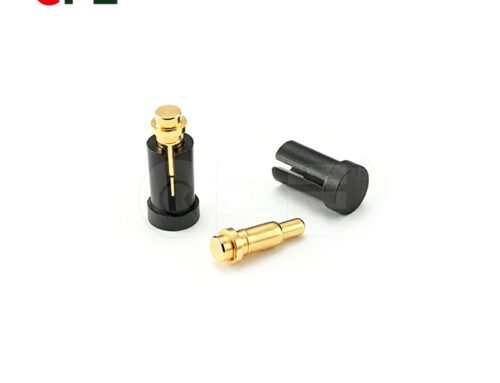
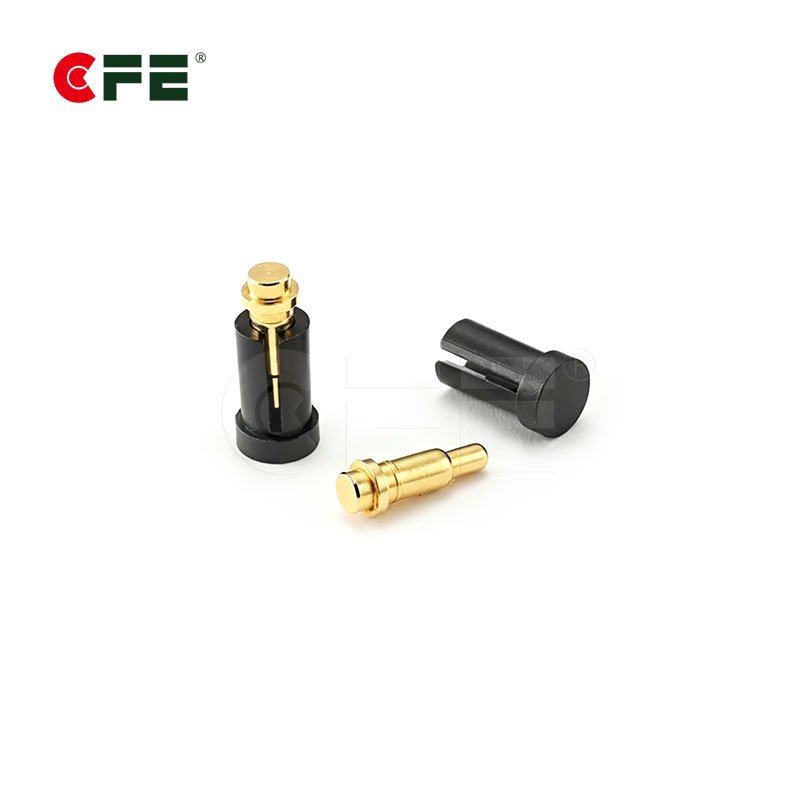
Standard pogo pin connectors are the spring-loaded contacts built directly into a finished electronic product. Think of the charging pins on the back of a smartwatch, the contact pads inside a TWS earbuds case, or the docking pins on a POS payment terminal. These connectors are designed for long-term, in-product use — they stay in the device for its entire service life, often mating and unmating thousands or tens of thousands of times as the user plugs in, docks, or charges the product.

Because they live inside a shipped product, standard connectors are optimized for:
- Durability under repeated use — rated for 10,000 to 100,000+ mating cycles depending on the design
- Stable current and signal transfer — contact resistance typically held under 30 mΩ
- Environmental resistance — many are built to IP67/IP68 waterproof and dustproof ratings
- Manufacturing efficiency — designed for SMT reflow, through-hole (DIP), or wire-mount (solder cup) assembly at scale
Types of Standard Pogo Pin Connectors
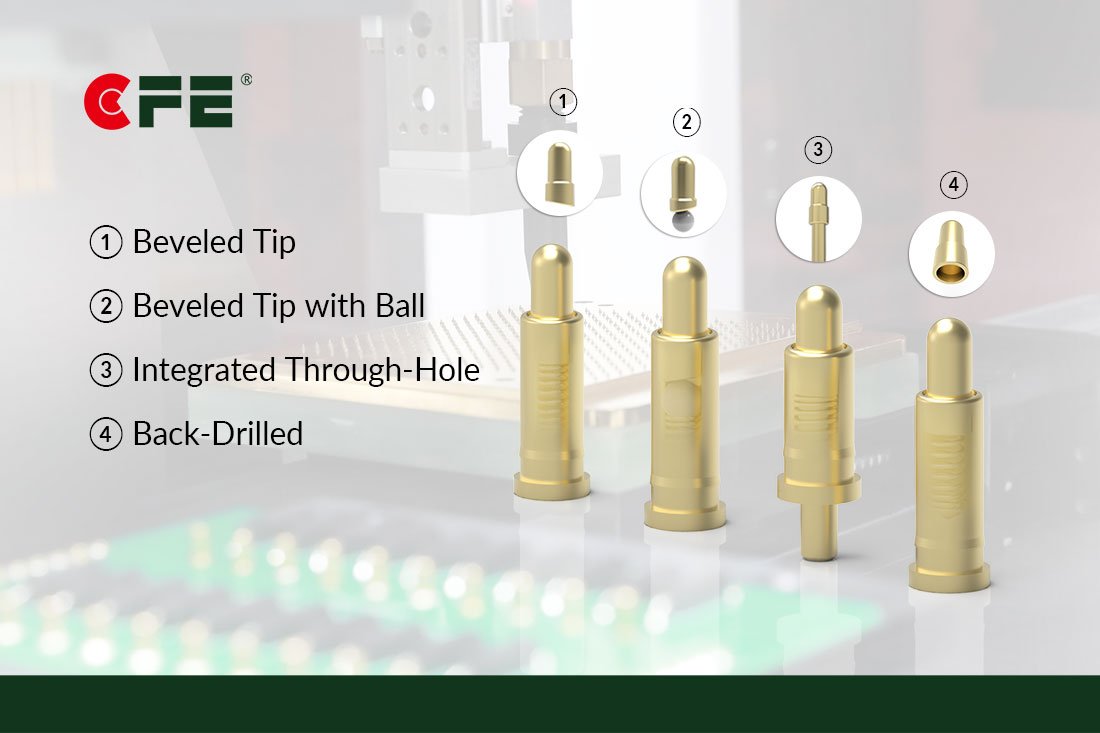
- SMT (surface mount) connectors — reflow-soldered directly onto a PCB, ideal for compact wearables and consumer devices
- DIP (through-hole) connectors — offer stronger mechanical retention for boards that see more mechanical stress
- Solder cup connectors — terminate to a wire for flexible cable assemblies
- Right-angle connectors — save vertical space in thin, space-constrained enclosures
- High-current connectors — rated from 5A up to 30A per pin for fast-charging and power-delivery applications


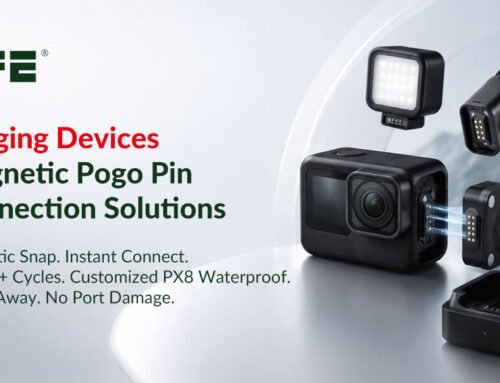
These connectors show up everywhere: charging cradles for smartwatches and smart rings, battery contacts in TWS earbuds cases, docking interfaces in POS terminals, board-to-board links in 5G small-cell equipment, and joint contacts in robotics and AI smart glasses.
What Are Pogo Pin Test Probes?
Pogo pin test probes, on the other hand, are never meant to live inside a finished product. They’re a testing tool — mounted in a bed-of-nails fixture, in-circuit test (ICT) jig, or burn-in socket — used to make temporary electrical contact with a PCB or component so engineers can verify it works before it ships.
Test probes are optimized for a completely different set of priorities:
- Extremely fine pitch — many probes are designed to land on pads spaced under 0.5 mm apart, since test points on modern PCBs are packed tightly together
- Very short stroke and low contact force — this protects delicate pads from damage during thousands of rapid test cycles
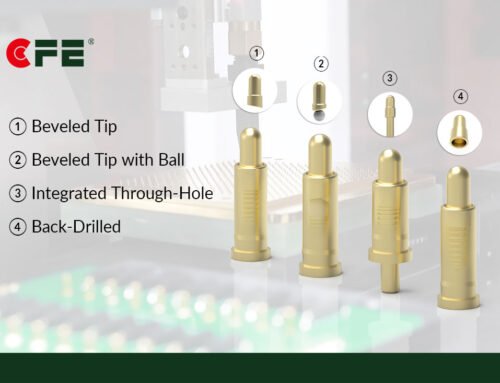
- High-frequency reliability — probe tips (often crown, cone, or spear-shaped) are engineered to punch through oxide layers and flux residue for a clean, low-resistance reading every time
- Fixture compatibility — designed to be pressed into a probe plate or receptacle, not soldered permanently into a product
Test probes typically aren’t built for high current or long-term environmental exposure, because they’re only in contact with the board for a fraction of a second during a test cycle, inside a controlled factory environment — not out in the field on a consumer’s wrist or in their pocket.
Pogo Pin Test Probes vs. Standard Connectors: Side-by-Side Comparison
| Feature | Pogo Pin Test Probes | Standard Pogo Pin Connectors |
|---|---|---|
| Primary purpose | Temporary testing/verification | Permanent in-product connection |
| Installation | Pressed into a test fixture or socket | Soldered (SMT/DIP) or wired (solder cup) into the product |
| Typical pitch | Ultra-fine (down to 0.3–0.5 mm) | Standard to fine pitch depending on application |
| Contact force/stroke | Low force, short stroke for delicate pads | Higher force, longer stroke for stable long-term contact |
| Current handling | Low current, signal-level | Ranges from milliamps up to 30A |
| Cycle life | Very high cycle counts in a lab setting, but not built for field durability | 10,000–100,000+ real-world mating cycles |
| Environmental sealing | Not required — used indoors, in test fixtures | Often rated IP67/IP68 for waterproof, dustproof use |
| Where you’ll find them | ICT fixtures, burn-in boards, bed-of-nails testers | Wearables, TWS cases, POS terminals, robotics, 5G equipment |
Real-World Applications: Where Each One Fits
Standard pogo pin connectors are the ones actually built into the products you use every day:
- Consumer electronics & wearables — smartwatches, smart rings, and TWS earbud cases rely on compact SMT pogo pin connectors for daily charging, often rated for 10,000+ mating cycles
- POS and payment terminals — docking stations use higher-force, higher-cycle-life pogo pins to survive constant docking and undocking in retail environments
- Robotics and AI hardware — modular robotic joints and AI smart glasses use pogo pins for quick-swap battery packs and sensor modules
- 5G and RF equipment — high-current and through-hole pogo pins handle board-to-board power and signal transfer in small-cell base stations


Pogo pin test probes, by contrast, stay behind the scenes on the factory floor — verifying that the PCBs going into those same wearables, terminals, and 5G modules actually work before they’re assembled into a final product.
How to Choose the Right One
Ask yourself these three questions:
- Will this pin stay in the final product, or is it only used during manufacturing/QA? If it ships with the product, you need a standard connector. If it’s only used to test a board before assembly, you need a test probe.
- How much current or signal bandwidth does it need to carry? Standard connectors are built to handle real operating current — sometimes up to 30A. Test probes are generally limited to low-current, signal-level verification.
- How many mating cycles does it need to survive, and in what environment? A charging connector needs to survive years of use, possibly with water and dust exposure. A test probe just needs to survive thousands of rapid test cycles indoors, in a controlled fixture.
If your project needs a connector that will live inside the shipped device — for charging, power delivery, or board-to-board connection — a standard pogo pin connector is the right call. If you’re building or sourcing a test fixture for PCB validation, you need a dedicated test probe, which is a different product category entirely.
Why Choose CFE Connector for Standard Pogo Pin Connectors
CFE Connector manufactures a full range of standard pogo pin connectors — SMT, DIP, solder cup, right-angle, and high-current (up to 30A) — engineered for consumer electronics, wearables, POS systems, robotics, and 5G equipment. Every connector is produced under recognized quality systems, including ISO9001, ISO13485, and IATF16949 certification, so you can be confident the pins in your product will perform reliably across their full rated cycle life.

If your design needs a durable, field-ready connector rather than a lab testing probe, explore CFE Connector’s pogo pin connector range to find the right configuration for your application, or visit the CFE Connector homepage to see the company’s full product catalog.
For a general technical overview of how spring-loaded pin mechanisms work, the Wikipedia entry on pogo pins is a useful external reference.
FAQs
Q1: Can a pogo pin test probe be used as a permanent connector?
Not recommended. Test probes are engineered for low-force, high-frequency temporary contact in a fixture — they’re not rated for the current levels, cycle life, or environmental exposure a finished product needs.
Q2: Can a standard pogo pin connector be used in a test fixture?
Technically it can make contact, but it won’t match the fine pitch, short stroke, or probe-tip geometry that test fixtures require for accurate, repeatable readings on densely packed PCB test points.
Q3: Which one costs more — test probes or standard connectors?
It depends on volume and specification. Test probes are often sold per-piece for fixture assembly, while standard connectors are typically priced for mass production and integrated directly into a bill of materials.
Q4: How do I know what current rating I need for a standard pogo pin connector?
Check your device’s charging or power-delivery specification. Low-power wearables may only need milliamp-level contacts, while fast-charging devices or power-delivery applications can require connectors rated up to 30A.
Q5: Do standard pogo pin connectors come in waterproof versions?
Yes. Many standard connectors, especially those used in wearables and outdoor equipment, are available with IP67/IP68-rated sealing to resist water and dust ingress.
Conclusion
Pogo pin test probes and standard pogo pin connectors share a similar spring-loaded mechanism, but they’re built for entirely different jobs. Test probes exist to verify a board works before it ships — optimized for fine pitch, low force, and rapid indoor testing. Standard pogo pin connectors exist to keep a finished product connected for years — optimized for durability, current handling, and real-world environmental exposure. Once you know which role your application falls into, choosing the right connector type becomes straightforward. For standard pogo pin connectors across SMT, DIP, solder cup, right-angle, and high-current configurations, CFE Connector’s pogo pin connector page is a solid starting point for finding the right fit for your next design.