Every charging interface is a trade-off between reliability, user experience, size and cost. Two of the most common options in compact electronics are magnetic connectors and pogo pin connectors. They are often described as rivals, but in practice they solve different problems, and in many products they work together. This guide explains how each one works, where each excels, and how to choose the right interface for your device. If you are still shortlisting options, you can also browse our full range of pogo pin connectors.
What Is a Pogo Pin Connector?
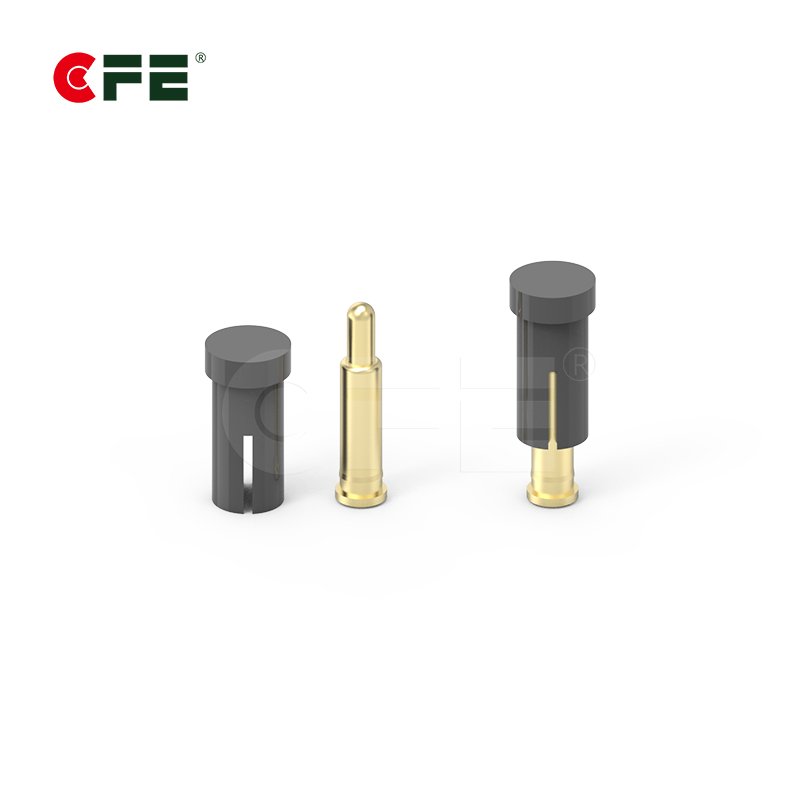
A pogo pin is a spring-loaded electrical contact. A small plunger sits inside a barrel, and an internal spring pushes it against a mating pad. That constant spring force keeps the contact stable through vibration, small misalignments and repeated use. You can read the general background on pogo pin technology if you want the historical context.
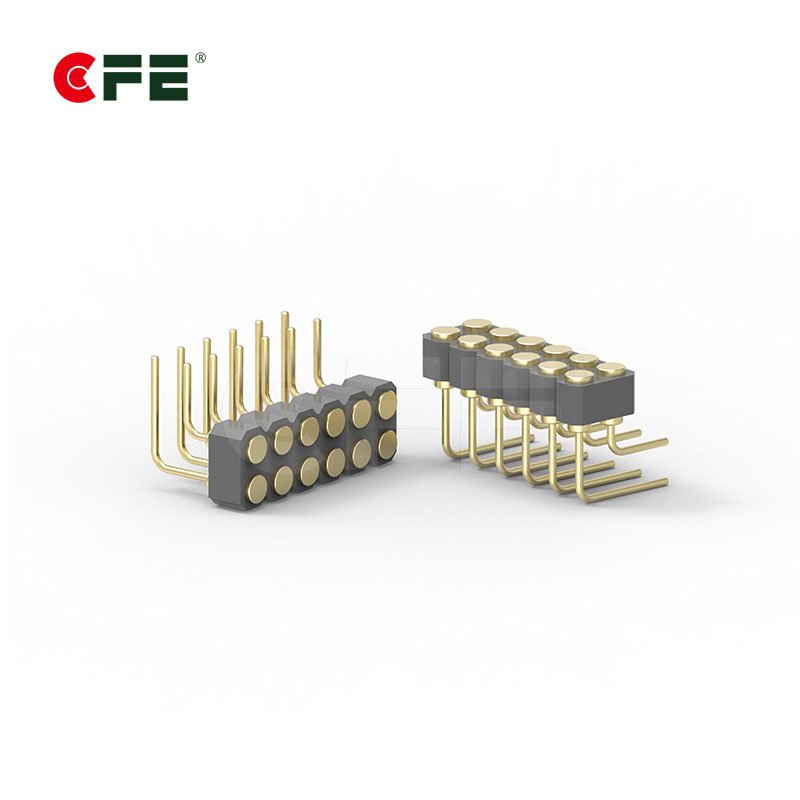
Standard pogo pin connectors are held together mechanically, by a clip, a screw, a cradle or the housing of the device itself. They are popular in board-to-board links, test fixtures, docking cradles and wearables because they are compact, low-profile and easy to customize by pitch, pin count and stroke.
What Is a Magnetic Connector?
A magnetic connector adds a magnet to the interface so that the two halves pull themselves into place. In most modern designs, the electrical path is still a set of pogo pins. The magnet does not carry current; it aligns the parts and holds them together with a defined pulling force.
That is why the “versus” question is a little misleading. The real comparison is between a pogo pin interface that relies on mechanical retention and a magnetic pogo pin interface that uses magnetic retention. CFECONN builds both, and the difference shows up in how people use the finished product.

Quick Comparison Table
| Factor | Standard pogo pin connector | Magnetic pogo pin connector |
|---|---|---|
| Mating method | Mechanical (clip, cradle, screw) | Magnetic self-alignment |
| User effort | Requires correct placement | Snaps into position |
| Breakaway protection | Depends on housing design | Detaches under a strong pull |
| Polarity handling | Fixed orientation | Can be keyed by magnet polarity |
| Best for | Internal and fixed connections | External charging and frequent mating |
Alignment and User Experience
For consumer devices, ease of connection matters more than most engineers expect. A magnetic interface guides the plug to the correct position automatically, so users do not need to look at the port, find the direction or force a connection. This is why so many smartwatches, fitness bands and earbud cases use it.
CFECONN’s 2 pin magnetic pogo pin connector with USB cable (CMA-0021) is a good example. It is designed around automatic adsorption, so the cable finds its position without any precise insertion.
A standard pogo pin interface can also feel effortless when the device drops into a cradle, but it depends on the cradle geometry. If the geometry is loose, alignment suffers.
Electrical Performance: Current, Voltage and Contact Resistance
Electrical capability depends mostly on the pin design, not on whether a magnet is present. Pin diameter, plating, spring force and pin count determine how much current the connector can carry and how low the contact resistance stays.
Published CFECONN specifications show the range available in magnetic designs. The round 2 pin magnetic connector (MXA0002) is rated at DC 24 V and 3 A, while smartwatch-oriented cables such as CMA-0021 are rated at 12 V and 1 A. Contact resistance is listed at 50 milliohm maximum on these parts. The 4 pin magnetic pogo connector (MXA0025) adds extra contacts for charging plus signal or data lines.
If your product needs higher current, more pins or a custom pitch, either interface can be engineered for it. What changes is the mechanical space you need for the magnet.
Durability and Cycle Life
Cycle life is where a well-made connector proves itself. Frequent plugging is normal for a wearable that charges every day, so the contact must survive thousands of insertions without a rise in resistance.
Listed life tests on CFECONN magnetic connectors include 20,000 cycles for the smartwatch cables and 50,000 cycles for the round 2 pin model. Magnetic mating can actually reduce wear, because there is no forced insertion and no side loading from an off-angle plug. Gold-plated contacts further protect against oxidation during long service.
Water, Dust and Corrosion Resistance
Sealed housings are a major advantage of both interfaces. With no open socket, there is nothing for sweat, dust or moisture to collect in. Magnetic designs make sealing simpler, because the connection surface can be flat and closed.
The MXA0002 is listed at IP68, and CMA-0021 is listed with a 48-hour salt-spray test for anti-corrosion performance. For medical and wellness devices, a medical pogo pin magnetic connector is built for stable power and easy use by people who may struggle with a small port.

Size, Design Freedom and Cost
Standard pogo pin connectors are usually the smaller and cheaper option. There is no magnet, no magnet housing and no polarity design to consider. In very tight internal spaces, such as connecting two boards inside a wearable, a plain pogo pin is often the right answer.
Magnetic versions cost more and need extra volume, but they return that investment in user experience, easier assembly and breakaway safety. If a cable is tugged, the magnet releases before the device or the cable is damaged. That protection is valuable for consumer products and for shared or clinical equipment.
Which Applications Suit Each Interface?
Choose a standard pogo pin connector when:
- The connection is internal, such as board-to-board or module-to-module.
- Space is extremely limited and the parts are held by a housing.
- The device is docked in a fixture or test jig with fixed geometry.
Choose a magnetic pogo pin connector when:
- Users plug and unplug the device every day, as with smartwatches and earbuds.
- You want breakaway protection and a sealed, flat charging surface.
- The product is used by people who need a forgiving connection, including home healthcare devices.
- You need reliable charging in LED lighting, smart home products, VR equipment or electronic locks.
You can see more configurations in our spring-loaded magnetic connector range.

How to Choose: A Six-Question Checklist
- How often will it be mated? Daily charging favors a magnetic design.
- What current and voltage do you need? Confirm the rating before choosing a pin count.
- Does it need to be waterproof? Ask for the IP rating and salt-spray results.
- How much space do you have? Magnets need volume; plain pogo pins need less.
- Who is the user? Older users and children benefit from self-aligning designs.
- What is your target cost and volume? Customization is available for both, and volume changes the economics.
FAQs
Are magnetic connectors and pogo pin connectors the same thing?
Not exactly. A pogo pin is the spring-loaded contact. A magnetic connector uses magnets to align and hold the mating parts, and it usually uses pogo pins as the contacts.
Do magnets interfere with electronics or batteries?
Properly engineered magnetic connectors use small NdFeB magnets in controlled positions. Placement and shielding are part of the design, so share your device layout with the engineer early.
Can magnetic pogo pin connectors be waterproof?
Yes. Sealed designs can reach high ratings, such as the IP68 listed for the CFECONN MXA0002. Always check the rating for the specific part number.
How many cycles can a magnetic pogo pin connector last?
It depends on the model. CFECONN lists 20,000 to 50,000 cycles across several magnetic series, tested to the stated stroke and force.
Can CFECONN customize the connector for my product?
Yes. Pin count, pitch, magnetic force, cable length and plating can be customized to your requirements.
Conclusion
Magnetic connectors and pogo pin connectors are not opposing technologies. Pogo pins provide the compact, spring-loaded electrical contact; magnets add self-alignment, breakaway safety and an easier experience for the user. For internal links and fixed docks, a standard pogo pin is often the most efficient choice. For external charging that people repeat every day, a magnetic pogo pin interface usually wins.
Ready to specify your interface? Explore our pogo pin connectors or contact the CFECONN engineering team for a custom solution.