If you buy or specify pogo pins, you will get this question eventually, usually from a service team or a contract manufacturer. A test fixture is reading intermittently, or a charging dock has gone flaky. Someone suggests cleaning the pins, and someone else suggests an abrasive. That second suggestion is how a fixable problem becomes a scrapped batch.
This guide covers how to clean pogo pins without damaging the plating that makes them work. It is written for B2B buyers, so it also covers when to clean, when to replace, and what to ask your supplier.
What is the safest way to clean pogo pins?
The safest way to clean pogo pins is to wipe the contact tip with a lint-free swab lightly dampened with high-purity isopropyl alcohol, loosen debris with a soft non-metallic brush, and let the pin dry fully before use. Avoid abrasives, steel tools and aggressive solvents, because they can remove the thin plating layer.
That answer covers most routine cases. The rest of this article explains why it works and where it stops working.
Why plating is the part you are protecting
Pogo pins are usually plated with a thin layer of gold over a nickel underlayer, and the gold is what keeps contact resistance low and stable. Cleaning should remove contamination without wearing through that layer.
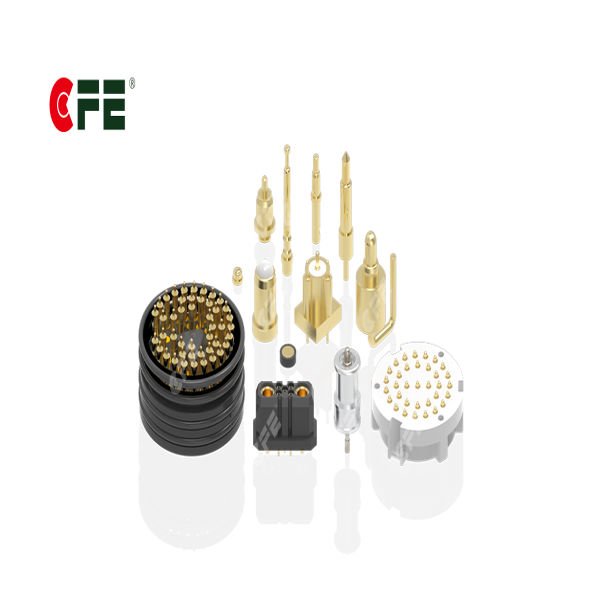
A pogo pin is a small spring-loaded assembly: a plunger, a barrel and a spring. The metal underneath is typically a copper alloy. The surface that touches your board or mating pad carries a plated finish, most often gold.
Gold does not tarnish the way other metals do, so the contact stays conductive. It is also very thin. Typical gold thicknesses on connector contacts are measured in microinches or fractions of a micron. That figure is general industry guidance, so check the exact plating specification on your own drawing or datasheet.
Once the gold wears through, the nickel or base metal beneath is exposed. Those metals oxidise, resistance climbs, and the signal gets noisy. Aggressive cleaning can speed this up, because the plating is often the only thing standing between a working pin and a failing one.
CFE lists gold-plated options in its range, such as the 2A SMD pogo pin with gold plating. Always confirm the plating on the specific part number you are cleaning.
What actually contaminates pogo pins?
The most common contaminants are flux residue, skin oils, dust, oxidation films and wear debris from repeated mating. The right cleaning method depends on which one you are dealing with.
Not all dirt is equal. Identifying what is on the pin keeps you from reaching for a stronger cleaner than you need.
| Contaminant | Where it comes from | Typical look | Cleaning approach |
|---|---|---|---|
| Flux residue | Soldering, rework | Sticky or crusty film near the base or barrel | Isopropyl alcohol and a soft brush |
| Skin oils | Handling without gloves | Faint smear on the tip | Lint-free swab with isopropyl alcohol |
| Dust and fibres | Assembly and storage | Loose particles around the plunger | Gentle compressed air, then brush |
| Oxidation or tarnish film | Humidity, sulfur-bearing air, worn plating | Dull or darkened tip | Light solvent wipe; if it persists, suspect wear |
| Wear debris | Repeated contact with the mating pad | Dark grit around the tip | Brush and wipe; inspect for plating wear |
If the tip looks dark and a solvent wipe does not change it, stop. That is often a sign the plating is already worn, and more cleaning will not help.
Should you clean the pin at all?
Clean a pogo pin only when contamination is confirmed or strongly suspected. If the plating is worn, the plunger is sticking or the spring has lost force, replacement is the correct fix.
Cleaning is cheap, so it is tempting to treat it as the default response to every intermittent contact. It is better to confirm the symptom first.
Ask these questions before you pick up a swab:
- Is contact resistance high, or only inconsistent?
- Is the problem on one pin or across the whole fixture?
- Does the plunger move freely and return fully?
- Is the tip visibly worn, flattened or discoloured?
- Has the pin reached the cycle count your application expects?
A sticking plunger usually points to debris inside the barrel or a damaged spring, not a dirty tip. Surface cleaning will not fix either. If a whole fixture shows the same symptom, the cause may be the mating pad finish or the spring force, not contamination on the pins.
For background on what a long service life depends on, see our comparison of pogo pins and leaf spring contacts.
Which tools and materials are safe for plated contacts?
Safe tools are non-abrasive and non-metallic: lint-free swabs, soft nylon or ESD-safe brushes, clean-room wipes and filtered compressed air. Safe solvents are high-purity isopropyl alcohol, ideally 90% or higher, which evaporates without leaving a film.
A short kit covers nearly every case:
- Lint-free foam or polyester swabs
- Soft nylon or ESD-safe brush
- Isopropyl alcohol, high purity
- Filtered, dry compressed air
- Magnification of 10x or more, for inspection
- Nitrile gloves
- ESD protection where the product is static-sensitive
Check your own materials list and the pin’s datasheet before you finalise the solvent choice. Some housings and plastics react to solvents that are harmless to the pin itself. That matters on connectors where the pins sit inside moulded plastic.
How do you clean pogo pins step by step?
Power down, inspect, brush off loose debris, wipe with a lightly dampened swab, let the pin dry, then re-inspect and test. Use light pressure throughout.
This is a general workflow, not a replacement for your own process document.
- Power down and discharge. Never clean a live connector. Handle static-sensitive assemblies with proper ESD controls.
- Inspect first. Use magnification and note the condition of the tip. Photograph it if the unit is a returned part, because wear evidence matters later.
- Remove loose debris. Use a soft brush or a short burst of filtered compressed air. Hold the air at an angle so you do not drive particles into the barrel.
- Dampen the swab. It should be damp, not dripping. Excess liquid can wick into the barrel and carry contamination toward the spring.
- Wipe the tip. Use light, short strokes. Rotate the swab as it picks up residue. Do not scrub.
- Clean around the base. Flux residue tends to collect where the pin meets the solder joint or housing.
- Let it dry fully. Wait for the solvent to evaporate before you mate or power the part.
- Cycle and inspect. Press the plunger a few times by hand if the design allows it, then check for smooth travel.
- Test. Measure contact resistance or run your functional test to confirm the result.
If the result is unchanged after one proper cleaning, a second attempt with more force will not help. Move to replacement or root-cause analysis.
What should you never use on pogo pins?
Never use abrasive erasers, sandpaper, steel wire brushes, metal picks, harsh acids, bleach-based cleaners or strong solvents on plated pogo pins. They can strip the plating or leave conductive or corrosive residue.
Some of these look like good ideas. Pencil erasers and fibre-glass pens are common in repair work because they brighten oxidised surfaces quickly. They do that by removing metal. On a thin gold layer, that is the damage you were trying to avoid.
| Method | Why people use it | Risk to plating |
|---|---|---|
| Abrasive eraser or fibre-glass pen | Fast brightening | High; removes plating |
| Sandpaper or emery cloth | Aggressive cleaning | Very high |
| Steel brush or metal pick | Dislodging debris | High; scratches and gouges |
| Acidic or bleach-based cleaners | Dissolving oxidation | High; corrosion and residue |
| Strong solvents such as acetone | Dissolving heavy residue | Moderate; can attack housings and seals |
| Ultrasonic cleaning on assembled connectors | Deep cleaning | Moderate to high; can force fluid into barrels |
Ultrasonic cleaning is sometimes used on bare components in controlled processes. Treat it as an engineering decision with a validated procedure, not a quick fix in the field.
Does the cleaning method change by pin type?
Yes. Mounting style, sealing and design affect how much liquid and force a pin can tolerate. SMT and DIP pins need extra care around solder joints, and sealed designs need care around the seals.
Different formats fail in different ways:
- SMT/SMD pogo pins: Flux residue collects at the base after reflow. Clean around the solder joint without lifting the part.
- DIP pogo pins: Through-hole soldering can leave residue on the underside. Keep solvent away from the plunger side where possible.
- Right angle pogo pins: The contact sits close to the board edge, so brushing direction matters. Avoid pushing debris toward the board.
- Solder cup pogo pins: Wire attachment points can hold residue. Clean the cup area gently.
- Waterproof pogo pins: Seals are part of the design. Harsh solvents can attack them, so check compatibility first. For context on sealing, read Are Pogo Pins Waterproof? IP Ratings Explained for OEMs.
- 5A-30A high current pogo pins: Contamination on a high current contact can generate heat. If you see discolouration or heat marks, investigate the cause instead of only cleaning.
If you are weighing mounting options for a new design, our SMT vs. DIP vs. Right Angle pogo pin comparison covers the trade-offs.
Where does pogo pin contamination matter most?
It matters most in applications with frequent mating, harsh environments or strict reliability needs, such as automotive, medical, wearables, smart home and payment hardware.
CFE serves a range of markets, and each one tends to see a different contamination pattern.
| Market | Typical contamination concern | Related page |
|---|---|---|
| Automotive | Heat, vibration, humidity and road-environment contaminants | Automotive |
| Medical | Cleaning agents, handling oils, strict hygiene routines | Medical |
| Smart bike | Moisture, dust and outdoor exposure | Smart Bike |
| TWS earbuds | Skin oils, sweat and pocket lint at charging contacts | TWS |
| Smart wear | Sweat and frequent docking | Smart Wear |
| Smart home | Dust and long idle periods | Smart Home |
| LED lighting | Heat cycling and dust | LED Lighting |
| POS payment terminal | Heavy daily docking and handling | POS Payment Terminal |
The contamination type listed for each market is general guidance, not a CFE test result. Your own field data will tell you more.
How do you reduce the need for cleaning?
Prevent contamination at the source: control handling and flux, protect the contact area in the design, match the plating to the environment, and set a clear inspection routine.
Cleaning is the last resort in a good process. These are the earlier steps that reduce it:
- Handle with gloves. Skin oils are the easiest contaminant to prevent.
- Control flux. Choose a flux and cleaning process that suits your assembly, and verify residue levels.
- Store properly. Keep parts in sealed, dry packaging until use.
- Design the contact zone. Give debris somewhere to go, and avoid dead pockets around the tip.
- Match plating to the environment. Humid, sweaty or corrosive environments need a deliberate plating choice. Discuss it with your supplier early.
- Define a service interval. Decide when to inspect and when to replace, based on mating cycles and field feedback.
If you are comparing contact technologies for a high-cycle product, see Pogo Pin vs. ZIF Connector: Which Wins for High-Cycle Use?
When should you replace pogo pins instead of cleaning them?
Replace pogo pins when the plating is worn through, the plunger sticks or fails to return, the tip is flattened, or contact resistance stays high after one proper cleaning.
Replacement is the right call in these cases:
- Visible base metal or dark spots on the contact tip
- A plunger that does not return fully
- Contact resistance that stays out of tolerance after cleaning
- Heat marks or discolouration on high current contacts
- A pin that has reached its expected cycle life
From a buyer’s side, repeated cleaning of the same pins is a signal. It may mean the plating spec is wrong for the environment, the spring force is mismatched, or the pin type does not suit the application. At that point it is worth sending a failed sample and the application details to your supplier. You can reach CFE through the Get Quote & Samples page, and our full range is listed on the pogo pin category page.
Conclusion
Cleaning pogo pins safely means removing contamination without touching the plating, which in most cases takes a lint-free swab, high-purity isopropyl alcohol and a light hand.
Key points:
- Confirm the symptom before you clean.
- Use non-abrasive, non-metallic tools.
- Avoid erasers, sandpaper, steel tools and strong solvents.
- Adjust your approach to the pin type and sealing.
- If one proper cleaning does not help, look at wear or design instead.
For buyers, the larger lesson is upstream. Plating choice, handling and environment decide how often anyone has to clean a pin at all.
FAQs
1. Can I use isopropyl alcohol on gold-plated pogo pins?
Yes. High-purity isopropyl alcohol, usually 90% or above, is the standard choice for gold-plated contacts because it removes oils and flux residue and evaporates cleanly. Apply it with a lightly dampened lint-free swab, not by pouring. Check that nearby plastics and seals tolerate it, and let the pin dry fully before use.
2. Can I use a pencil eraser to clean pogo pins?
No. A pencil eraser is abrasive and can remove the thin gold layer, which exposes the nickel underneath. It may brighten the tip at first, but that brightness comes from removing metal. If a pin needs abrasion to look clean, it is usually better to replace it.
3. How often should pogo pins be cleaned?
There is no universal interval. Clean when inspection or test data shows contamination, not on a fixed schedule. High-cycle fixtures and exposed consumer products may need regular inspection. Set the interval from your own field data, and review it if cleaning becomes frequent.
4. Can cleaning fix a stuck or weak pogo pin?
Sometimes, but only if the cause is surface debris or residue. A pin with a damaged spring, bent plunger or contamination inside the barrel generally needs replacement. If the plunger does not return smoothly after one gentle cleaning, stop and replace the pin.
5. How can I tell whether the plating is worn?
Look at the tip under magnification. Worn plating shows dull, discoloured or copper-coloured spots, flattening, or scratches where the base metal shows through. Rising contact resistance that does not respond to cleaning is another sign. Compare against a new pin from the same lot.
Related reading on CFE: SMT vs. DIP vs. Right Angle Pogo Pins · Pogo Pins vs. Leaf Spring Contacts · Are Pogo Pins Waterproof?
Need pogo pins for a demanding application? Request a quote or samples.