Pick up a smartwatch, a rugged handheld or a medical wearable and look at where it fails first. Nine times out of ten the story starts at the charging port. Plugs get yanked at an angle, lint packs into the socket, and seals wear thin from repeated use. So it’s a fair question: would a magnetic charging cable solve those problems, or just swap them for new ones?
We build these connectors, so we’ll be upfront: magnetic cables are not the right answer for every product. This guide walks through the real advantages and the real limits from an engineer’s point of view, so you can decide before you commit to tooling.
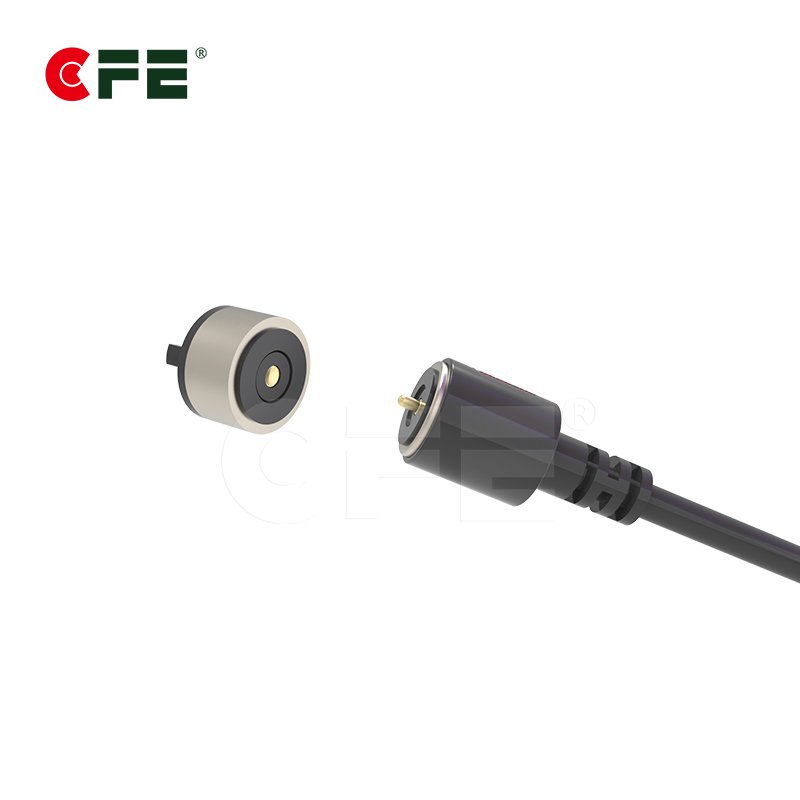
Definition: A magnetic charging cable is a cable that ends in a magnetic connector, a small set of spring-loaded contact pins (pogo pins) held against matching pads by magnets, so the cable snaps into place and releases cleanly when pulled.
| Quick answer |
|---|
| Pros: one-handed connection, break-away protection, a flatter and easier-to-seal device surface, long mating life, and full design freedom. Cons: lower power and data limits than USB-C, sensitivity to debris and moisture on exposed contacts, magnetic interference near sensitive parts, and a non-standard interface that needs planning. |

What Is a Magnetic Charging Cable and How Does It Work?
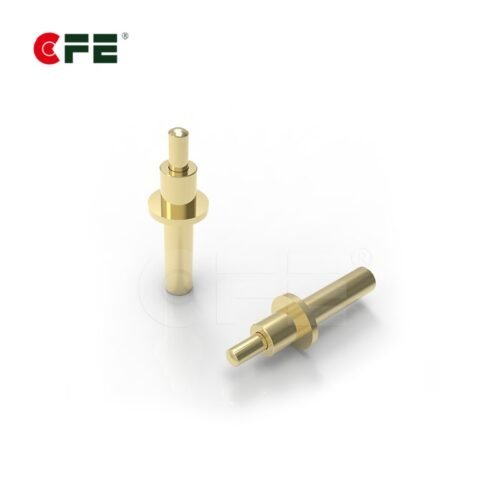
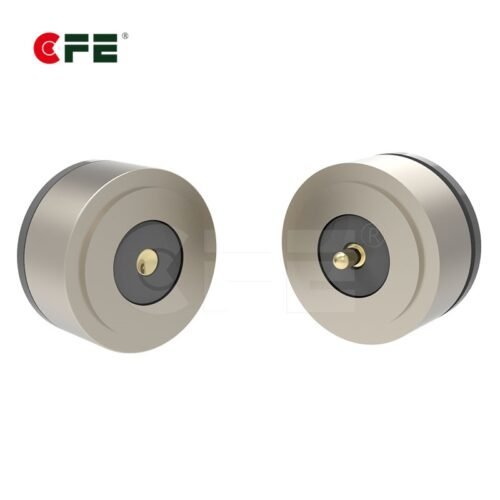
A magnetic charging cable has two halves. The device half sits flush in the product housing and carries contact pads and a magnet. The cable half carries spring-loaded pins and a matching magnet. When the two faces get close, the magnets pull them together, the springs compress slightly, and each pin presses onto its pad. That spring pressure is what keeps the electrical contact steady.
Two details make the design clever. First, the magnets are arranged with set polarity, so the cable only mates one way. You can’t plug it in backwards. Second, the connection is mechanical-light: nothing locks, so a tug releases it. That’s the whole appeal.
It’s worth separating this from wireless charging. A magnetic cable is still a conductive connection, with metal touching metal. That’s why it can carry real current and data, and also why contact quality matters so much. If you want the deeper mechanics, our guide to magnetic connector retention force explains how magnet strength and spring force work together. You can also browse the full magnetic cable range, from 2-pin and 4-pin versions to round magnetic cable connectors.
The Pros of Magnetic Charging Cables
Let’s start with what makes product teams choose them in the first place.
1. Connecting is effortless
Bring the cable near the port and it finds its own position. That sounds minor until you picture a nurse wearing gloves, a cyclist with cold hands, or a user charging in the dark. Anything that removes fiddling reduces returns and bad reviews.
2. Break-away protection
With a conventional plug, a sideways pull can bend the housing, crack solder joints or tear the port off the board. A magnetic connection simply lets go. The cable and the device both survive, which is a big reason magnetic designs show up on products that get tripped over, such as laptops and lamps.
3. A cleaner, easier-to-seal surface
A normal port is a hole. Holes let water, dust and sweat in. A flat pad surface gives designers far more room to build a sealed enclosure. Keep in mind that sealing still depends on gaskets, materials and assembly, and that an IP rating is a tested result, not a promise of the connector type. The IEC explains how IP ratings are defined, and our article Are Pogo Pins Waterproof? covers how that plays out for OEM designs.
4. Long mating life
Pogo pins are built for repeated contact. For reference, the USB Type-C specification calls for a minimum of 10,000 mating cycles, while the CFE CMA-0006 2-pin magnetic connector is listed at 20,000 cycles in its product data. Those are different products, so compare tested figures for your own build, but the point stands: a well-made pogo contact is not the weak link.
5. Design freedom
You pick the pin count, the pitch, the shape, the cable exit and the cable length. A smartwatch needs two tiny pins. A handheld terminal may need power plus data. A custom shape can hide in a curved housing. That flexibility is hard to get from a fixed standard connector.
6. Easy to wipe clean
For medical, wellness and shared-use products, a flat contact face is simpler to disinfect than a deep socket. Your cleaning protocol still has to be validated against the materials you choose.
The Cons You Should Plan For
Now the honest part. Most of these are design challenges rather than deal-breakers, but ignoring them is how projects go wrong.
1. Power and data limits
Every pin has a current rating, and a magnetic connector is only as capable as its pins and contact area. A 2-pin smartwatch connector and a high-current industrial connector are very different parts. If you need serious power, look at dedicated 5A-30A magnetic connectors rather than assuming a small cable will stretch. Data works too, but speed and protocol support depend on pin count and signal design, and you shouldn’t expect it to match a full USB-C link.
2. Exposed contacts collect trouble
Open pads can pick up lint, dust, sweat and skin oils. Magnets also attract ferrous particles, which can bridge neighboring pins in the wrong environment. Good designs use keep-out spacing, plating that resists corrosion, and smart power sequencing so the contacts only go live once a valid connection is detected. We cover that last point in How to Prevent Short Circuits in Multi-Pin Connectors.
3. The retention force balancing act
Too weak and the cable drops off when the device is nudged. Too strong and users have to wrestle it free, which defeats the break-away benefit. For scale, the CMA-0006 connector lists a magnetic force of 2.5 N. The right number depends on device weight, how it moves, and where the cable hangs.
4. Wet environments need care
Live contacts and moisture don’t mix. If voltage is present on exposed pads while they’re wet, corrosion can follow. Salt exposure makes it worse, which is why plating choice and corrosion testing matter. The CMA-0006 lists a 48-hour salt-spray test, a useful data point to ask any supplier about.
5. Magnetic interference
Magnets create fields. Near a compass, magnetometer, hall sensor or other magnet-sensitive part, that field can cause errors. It’s manageable with placement and shielding, but it needs to be considered early, not after the first prototype.
6. It’s not a universal standard
A USB-C cable works with almost everything. A custom magnetic cable works with your product. That’s fine for a closed ecosystem, but you need a plan for spares, replacements and accessories.

Magnetic vs. Standard Plug-In Cable: Side-by-Side
Here’s the short version, laid out so you can scan it.
| Factor | Magnetic charging cable | Standard plug-in cable |
|---|---|---|
| Connecting | Self-aligning, one hand | Needs orientation and insertion |
| Accidental pull | Releases cleanly | Can strain the port |
| Sealing | Flat surface, easier to seal | Open port to manage |
| Power and data | Set by pin rating and count | Defined by the standard |
| Debris and moisture | Exposed contacts need protection | Contacts sit inside the port |
| Interoperability | Usually custom to your product | Works across brands |
| Customization | High | Limited |
Specs to Check Before You Choose
When buyers compare quotes, the cheapest line item can hide the costliest mistake. These are the specs that separate a solid connector from a risky one.
| Spec | Why it matters | Ask the supplier |
|---|---|---|
| Rated voltage and current | Sets safe charging speed and heat | Is the rating per pin or total? |
| Contact resistance | Lower resistance means less heat and voltage drop | What is the maximum value, and over life? |
| Magnetic and contact force | Controls retention and contact stability | Is it tested at the working stroke? |
| Mating cycles | Predicts service life | How was the cycle test run? |
| Plating and corrosion test | Protects contacts from sweat and salt | What plating and what test duration? |
| Sealing or IP target | Decides where the product can be used | What was actually tested? |
| Cable and strain relief | Most field failures start at the cable exit | Wire gauge, bend test, exit design? |
| Compliance | Needed for market access | RoHS, REACH and other reports? |

Where Magnetic Cables Fit Best, and Where They Don’t
After enough projects, patterns show up. Magnetic cables tend to shine when the user experience and durability matter more than raw charging speed.
- Strong fit: smart watches and other wearables, medical devices that need easy cleaning, handheld terminals, smart home gadgets, LED lighting and tools that get bumped or dropped.
- Possible with careful design: products that see water, sweat or outdoor dust. Sealing, plating and power sequencing do the heavy lifting here.
- Weaker fit: products that need very fast charging or full-speed data on a tiny footprint, or products that must charge from any generic cable a customer already owns.
A good rule of thumb: if your users charge the product daily and mishandle cables, magnetic wins. If they rarely connect it and expect universal accessories, a standard port may serve you better. For a broader comparison, see Magnetic Pogo Connector vs. USB-C vs. MagSafe for OEMs.
Safety and Magnet Considerations
Because this topic touches user well-being, a few cautions belong here. This is general guidance, not medical advice.
- Strong magnets can affect implanted medical devices. Anyone with a pacemaker or similar implant should follow the guidance from their clinician and the device maker.
- Keep magnets away from magnetic-stripe cards, compasses and magnet-sensitive sensors unless the design has been tested.
- Small magnets are a swallowing hazard for young children, so keep loose parts out of reach.
- Always treat charging heat seriously. Match the cable to the rated current and avoid damaged or modified cables.
If you’re designing for a regulated market, validate the final assembly, not just the connector in isolation.
How to Decide: A Practical Buyer’s Process
- Define the load. Write down voltage, peak current and whether you need data. This single step rules out half the options.
- Map the environment. Water, sweat, salt, dust, cleaning chemicals and temperature all change your plating and sealing needs.
- Set the retention target. Think about device weight, motion and where the cable will hang, then test with real units.
- Check magnetic neighbors. List any sensors or magnet-sensitive parts near the port.
- Request test data. Ask for cycle life, contact resistance, corrosion testing and compliance reports.
- Prototype early. Real hands and real pockets reveal problems drawings never will.
If your product doesn’t fit an off-the-shelf part, CFE can build a custom one. Start from the magnetic cable catalog and tell us what you need through the quote and samples page.
Conclusion: Are Magnetic Charging Cables Worth It?
For the right product, yes. Magnetic charging cables deliver easy connection, break-away protection, longer life and a sealed-friendly design. Their limits are just as clear: pin-rated power, exposed contacts that need protection, magnetic fields to manage, and a non-standard interface. The best results come from treating the connector as part of the product design from day one rather than a late purchase. Match the specs to your real use case, ask for test data, and prototype early. Ready to compare options? Browse our magnetic cable connectors or send us your requirements.
Frequently Asked Questions
Are magnetic charging cables safe?
Yes, when they’re designed and rated correctly. Choose a cable with the right voltage and current rating, keep magnets away from implanted medical devices and magnet-sensitive items, and keep small magnets away from young children. Replace any cable that is damaged or runs unusually hot.
Can a magnetic charging cable carry data as well as power?
It can, if the connector has enough pins and the signal path is designed for it. Multi-pin versions can carry power and data together. Expect speed and protocol support to depend on the specific design rather than matching a full USB-C link.
Are magnetic charging cables waterproof?
The cable itself isn’t automatically waterproof. Water resistance comes from the whole product: gaskets, housing and contact design, confirmed by testing against an IP rating. Ask suppliers exactly what was tested and under what conditions.
How long does a magnetic charging connector last?
It depends on the pins, plating and use. As one example, the CFE CMA-0006 is listed at 20,000 mating cycles. Always request cycle test data for the exact part and compare it with your expected daily use.
Can I get a custom magnetic charging cable for my product?
Yes. Pin count, pitch, shape, cable length and cable exit can usually be tailored to the product. Share your voltage, current, environment and size limits through the contact page and our engineers can recommend a starting point.
| Need a magnetic cable for your next product? Send us your voltage, current, environment and size limits, and our engineers will suggest a fit. Get a quote and samples or explore the magnetic cable range. |