A plain-English breakdown of the small spring-loaded connector behind your smartwatch charger, your wireless earbuds case, and thousands of factory test fixtures.

Ever charged a smartwatch on a magnetic dock? Or plugged in a pair of wireless earbuds? Then you’ve used a pogo pin. You just never saw it.
It’s a small part with a big job. It makes sure two surfaces connect electrically, every single time you dock, undock, or re-seat them.
So why does this matter to you? Because once you understand how a pogo pin is built, choosing the right one gets much easier. That’s exactly what we’ll cover here.
What Is a Pogo Pin?
A pogo pin is a spring-loaded electrical connector. It’s built around a metal pin that compresses under pressure and pushes back with steady force.
The name comes from the pogo stick. Push down, and the internal spring resists. It stores energy and keeps constant pressure against whatever it touches.
In electronics, that constant pressure is the whole point. Rigid connectors need a perfect, unchanging fit. Pogo pins don’t.
Instead, they absorb small amounts of misalignment, vibration, and wear. At the same time, they hold a stable connection. That’s why you’ll find them in chargers, test fixtures, and wearables — anywhere something gets plugged in over and over.
Want to see this in a real product line? CFE Connector’s pogo pin connector solutions cover different current, durability, and space requirements.
The Structure of a Pogo Pin
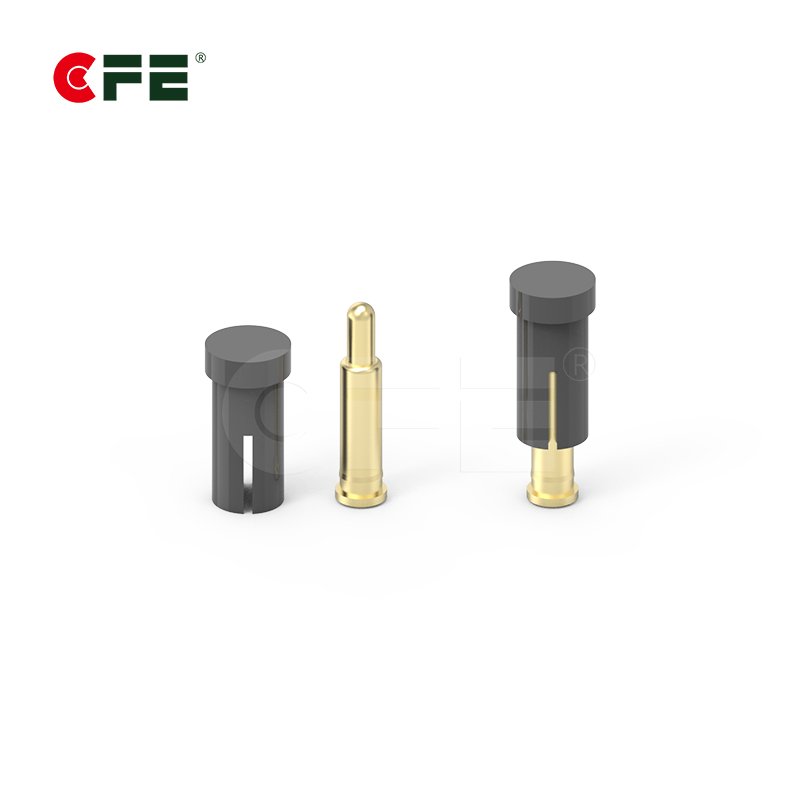
A pogo pin looks simple from the outside. But it’s really a small mechanical assembly with four core parts. Each one does a specific job.

Barrel
The barrel is the outer metal housing. It’s usually machined from brass or stainless steel.
Manufacturers often plate it with gold or nickel. This resists oxidation and lowers contact resistance. The barrel’s diameter and wall thickness set how much force the pin can handle.
Plunger
The plunger makes the actual contact. It sits at the top of the barrel and moves up and down under pressure.
Plungers come in different tip shapes. The right shape depends on what they touch, and how much wear they need to survive.
Spring
The spring gives the pogo pin its name. It’s usually precision-wound stainless steel or beryllium copper.
Engineers calibrate it to a specific force, measured in grams, at a set compression depth. Too weak, and the connection turns unreliable under vibration. Too strong, and it wears down the contact.
Tip Style
The tip is the very end of the plunger — the actual point of contact. It comes in a few common shapes:
- Flat tip — broad, stable contact for larger pads
- Round/dome tip — self-centering, tolerant of misalignment
- Crown tip — multiple contact points, useful in dusty environments
- Sharp/pointed tip — pierces light oxide layers for a cleaner connection
So why does tip shape matter so much? Because it’s one of the most overlooked decisions in connector design. And it directly affects long-term reliability.
How Pogo Pins Work
The working principle is simple mechanically. But it explains why these connectors show up in so many demanding applications.
- Compression. The mating surface — a PCB pad, a charging contact, a test probe — presses against the plunger. This pushes the plunger down into the barrel.
- Spring resistance. The internal spring compresses. It pushes back with calibrated force, keeping the plunger pressed against the contact.
- Electrical continuity. Current flows from the mating surface, through the plunger and spring, then out through the barrel to the circuit.
- Return. Release the pressure, and the spring pushes the plunger back. It’s ready for the next cycle.
This cycle repeats a lot. Often tens of thousands of times — sometimes over a million. That’s exactly why pogo pins get chosen over a soldered joint, anywhere a connection needs to be made and broken repeatedly.
Want more technical depth? DigiKey’s basics of pogo pin connectors article is a solid reference.
Types of Pogo Pins and Mounting Styles
Not all pogo pins are built the same way. The right type depends on the application. It also depends on how the pin attaches to a board or housing.

SMT (Surface Mount) Pogo Pins
SMT pogo pins get reflow-soldered directly onto the PCB surface. This keeps the profile low. It suits compact, high-density designs like wearables and handhelds.

DIP / Through-Hole Pogo Pins
Through-hole pins pass through plated holes in the board. They get soldered on the other side.
This gives a stronger mechanical bond. That’s useful anywhere the connector faces repeated physical stress.

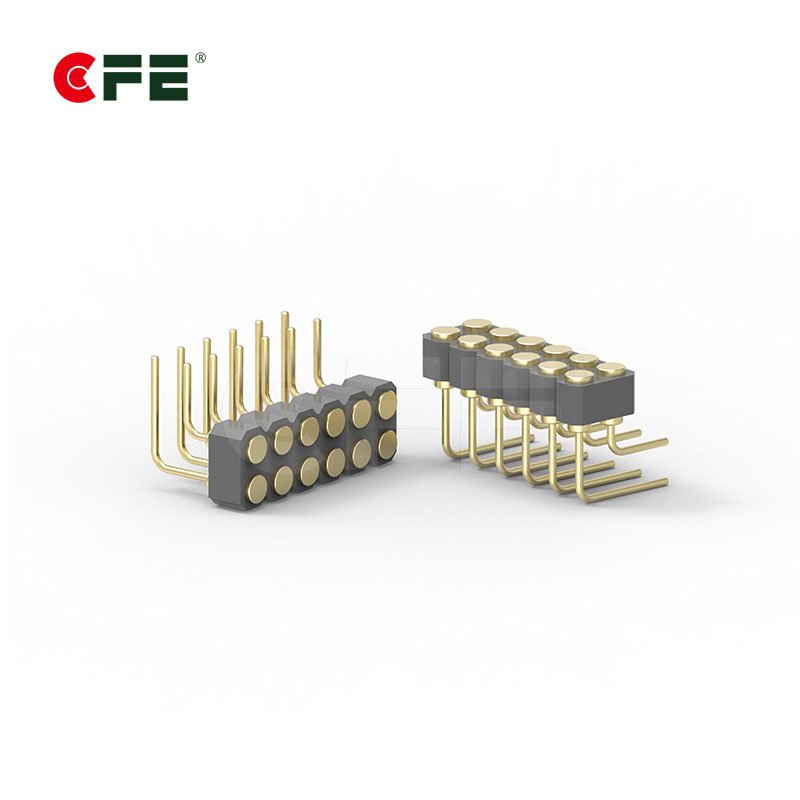
Right-Angle Pogo Pins
Right-angle pins mount at a 90° angle to the board. They support horizontal mounting where vertical space runs short.
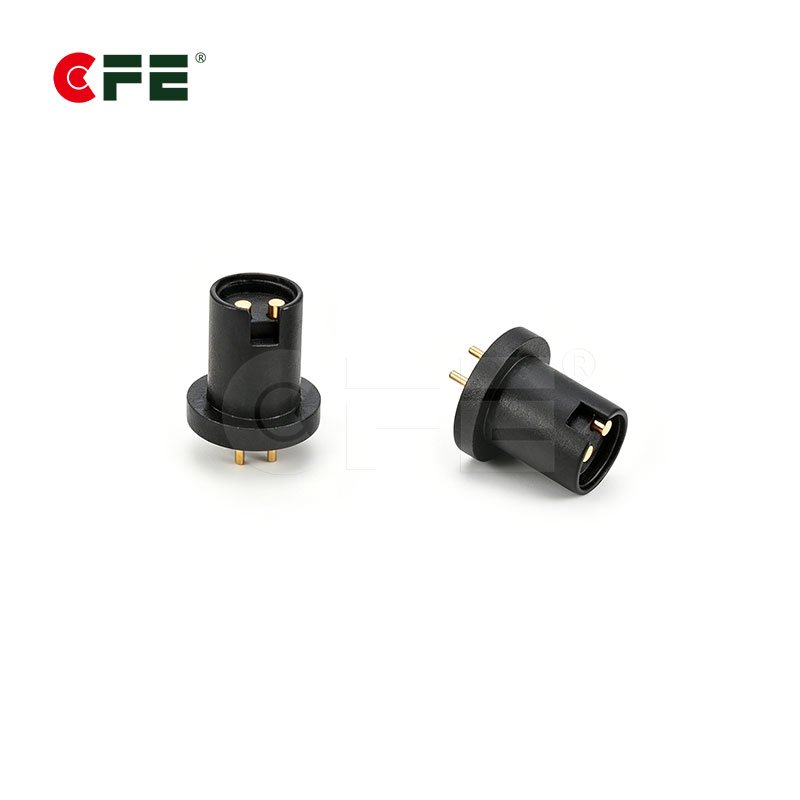
Magnetic Pogo Pin Connectors
A magnetic pogo pin connector pairs a pin with a magnet. The magnet lets both halves self-align and snap together.
This is the design behind most smartwatch chargers. The magnet handles alignment — the pogo pin still does the electrical work.

Custom Multi-Pin Arrays
Need more pins, or an unusual layout? Pogo pins can form custom blocks and circular arrays. A single connector can then carry power, signal, and ground lines in one compact footprint.
Common Applications

Pogo pins turn up in more places than most people expect:
- Consumer electronics — charging docks, smartwatches, TWS earbud cases, smart rings, AI glasses
- Testing and manufacturing — ICT fixtures, functional test probes, burn-in testing
- Point-of-sale devices — docking stations and payment terminal contacts
- Medical devices — wearable monitors, diagnostic equipment docks
- Industrial and robotic equipment — ruggedized connectors built for vibration
In every case, the need is the same: a reliable connection in a small footprint. And no soldering required on the user’s end.
Why Manufacturing Precision Matters

A pogo pin’s performance comes down to tolerances measured in microns. Even a small shift in spring force across a batch causes problems.
Some connections hold. Others fail intermittently. Often, nobody notices until the product is already out in the field.
That’s why plating quality and machining tolerances matter as much as the basic design. Two pins can look identical on a datasheet. But after 50,000 cycles, tighter process control makes all the difference.
Why it matters for sourcing: Certifications like ISO and RoHS aren’t just paperwork. They reflect the process controls that keep spring force and plating thickness consistent, batch after batch.
Choosing the Right Pogo Pin for Your Product
Specifying a pogo pin comes down to a few practical questions:
- What current does the connection need to carry? This affects barrel diameter and plating.
- How many insertion cycles must it survive? This determines spring material and tip hardness.
- What’s the available space? Pin pitch and height need to fit the enclosure.
- Will it face moisture, dust, or vibration? This affects tip style and sealing.
- Is self-alignment needed? A magnetic pogo pin connector can simplify the design.
CFE Connector works through exactly these variables on every project. The goal: match the pin to real electrical and mechanical demands, instead of defaulting to a generic part. See the full range of pogo pin and magnetic connector solutions here.
Conclusion
A pogo pin looks simple: a barrel, a plunger, a spring, and a contact tip. But that simplicity is exactly what makes it so dependable.
It turns mechanical pressure into steady, repeatable contact. That solves a problem rigid connectors can’t: staying reliable through thousands of cycles, in tight spaces, with no maintenance.
Whether it’s a wearable charger or an industrial connector, knowing the structure behind a pogo pin makes it easier to specify the right one. And it helps you avoid the shortcuts that cause failures down the line.
Frequently Asked Questions
What’s the difference between a pogo pin and a regular connector pin?
A regular pin needs a fixed, rigid fit. A pogo pin uses an internal spring instead. That keeps contact pressure constant, even with slight movement or misalignment.
How much force does a pogo pin spring typically apply?
It varies by design. Most pins are calibrated to deliver a few grams up to over 100 grams of force at full compression.
Can pogo pins carry high current?
Standard pins handle low-to-moderate current. For higher current, manufacturers use larger-diameter pins with thicker plating.
Why do some pogo pin connections fail over time?
Usually it’s spring fatigue, plating wear, or contamination on the tip. The right tip style and plating for the environment reduces this risk.
Are magnetic pogo pin connectors less reliable than standard ones?
Not inherently. The magnet only handles alignment. The pogo pin still makes the actual connection, so reliability depends on the same spring and plating quality.
Written for CFE Connector, a manufacturer of pogo pin and magnetic connector solutions.