A supplier tells you their waterproof pogo pin “passed 48 hours of salt spray.” Good news, but which standard did they use? Which salt solution? What did the contact look like afterward, and what counted as a pass? If you buy connectors for products that live near the coast, on a bike, on a wrist or in a vehicle, those questions decide whether a line on a datasheet means anything at all.
This guide compares the two salt spray standards you will meet most often, ASTM B117 and ISO 9227, and shows how to read the claim when the part is a spring-loaded contact instead of a flat test coupon.
Quick answers
- ASTM B117 is a practice for running a continuous salt fog chamber. It does not set the test length or the pass/fail rule.
- ISO 9227 defines three tests: neutral (NSS), acetic acid (AASS) and copper-accelerated acetic acid (CASS).
- For pogo pins, the neutral salt spray test is the one you can compare across both standards.
- Salt spray is not a waterproof rating. It checks corrosion, while IP ratings check water and dust ingress.
- A useful claim names the standard, test type, hours, sample condition and post-test electrical results.
What Salt Spray Testing Actually Tells You
Salt spray (salt fog) testing is an accelerated corrosion test. Parts sit in a closed chamber in a continuous mist of salt water, so weak plating and coating defects show up faster than they would in daily use.
ISO 9227 itself points out that the method is particularly good at revealing discontinuities such as pores in coatings. That is exactly why it suits connector contacts. A gold layer can look flawless and still hide pinholes, and a salt chamber is a blunt but effective way to find them.
What it does not do is predict service life. ASTM’s own text cautions that results seldom map neatly onto other environments, so “96 hours equals two years at the beach” is a myth. Treat the test as a way to compare lots, check process control and screen suppliers.
Here is a simple picture. Imagine two production lots of the same pin. One plating bath drifted slightly thin. On the bench both look identical, and both measure the same contact resistance. After the same hours in the chamber, one lot shows rust-coloured spotting on the barrel and the other stays clean. That difference is the value of the test: it is a quality signal, not a lifetime promise.
ASTM B117 in Plain English
ASTM B117 is a standard practice that describes the apparatus, solution and operating conditions needed to create and maintain a salt spray (fog) environment. It is the older and more widely quoted of the two, first approved in 1939. The current edition is B117-26, summarised in the ANSI overview of ASTM B117-26.
The core conditions most labs run are:
- A 5% sodium chloride solution by mass, with a collected-solution pH of 6.5 to 7.2
- A chamber temperature of 35 °C
- Continuous fog, collected at roughly 1.0 to 2.0 mL per hour on an 80 cm² horizontal area
Notice what is missing. B117 does not say how many hours to run, what the specimen should be, or how to judge the result. Those choices come from the product specification or the customer. So “passed B117” alone is an incomplete sentence. It tells you the chamber was operated to the practice, not how demanding the test was. If a test involves the copper-accelerated acetic acid method, that is a separate ASTM standard, B368, not B117.
ISO 9227 in Plain English
ISO 9227 is the international standard for salt spray tests. It specifies the apparatus, reagents and procedure for three test types. The current version is the fifth edition (2022), with a 2024 amendment. If a supplier quotes it, ask which edition they ran.
| Test | Solution | pH | Temperature | Typical use |
|---|---|---|---|---|
| NSS (neutral) | Sodium chloride, about 50 g/L | 6.5–7.2 | 35 °C | General coatings and finishes, the most common choice |
| AASS (acetic acid) | Sodium chloride plus acetic acid | 3.1–3.3 | 35 °C | More aggressive, often used for decorative finishes |
| CASS (copper-accelerated) | AASS solution plus copper(II) chloride | 3.1–3.3 | 50 °C | Fastest and harshest, mainly decorative coatings |
The practical point for a buyer: the acid-based tests are not “better NSS.” They are different tests aimed at different coatings. For gold over nickel on a brass pin, most specifications start with NSS. ISO also asks labs to verify the chamber with reference specimens, which is one reason a result from an ISO-run lab is easier to defend.
ASTM B117 vs. ISO 9227: Side by Side
On the neutral test the two standards are close cousins, but they are not identical. The table lists typical values. Always confirm the exact limits in the edition your lab used.
| Item | ASTM B117 | ISO 9227 (NSS) |
|---|---|---|
| What it is | Practice for operating the apparatus | Standard with three test methods |
| Salt solution | 5% NaCl by mass | About 50 g/L NaCl |
| pH (collected) | 6.5–7.2 | 6.5–7.2 |
| Chamber temperature | 35 °C | 35 °C |
| Fog collection rate | About 1.0–2.0 mL/h per 80 cm² | About 1.5 ± 0.5 mL/h per 80 cm² |
| Test duration | Set by the product specification | Set by the product specification |
| Pass/fail criteria | Not defined | Not defined |
| Other tests in the document | None (CASS is ASTM B368) | AASS and CASS |
Two takeaways. First, an ASTM result and an ISO result are comparable on NSS only if the hours, specimen condition and evaluation are also the same. Second, neither standard hands you a pass/fail rule, so the real requirement is the one in your purchase specification. If you are unsure which one to cite, pick the standard your customers or regulators already reference and name it in the drawing notes.
Why a Pogo Pin Is a Tricky Salt Spray Specimen

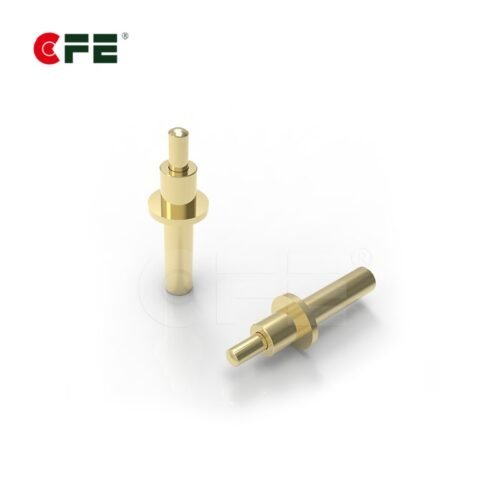
Standards were written around flat panels. A pogo pin is a small assembly with a plunger, barrel and spring, and each of them can fail differently. On CFE’s BP77031 waterproof pogo pin, for example, the datasheet lists a gold-over-nickel finish on the brass plunger and barrel, with a surface-treated stainless steel spring.
That creates several problems that a flat coupon never shows:
- Crevices. Salt water can sit in the gap between plunger and barrel, then dry into crystals that jam or foul the contact.
- Thin spots. Edges, cut ends and solder tails often carry less plating than the visible face.
- Moving contact. A surface that wipes against a mating pad every cycle can wear through a thin layer, then corrode faster. Our guide to gold plating thickness in microinches vs. microns explains why thickness matters.
- Powered contacts. Current in a wet, salty environment accelerates attack on the positive contact. See why powered pogo pin contacts corrode in water.
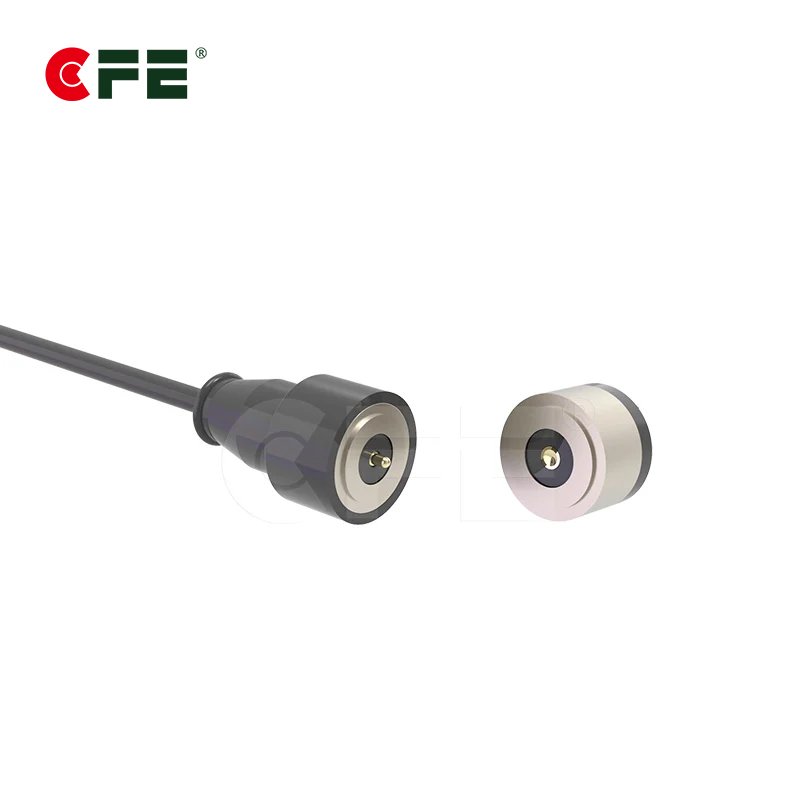
- Magnets. In magnetic connectors the magnet coating also has to survive. The MXA-0010 magnetic connector, for instance, uses NdFeB magnets, so ask how they are protected.
The takeaway: a salt spray result on a loose pin does not automatically describe the finished connector in its housing. Ask what exactly went into the chamber.
How to Read a Salt Spray Claim on a Datasheet
When a datasheet or test report quotes salt spray, run it through this checklist. A good supplier will have these answers ready, and a vague answer is information too.
| Ask this | Why it matters |
|---|---|
| Which standard and edition? | ASTM B117 and ISO 9227 differ in detail, and editions change. |
| Which test type: NSS, AASS or CASS? | The acid tests are much harsher and not directly comparable to NSS. |
| How many hours? | Duration is chosen by the specification, so the number is meaningless without the rest. |
| Mated or unmated? Powered or unpowered? | These change both the exposure and the failure mechanism. |
| What were the acceptance criteria? | “No red rust” and “contact resistance within limit” are very different bars. |
| How many samples, from which lot? | One hand-picked sample proves little about production. |
| Who ran the test? | An accredited third-party lab report carries more weight than an internal note. |
Pair the corrosion result with electrical data. A pin can look clean and still have drifted in resistance, so ask for contact resistance before and after the exposure. Datasheets such as the BP77031 list a maximum contact resistance (50 milliohm), which gives you a baseline to compare against. Our guide on how to read a pogo pin connector datasheet covers the other specifications worth checking.
Salt Spray vs. IP Ratings and Other Connector Tests
Buyers often assume “waterproof” and “salt spray tested” mean the same thing. They don’t. Each test answers a different question, and a rugged connector usually needs several.
| Test | Question it answers |
|---|---|
| IP rating (IEC 60529) | Does water or dust get past the seals? |
| ASTM B117 / ISO 9227 | Do the plating and base metals resist salt corrosion? |
| EIA-364 connector procedures | How do connectors behave under defined electrical and environmental stress? The series includes a salt spray procedure and a mixed flowing gas test. |
| IEC 60068-2-11 (salt mist) | A salt mist test written for electronic and electrical products. |
| Mating cycle and thermal tests | Does the seal and the contact finish survive real use? |
An IP68 connector with thin plating can still corrode over a season, and a corrosion-proof pin in a leaky housing can still short. For the sealing side, read how to test a waterproof pogo pin connector, and see the waterproof pogo pin and magnetic connectors for 5A–30A designs page for the product range.
What to Send With Your Quote Request
If your product faces salt, sweat, road spray or marine air, put that into the quote request. These details let an engineering team recommend a plating and sealing approach instead of guessing:
- The environment: coastal air, direct splash, wash-down, sweat, or road salt
- The salt spray requirement you must meet, with standard, test type and hours
- Whether the contacts are mated, unmated or powered while exposed
- Current, voltage and duty cycle, since heat and current affect corrosion
- Target mating cycles and expected product life
- Any acceptance limit on contact resistance after exposure
CFE lists gold plating on its pogo pin datasheets and notes that the plating specification can be adjusted to customer requirements. You can browse the waterproof pogo pin, 5A–30A high current pogo pin and 5–30A magnetic connector categories, or discuss a custom pogo pin connector built around your environment. When you are ready, request a quote and samples and include your salt spray requirement in the message.
Frequently Asked Questions
What is the difference between ASTM B117 and ISO 9227?
ASTM B117 is a single practice for running a neutral salt fog chamber, while ISO 9227 defines three tests: NSS, AASS and CASS. The neutral conditions are similar, but collection rates and other tolerances differ slightly, so the two results are not interchangeable unless the hours, samples and evaluation also match. Always name the standard and edition in your specification.
Does passing salt spray testing mean a pogo pin is waterproof?
No. Salt spray measures corrosion resistance of the plating and metals. Waterproofing is a sealing question, normally described by an IP rating under IEC 60529. A connector can pass one and fail the other, so ask for both results, and make sure each was run on the mated assembly if that is how your product will be used.
How many hours of salt spray should a pogo pin pass?
There is no universal number. The right duration depends on your environment, expected life, plating system and customer requirements, and neither standard sets it. Start from the exposure your product faces, ask for the plating specification, and agree an hour count with the supplier in writing, along with clear acceptance criteria.
Can salt spray results predict how long a connector will last?
Not reliably. The test is a controlled, accelerated comparison and does not reproduce real conditions such as temperature swings, wear, drying cycles or electrical load. Use it to compare lots and suppliers and to catch plating problems early, then confirm with mating-cycle, thermal and field-condition testing.
Should I test pogo pins mated or unmated?
Test the condition your product will actually see, and often both. Mated connectors protect the contact faces but can trap salt at the interface, while unmated pins have exposed surfaces that corrode directly. If current flows while the contacts are wet, add a powered test, because it can change how corrosion develops.
Conclusion
Salt spray testing is a useful tool, but only when the claim behind it is specific. ASTM B117 and ISO 9227 give you a repeatable environment, while the hours, sample condition and acceptance rules decide how meaningful the result is. For pogo pins, remember the extra variables: crevices, thin plating at edges, moving contacts, current and magnets. Match the test to your environment, ask for electrical data before and after, and keep corrosion and waterproofing separate in your specification. Then you can compare suppliers on facts rather than on a single number.
Ready to discuss a connector for a salty or wet environment? Explore the waterproof 5A–30A pogo pin and magnetic connector range or send your requirements to the CFE team.