Pogo pin smart glasses charging has a simple job and a hard address. It must move power into a product that sits on someone’s face, has very little spare room in its frame, and meets sweat, rain and pocket lint along the way. Where would you put a charging port on that?
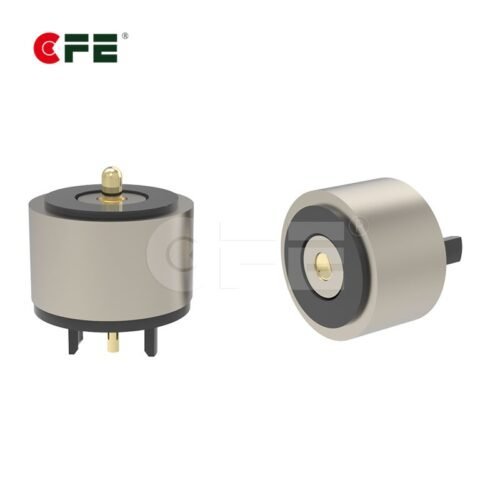
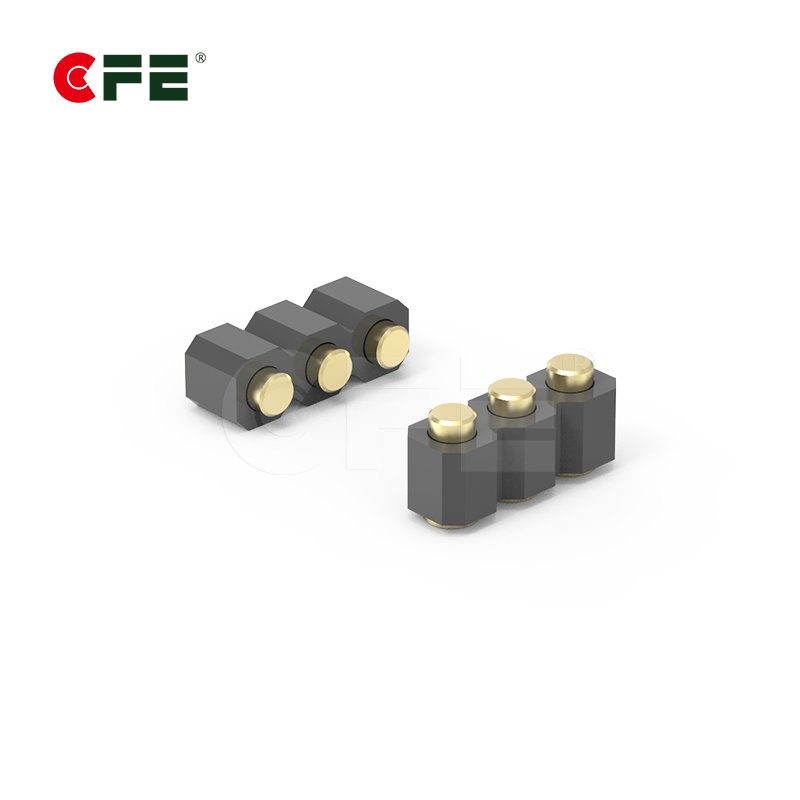
Pogo pin charging for smart glasses is a contact charging method in which spring-loaded pins in a cable or case press against small metal pads or mating pins on the eyewear. Magnets often guide and hold the two sides together. It saves frame space and removes the open socket, but plating, sealing and alignment decide how well it lasts.

Why Smart Glasses Need a Different Charging Interface
Smart glasses are no longer a lab curiosity. IDC reported that display-less smart glasses shipments reached about 2.25 million units in the first quarter of 2026, up 167% year over year. It forecasts 13.6 million units for 2026 and 27.3 million by 2030. For see-through display glasses, the forecast rises from 3 million to 12.2 million over the same period. Forecasts can move, but the direction matters for anyone planning tooling today.
The engineering squeeze is easy to picture. A temple arm has to hold some mix of battery, circuit board, speaker and antenna while still feeling like ordinary eyewear. A receptacle needs depth, a cut-out in the housing and a plan to keep that cut-out sealed. Flat target pads ask for far less.
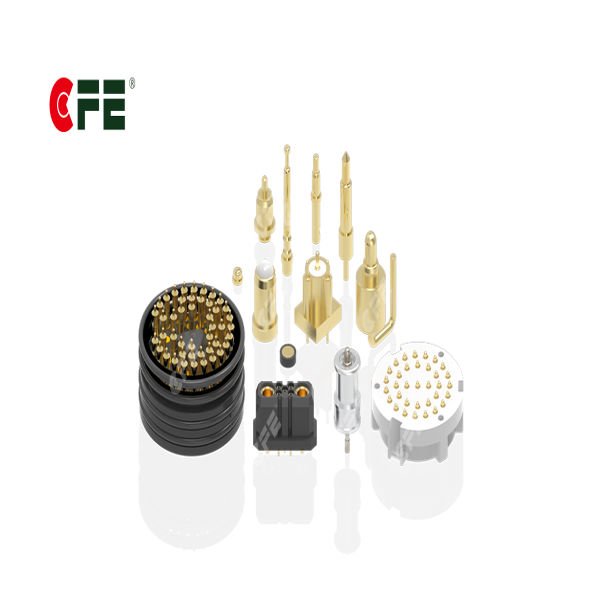
Contact charging also changes daily behaviour. Users can drop the glasses into a case or let a magnetic head snap on, with no hunting for plug orientation. Less side load reaches the thin temple arm, too. Our smart wear pogo pin and magnetic connector solutions cover this wider family of products, from watches and shoes to AR/VR hardware.
How Pogo Pin Smart Glasses Charging Works
A pogo pin has three core parts: a plunger, a barrel and a spring. When the case lid closes or the magnetic cable attaches, the plunger moves into the barrel. The spring then pushes back and holds the tip against its target. Think of it as a tiny suspension system that absorbs small differences in height.
A typical charging event follows this path:
- Align: a case cradle or magnet pair guides the glasses into position.
- Compress: each pin reaches its designed working stroke.
- Detect: the charger electronics confirm that a valid device is present, if your design includes detection.
- Charge: power flows through the contacts to the battery management circuit.
- Release: the user lifts the glasses and the pins extend again.
Where do the springs belong? Many teams place them in the charger or case and leave passive pads on the glasses. The wearable side stays flatter and easier to wipe, and the moving parts sit in the accessory, which is usually simpler to replace.
Our AI smart glasses charging case solution shows one version of this idea: contacts on the frame and temple tips meet spring-loaded pins inside a case that carries its own battery module.

Choosing the Contact Position on AR Wearables
Contact location shapes industrial design, comfort and failure risk all at once. Settle it early, because moving contacts after the frame mould is cut gets expensive.
| Contact position | Where it works well | What to check |
|---|---|---|
| Temple tips | Case charging with contacts at the arm ends | Skin and hair contact, sweat build-up, tip tolerance |
| Hinge area | Folded glasses resting in a shaped case | Hinge play, fold angle, internal wire routing |
| Nose bridge | A central docking point in the case | Skin oils, cosmetics, limited internal space |
| Inner or lower temple | Magnetic cable charging, including use at a desk | Snag risk, magnet pull on a light frame, comfort while worn |
Tolerance is the quiet troublemaker. Two folded arms never land in exactly the same place, especially after months of use. Add up the variation from the hinge, frame, case cradle and connector. Then confirm that every pin stays inside its working stroke at both extremes. Too little travel causes intermittent charging. Too much can bottom out the spring and stress the solder joint.
AR headsets and display glasses may also need data, accessory or battery-pack connections, which raises the pin count. Our AR/VR connector solutions include an 8-pin magnetic example. When a standard layout will not fit your curve, a custom pogo pin connector lets you set pitch, height and housing shape around the frame.
Pogo Pins vs USB-C and Wireless Charging
No method wins every time. Which compromise can your product live with?
| Factor | Pogo pin contact | USB-C on the eyewear | Wireless coil |
|---|---|---|---|
| Space on the frame | Small pads or compact pins | Needs a deeper receptacle | Needs coil area and shielding |
| Sealing | Seals around contacts | Requires a sealed, open-mouth port | No exposed electrical contacts |
| Alignment | Case or magnet guided | Manual plug insertion | Coils must line up |
| Corrosion exposure | Exposed contacts need protection | Port contacts need protection | Lowest at the interface |
| Cable compatibility | Usually product-specific | Standardised | Depends on the system used |
USB-C is hard to beat for universal cables. In the EU, the common charger rules apply to named device categories, including headphones, headsets and earbuds. Smart glasses are not named as their own category, but audio functions and a bundled charging case can raise classification questions. Ask your compliance advisor before you freeze the design, and watch for scope updates. For a closer look at port trade-offs, read our magnetic connector, USB-C and MagSafe comparison.
Specifications That Decide Charging Reliability
A datasheet should answer more than “will it fit?” Here are published figures from CFE smart glasses and AR/VR pages. Each row is a different part, so do not mix values between them.
| CFE example | Electrical rating | Other published figures |
|---|---|---|
| CMA-0115 magnetic DC connector | DC 12 V, 0.5 A | 50,000-cycle life test, 48-hour salt spray |
| Smart glasses magnetic charging cable, 2-pin | 2 A | IPX5, 300 g magnetic force |
| AR/VR 8-pin magnetic connector, male | DC 12 V, 1 A max | 50 mΩ max contact resistance, 100,000-cycle service life |
These ratings are connector limits, not a recommendation to feed your battery that voltage or current. Your charging circuit sets the real operating values.
Contact resistance deserves a quick sum. At 50 mΩ per contact, one power pin and one return pin total 100 mΩ. At 1 A, that means a 0.1 V drop and 0.1 W lost as heat at the interface. Dirt or weak compression can push resistance higher, so test aged and contaminated samples as well as new ones.
Spring force matters too. The AR/VR short pins list 50 g ±20 g at a 0.7 mm working stroke. Eight pins at that nominal figure would push back with about 400 g in total. Your magnets or case latch must overcome the combined force with margin. Our retention force design guide walks through that balance.

Managing Sweat, Water and Contact Corrosion
Sweat is salty, and salt plus voltage is a rough combination. When a powered contact sits in a film of moisture, electrolytic corrosion can strip plating far faster than ordinary wear.
One Umicore artificial sweat electrolysis article reported that a 0.75 μm gold layer dissolved in about 2.5 minutes at 5 V, in 1% saline at 40°C. A rhodium-ruthenium alloy showed no visible corrosion. Treat this as a warning sign rather than a lifetime prediction: it was an accelerated test published by a company that sells the alloy.
So what can your team do?
- Keep charger pins unpowered until a valid device is detected.
- Specify plating for powered, wet exposure, not only for mating cycles.
- Shape the contact area so liquid drains instead of pooling.
- Tell users to dry the glasses before docking.
- Test with artificial sweat under voltage, followed by resistance checks.
Salt spray results help compare finishes, yet they do not recreate sweat under electrical bias. Water ratings need the same care. The IEC ingress protection system grades how an enclosure resists dust and liquids. IPX5 relates to water jets, not immersion, and it says nothing about long-term corrosion. Ask whether a rating applies to the loose connector, the mated pair or your finished glasses. See whether pogo pins are waterproof and compare our waterproof pogo pin options.
Protecting Skin, Circuits and Nearby Sensors
Eyewear touches skin for hours, so material safety is a design input. Under EU REACH, the nickel restriction in Annex XVII, entry 27 limits release to 0.5 μg/cm² per week for articles intended for direct and prolonged skin contact. Recognised test methods include a specific one for spectacle frames and sunglasses. Gold contacts often use a nickel underlayer, so a bright finish alone proves nothing. Confirm which parts touch skin, and ask an accredited lab to define the test plan. This is general information, not legal advice.
Electrical protection comes next. Keys, coins or metal frames can bridge exposed pins. Recessed contacts, sensible spacing, reverse-polarity protection and current limiting all reduce risk. Our guide to preventing short circuits in multi-pin connectors covers the layout choices. Validate temperature rise inside the closed case, where heat has fewer places to go, and check the finished product against the safety standards for your markets.
Magnets bring their own homework. They help alignment, but stray fields can disturb a compass or other magnetic sensor. Keep polarity consistent so the head cannot attach backwards, then measure sensor behaviour with the real magnet stack. Read more about protecting sensors from stray magnetic fields.

What to Send Your Connector Supplier
A vague request gets a vague quote. Send these details with your enquiry:
- Frame CAD data, contact position and available depth
- Operating voltage, charging current and any data signals
- Pin count, pitch, working stroke and spring force target
- Plating needs, sweat exposure and water rating goal
- Magnet force, polarity and nearby sensors
- Mating cycle target, sales markets and annual volume
Then ask for evidence: drawings with tolerances, test methods, sample sizes, pass limits and material declarations. A cycle number without its test conditions tells you little.
Final Thoughts
Pogo pins give smart eyewear a compact, easy-to-dock charging path. The pin itself is only part of the answer. Contact position, tolerance, spring force, plating, powered-wet protection, skin safety and magnet layout need to work as one system. Prototype early, test dirty and aged samples, and treat every published rating as specific to its part.
Frequently Asked Questions
Can pogo pins carry data as well as power to smart glasses?
Yes. Extra contacts can carry signals for firmware updates or accessory communication. The achievable data rate depends on pin geometry, pinout, grounding, cable and circuit layout. Ask for signal integrity results for the exact assembly and protocol you plan to use.
How many pins do smart glasses need for charging?
Basic charging needs at least two contacts: power and ground. Designs may add pins for device detection, temperature sensing, data or parallel current paths. More pins add capability, but they also add spring force, space demands and alignment sensitivity.
Are magnetic pogo pin chargers safe to wear while charging?
That depends on the complete product, not the connector alone. Wearing during charging needs separate review of surface temperature, skin contact, cable snagging, release force, electrical protection and applicable safety standards. Follow the device maker’s instructions, and do not assume a design permits it.
Why do smart glasses stop charging even when the magnet attaches?
A magnet can hold while one contact makes a poor connection. Common causes include residue on pads, corrosion, a stuck plunger, worn plating or frame misalignment. Disconnect power, inspect both sides and clean the pogo pins carefully as the manufacturer directs. Replace damaged parts.
Can an existing magnetic charger fit a new glasses design?
Only if pin layout, polarity, voltage, current, stroke, mating geometry and magnet arrangement all match. A head that attaches physically may still be electrically wrong. Check drawings and validate samples before reusing any charger across models.
Planning a Smart Glasses Charging Interface?
Share your frame drawing, power needs and exposure conditions. Explore our smart wear connector solutions, then request a quote and samples from CFE.