Pogo pins for medical devices are spring-loaded electrical contacts that let a device charge, communicate or attach a module without an open port or a fragile plug. They suit wearable monitors, handheld diagnostic tools, hearing aid chargers, clinical docking cradles and reusable electronics that clip onto single-use sensors, because they allow smooth, easy-to-wipe housings and quick, tool-free connection.
Picture a nurse at the end of a long shift. She has a handheld monitor in one hand and a phone in the other, and she needs the monitor charged before the next patient. She drops it into a cradle and walks away. No cable, no port cover to flip, no plug to line up. That small moment depends on a pair of spring-loaded contacts about the size of a grain of rice.
This guide explains where pogo pins fit in medical products, what those products demand from a contact, and what to check before you commit a part to a design. It is written for engineers and sourcing managers, and it supports our main pogo pin connectors page.
Safety note: This article is general engineering information. It is not regulatory, clinical or legal advice. Medical device manufacturers remain responsible for safety, biocompatibility, risk management and compliance in each market they sell into, including the requirements described by the U.S. FDA. Confirm any connector choice with your regulatory and quality teams.
Why Medical Devices Use Pogo Pins
Medical products face a set of demands that consumer gadgets rarely meet all at once. They get cleaned constantly, handled by people in a hurry, carried between rooms, dropped now and then, and expected to work every single time. A conventional port is a liability in that world. It is an opening where liquid, residue and lint can collect, and a socket that wears out under repeated plugging.
A pogo pin flips that around. The contact sits flush behind a small opening or a sealed surface, and the mating side is often just a flat pad. Designers can give the enclosure a smooth, continuous surface that is far easier to wipe down. There is no plug to bend and no port to fill with debris.
Speed matters too. In a clinical setting, every extra step is a chance for an error or a delay. A cradle that charges a device the moment it is seated removes a step entirely. The same idea applies to wearables: a patient who must wrestle with a tiny connector at home may simply stop charging the device.
Pogo pins also help with miniaturisation. Wearable patches and small monitors have almost no room to spare, and a low-profile side-contact pin can fit where a standard connector cannot.
None of this makes pogo pins a universal answer. They rely on spring force rather than a locking latch, so designers pair them with guides, magnets or cradles that hold the parts in position. The rest of this article looks at exactly how to make that work in a medical context.
How a Pogo Pin Works Inside a Medical Device
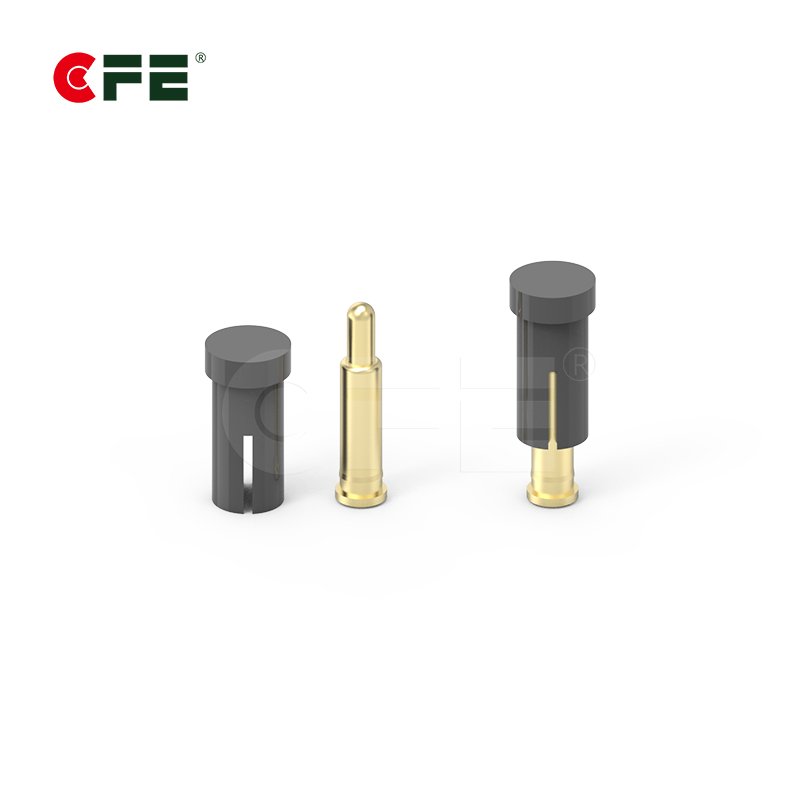
A pogo pin is built from three parts: a plunger that touches the mating pad, a barrel that holds the assembly together, and a spring that pushes the plunger outward. When the pad presses down, the spring compresses and holds steady force on the contact. When the device lifts away, the plunger returns to its resting position.

In medical products that simple mechanism does a lot of quiet work. The spring absorbs small alignment errors, so a monitor that sits slightly off-centre in its dock still makes contact. It also keeps force consistent through thousands of mating cycles, which is what you want from a part that a clinician will use dozens of times a week.
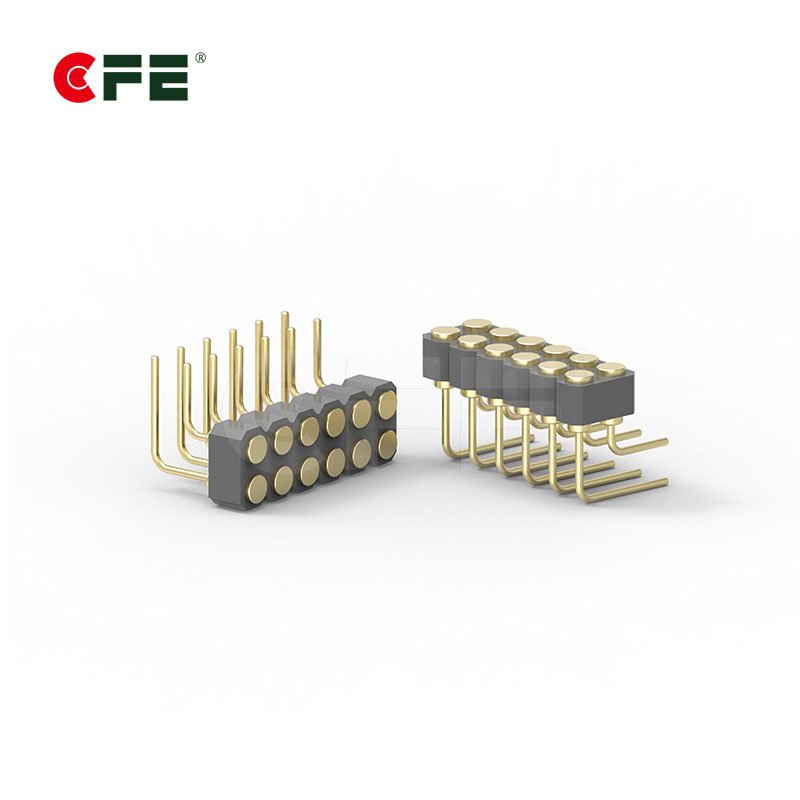
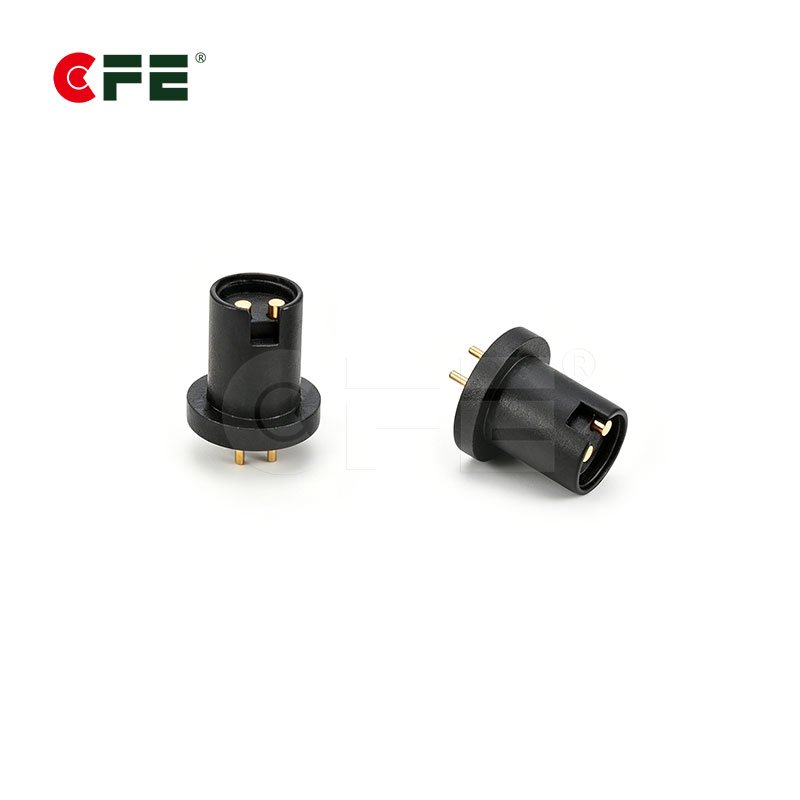
Several variations matter to medical designers. Vertical pins press straight onto a pad, while side-contact pins are compressed sideways and suit very thin housings. Some pins are fitted into moulded multi-pin blocks that combine power and data lines. Others are soldered onto a circuit board or crimped onto wire leads. Sealed variants add an O-ring or similar element to help keep fluid out, although the sealing performance of the finished product always depends on the surrounding housing design.
The mating pad deserves as much thought as the pin. Because the plunger presses on the same spot again and again, a soft or thin pad plating wears through first. Specifying hard gold on the pad, with enough area to allow for misalignment, is one of the cheapest ways to protect long-term reliability.
Wearable Health Monitors and Patches
Wearable health devices are one of the fastest-growing homes for pogo pins. Connected patches, fitness and health-tracking bands, and sensor modules all need to be charged or programmed without adding a port that lets in sweat or water.

The typical layout is a set of small gold pads on the back of the device, mating with a charging cradle or magnetic puck fitted with pogo pins. Placing the pins on the accessory rather than the device is a common choice, because the part that wears is then the replaceable one. If a charging pin loses spring force after years of use, the user replaces a cheap dock instead of the whole wearable.
Skin contact changes the design brief. Sweat, lotions and cleaning wipes all attack metal surfaces, so plating quality and base material selection carry extra weight. Corrosion on a charging pad is more than a cosmetic problem: it raises contact resistance, slows charging and can cause intermittent faults that are hard to reproduce.
Data is often part of the picture too. Some wearables use the same contacts for charging and for factory calibration or firmware updates, so a three- or four-pin block with clean signal lines is common. Because the device may be worn all day, the contacts need to sit flush and comfortable against the skin and stay out of the way of the sensing surfaces.
For small, thin products, ask suppliers about pin height tolerance and coplanarity across a block. A pin that sits proud by a fraction of a millimetre can cause an uncomfortable pressure point or an unreliable connection.
Handheld and Portable Diagnostic Devices
Handheld diagnostic tools, portable monitors and point-of-care devices live a harder life than a wristband. They are carried between wards, dropped on carts, wiped with disinfectant and docked over and over. A connector here has to be both durable and forgiving.
Pogo pins fit because they support a docking-style workflow. A portable monitor can rest in a stand or cradle that charges it and, if needed, syncs data to a hospital system. The clinician does not have to find a port, open a cover or handle a cable. That reduces wear on the device and reduces the chance that a cable is left plugged in and pulled out of a wall.
These devices often need more than power. A dock might carry charging current and a low-speed data line in the same multi-pin block. Contact resistance and its stability over time matter for both, and dust or residue on the pads can degrade the signal. Longer-stroke pins with moderate spring force help maintain contact when the device is placed roughly rather than carefully.

Multi-pin housings like the one above are usual here. They keep the pin spacing fixed, simplify assembly and let designers combine power and signal contacts in one compact block. When you evaluate these, check the pitch, the number of positions and whether the housing material can tolerate your cleaning agents.
Finally, think about the device that is dropped. A pogo pin cannot be a structural element. Design the housing and cradle so that shock loads pass through the enclosure, not through the pins.
Charging Docks and Clinical Cradles
Docks are where pogo pins probably earn the most trust in a hospital. A cradle for a handheld unit or a monitor carries out the same action hundreds of times: seat, charge, lift. Any weakness in the contact shows up quickly as a device that is flat when someone needs it.
To size the pin for this job, start with simple arithmetic. If a device is docked twice a day for five years, that is roughly 3,650 mating cycles. Add a safety margin and a design should target several times that number so the contact is far from its limit when the product reaches the end of its service life. Ask the supplier for tested cycle life under load, and compare it to your own calculation rather than to a marketing headline.
Current is the next question. Small monitors may need only a modest current, while larger portable equipment and carts with battery packs need more. Contact resistance turns into heat at the interface, so a pin running near its limit warms up, and heat is not welcome next to batteries or patient-facing surfaces. Derate the published rating and validate temperature rise in the real assembly.
The cradle itself should be designed to help the pin. Guide features, chamfers and, where appropriate, magnets pull the device into the right place so the pins meet their pads squarely. A dock that relies on the user to position the device perfectly will disappoint. A dock that guides the device into place will feel effortless and protect the contacts at the same time.
Lastly, consider replaceability. Docks live in busy areas and take abuse, so pins in a serviceable module can be swapped without replacing the whole cradle.
Reusable Electronics with Single-Use Sensors
One of the more interesting medical design patterns pairs a reusable electronics module with a disposable sensor or patch. The disposable part carries the parts that touch the patient and are thrown away, and the reusable module holds the battery, radio and processor. A pogo connection joins the two.
The logic is sound. Disposable sensors need to be cheap, so it makes sense to put simple flat pads on them and keep the more expensive contacts on the reusable side. The user clips the module on, the pins press against the pads, and the system is live. Remove the module, throw the patch away and the electronics move on to the next patient.
This puts particular demands on the pogo pins. The connection is made and broken every time a new sensor is applied, so cycle life matters. The pins must make a clean, low-resistance contact with a pad that may be printed or laminated rather than plated gold, so contact force and tip shape need careful selection. A tip that is too sharp could damage a thin printed pad, while a flat tip may struggle to break through a light film.
Low-level signals add another wrinkle. If the sensor measures small electrical signals from the body, an unstable contact shows up as noise in the measurement. Test contact resistance variation, not only its average value, and test it with the actual pad material.
Cleanliness is also part of the design. The reusable module gets wiped between patients, so the pin area should not trap residue, and the design should let disinfectant flow away instead of pooling around the contacts.
Hearing Aids and Personal Health Devices
Rechargeable hearing aids, smart rings that track health data, earbuds with health features and similar personal devices all face the same brief: very small, worn for long hours and charged every night. Pogo pin contacts on a charging case are a natural fit.

Users of these devices are not engineers, and many are elderly or have limited dexterity. A charger that works when the device is dropped roughly into place is a real accessibility feature. Fine plug-and-socket connectors, by contrast, can be frustrating to use. Pogo contacts combined with a magnet or a shaped cradle make charging close to automatic, which encourages people to keep their device charged and in use.
The pins are very small in these products, typically with short strokes and light spring force. Getting that force right is a delicate balancing act. Too light and a slight movement breaks the connection overnight. Too heavy and the device is pushed out of its cradle or feels stiff to seat.
Moisture and body oils are unavoidable. These devices sit close to skin and ears, so contact surfaces need plating that resists corrosion and staining. The charger side should also be easy to wipe clean, since earwax and skin residue can build up on contacts over time.
From a supply point of view, volumes can be high and tolerances tight. Buyers should look for consistent pin height, stable spring force from batch to batch and a supplier able to explain how they control those variables in production.
Materials, Plating and Skin Contact
Choosing the right metal is more than a cost decision in medical products. Most pogo pins use a copper alloy body with nickel underplating and a gold finish. Gold gives a stable, low-resistance surface that resists oxidation, and the nickel layer acts as a barrier between the base metal and the gold.
Where a contact can touch skin, nickel needs attention. Nickel is a known cause of skin allergy in some people, and regulations in some markets limit nickel release from items in prolonged skin contact. A properly plated gold surface reduces exposure, but wear can expose underlying layers over time. If your product has exposed contacts against skin, discuss nickel release and plating thickness with your supplier and your regulatory team, and consider designs that keep contacts away from the skin altogether.

Biocompatibility is a broader question. The ISO 10993 series of standards covers the biological evaluation of medical devices, and the requirements depend on how long a device touches the body and which tissues it contacts. Whether a small contact needs its own testing, or is covered by the evaluation of the whole assembly, is a decision for the device manufacturer and its regulatory advisers. A component supplier can provide material data and declarations, but it cannot certify your finished device.
Environmental compliance also comes up. Most medical buyers ask for RoHS and REACH declarations for every component. The EU’s RoHS directive overview explains which substances are restricted. Request these documents early, because a missing declaration can hold up a project late in the schedule.
Finally, insulating housings matter as well. Ask which plastic is used, how it behaves at your operating temperature and whether it tolerates the cleaning products your customers use.
Cleaning, Disinfection and Sealing
Hospitals clean devices aggressively, and a contact area that cannot cope with that will fail in service. Alcohol wipes, quaternary ammonium products and other disinfectants can all affect plastics and metal finishes, and repeated exposure is very different from a one-off lab test.
Start with realistic expectations. A standard pogo pin is not designed to be sterilised in an autoclave, and most are not sealed against immersion. If your device needs to survive high-temperature sterilisation or full submersion, the pin, housing and seal need to be designed and validated specifically for that. Ask the supplier what they have tested and what the limits are.
For wipe-down use, sealing details matter. A pin has a small gap around the plunger, and liquid can creep in by capillary action. Sealed pin designs and gasketed housings reduce this risk. Designers also use recessed pads on the mating side, or cover the contact area when the device is not docked. Water resistance of the finished product is defined by the IEC 60529 IP code, and the IEC IP ratings page explains what the numbers mean. Remember that the rating applies to the whole product, not to the pin alone.
- Design the drainage: let liquid run away from the contacts instead of pooling around them.
- Check chemical compatibility: test the housing plastic and plating against the real cleaning agents your customers use.
- Plan for residue: dried disinfectant and skin oils can raise contact resistance, so test after cleaning cycles, not just when new.
- Validate the assembly: sealing performance belongs to the finished product, so test it there.
Treat cleaning as a design input from the first sketch and it becomes an advantage. Treat it as an afterthought and it becomes a field failure.
Electrical Performance: Current, Resistance and Signal Quality
Medical electronics span a huge range of electrical needs. A small wearable might draw a fraction of an amp while charging, and a portable clinical unit might need several. Pogo pins are available for both ends, but the right choice depends on understanding what actually flows through the contact.
Contact resistance is the number that quietly controls everything else. A low and stable resistance means little heat, fast charging and clean signals. A resistance that drifts upward as the pin ages or the pad gets dirty causes warm contacts, slow charging and noise. Ask for resistance data measured over the life of the pin, with the test conditions stated, and check it against the mating pad material you will really use.
Electrical safety is a separate discipline. Medical electrical equipment is generally assessed against the IEC 60601 family of standards, which addresses issues such as leakage current and insulation between the patient and mains power. The connector’s creepage and clearance distances, its housing material and its position in the product all feed into that assessment. That work sits with the device manufacturer, so involve your safety engineers before the connector layout is frozen.
| Electrical factor | Why it matters in a medical device | What to ask or test |
|---|---|---|
| Current rating | Heat next to batteries and patient-facing surfaces | Rating conditions, temperature rise, derating advice |
| Contact resistance | Charging speed, heat and signal quality | Initial value and drift over cycle life |
| Signal integrity | Noise in low-level sensor measurements | Resistance variation, not just average |
| Insulation and spacing | Patient and operator safety | Housing material, creepage and clearance in the assembly |
| Electrostatic discharge | Exposed contacts can be touched by users | ESD protection in the circuit design |
Exposed contacts deserve special thought. If a user or patient can touch the pins, the circuit behind them must be protected against static discharge and, where relevant, limited in voltage and current. Put those protections in the design rather than relying on the connector alone.
Standards and Documentation Buyers Should Ask For
Medical sourcing is as much about paperwork as parts. A strong technical specification means little if the supplier cannot show consistent production and clear records. Before you commit, work through a short documentation checklist.
- Material declarations: RoHS and REACH statements, plus plating and base material details.
- Drawings and specifications: controlled documents with tolerances, spring force ranges and plating thickness.
- Test data: cycle life, contact resistance and current rating, with test conditions stated.
- Lot traceability: the ability to trace a delivered lot back to material and process records.
- Change control: a commitment to notify you before changing material, plating or process, since a silent change can affect a validated product.
- Quality system: ask what quality management system the supplier operates under.
That last point deserves a note. ISO 13485 is the international standard for quality management systems in the medical device industry. Device manufacturers must work under a system that meets regulatory requirements, and they normally control their suppliers accordingly. Whether a component supplier itself needs ISO 13485 certification depends on the component, your risk assessment and your regulatory strategy. Some buyers require it, others accept a supplier audit and a well-run ISO 9001 system. The right answer is a decision for your quality team, so raise the question early.
It also helps to agree on incoming inspection. Decide which dimensions, spring forces and plating checks you will verify on delivery, and put them in the purchasing agreement so both sides know what acceptable looks like.
How to Select a Pogo Pin for a Medical Device
With the application areas and constraints in mind, selection becomes a structured job. Work through these steps in order and you will usually narrow the options to a short list before requesting samples.
- Define the use case. Wearable, handheld, dock or module-to-sensor interface? Each points to a different pin style and cycle target.
- Set the electrical load. Note charging current, peak current, voltage and any data or low-level signals sharing the contact. Derate the published rating.
- Calculate the cycle requirement. Multiply expected daily connections by service life, then add a healthy margin.
- Choose the mechanical envelope. Confirm available height, pitch and stroke, and account for the alignment tolerance of your cradle or housing.
- Match materials and plating to skin contact and cleaning. Consider nickel release, corrosion and the chemistry of your disinfectants.
- Decide on sealing. Choose a sealed pin or a sealed housing if fluid ingress is a realistic risk.
- Confirm mounting and integration. SMT, through-hole, press-fit or wire-lead: choose what your assembly line handles reliably.
- Collect documentation and prototype. Get declarations and test data, then test in the real assembly, including cleaning cycles.

If a standard part does not fit, customisation is worth discussing. Pin length, spring force, plating, housing colour and the number of positions can often be adjusted for a defined volume. Bring your drawings, cleaning requirements and cycle target to the first conversation, and a good supplier will help you find the right fit. You can browse our pogo pin connectors range to see standard options.
Common Design Mistakes to Avoid
Most connector problems in medical products trace back to a handful of avoidable mistakes.
Treating the pad as an afterthought
The pad takes as much wear as the pin. A thin or soft finish wears through, resistance rises and the fault appears months after launch. Specify hard gold and enough pad area from the start.
Ignoring real cleaning routines
A connector that passes on the bench may struggle after a hundred wipes with a hospital disinfectant. Test after cleaning cycles using the actual agents your customers use.
Skipping the alignment strategy
Pogo pins do not latch. Without guides or magnets, the connection depends on perfect placement. Design the alignment first, then the electrical interface.
Running the pin at its limits
Operating near the rated current or at the extreme of the stroke leaves no margin. Aim for mid-stroke operation and derated current so tolerances and ageing do not push you over the edge.
Assuming a rating applies to your product
Current, cycle life and sealing figures come with test conditions. A pin’s sealing is not the same as a product’s IP rating, and a datasheet rating is not a compliance claim for your device. Validate at the product level.
Leaving documentation until the end
Missing declarations or change-control agreements can hold up a launch. Ask for them at the start of supplier selection.
Conclusion
Pogo pins earn their place in medical devices because they solve real problems: smooth surfaces that are easier to clean, fast and forgiving connections, slim profiles for wearables and a serviceable link between reusable electronics and disposable sensors. Wearable monitors, handheld diagnostics, clinical docks, hearing aid chargers and sensor modules all benefit.
The details decide success. Start with the electrical load and the cycle count. Pick materials and plating with skin contact and cleaning in mind. Give the mating pad the same attention as the pin, guide the connection with good alignment, and keep the paperwork in order from the first sample. Do all that, and a very small part will quietly do its job for years.
If you want help matching a pin to your device, explore our pogo pin connectors or send our team your requirements. For designs that pair pins with magnets, our guide to magnetic connectors is a useful companion.
Designing a medical device? Send us your current requirement, pitch, stroke, cleaning routine and cycle target, and our team will suggest suitable options. View pogo pin connectors
Frequently Asked Questions
Why are pogo pins used in medical devices?
Pogo pins let a medical device charge, communicate or attach a module without an open port, which allows smooth housings that are easier to wipe clean. They also make docking fast and tolerant of small misalignment, and they fit slim products such as wearables and patches. They are used in wearable monitors, handheld diagnostic tools, hearing aid chargers and clinical docking cradles.
Can pogo pins be sterilised or fully sealed?
A standard pogo pin is not designed for autoclave sterilisation or immersion. Sealed pin designs and gasketed housings can reduce liquid ingress during wipe-down, but the sealing of the finished product depends on the whole enclosure. If your device needs high-temperature sterilisation or submersion, ask the supplier for validated designs and test data specific to that requirement.
Are gold-plated pogo pins safe for skin contact?
Gold plating gives a stable, corrosion-resistant surface, but most pins use a nickel underlayer, and nickel can cause allergic reactions in some people if it is exposed. Whether a contact suits skin contact depends on plating thickness, wear, the duration of contact and the regulations of your target market. Discuss nickel release and biocompatibility evaluation with your supplier and regulatory team.
How many mating cycles does a medical dock need?
Multiply the expected connections per day by the product’s service life and add a safety margin. A device docked twice a day for five years sees about 3,650 cycles, so a design should target several times that figure. Always compare your calculation with tested cycle life under load, and confirm the test conditions with the manufacturer.
What documents should I request from a pogo pin supplier for medical use?
Request RoHS and REACH declarations, controlled drawings and specifications, test data for cycle life, contact resistance and current rating, lot traceability records and a change-notification commitment. Also ask what quality management system the supplier operates under, such as ISO 13485 or ISO 9001, and decide with your quality team whether that meets your regulatory strategy.