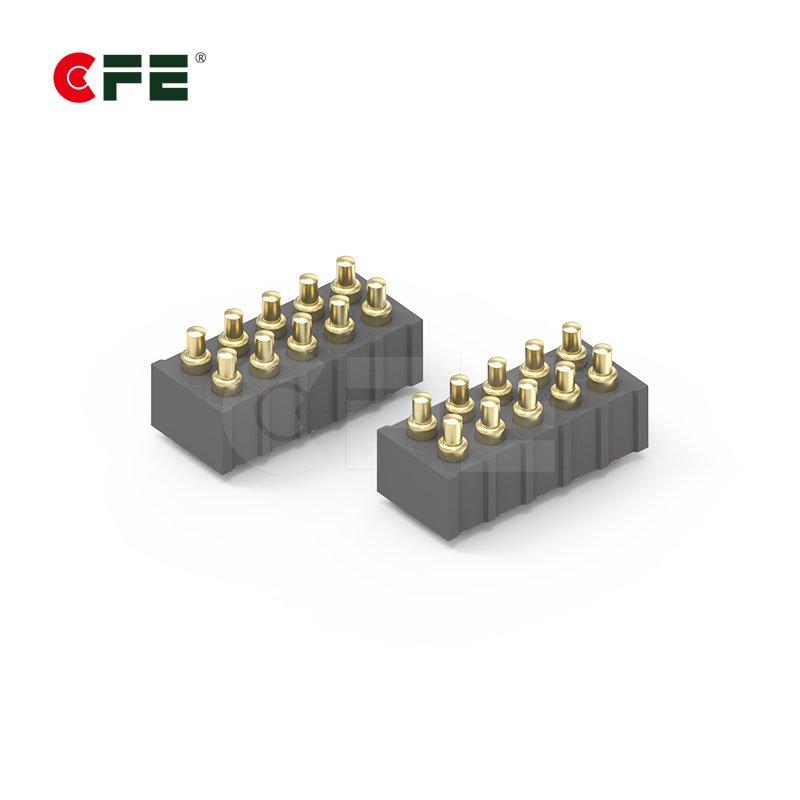
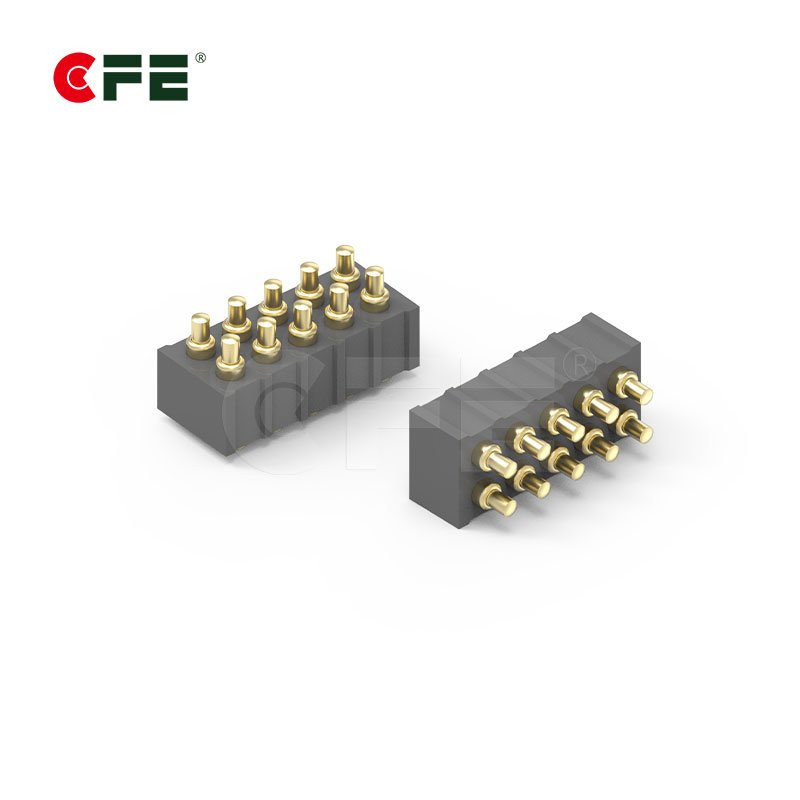
Pogo pin working height is one of the most important mechanical specifications to understand when selecting a spring-loaded connector. It defines the operating position where the pogo pin is intended to make reliable electrical contact while producing its specified contact force. Choosing the correct working height helps designers balance contact pressure, mechanical tolerance, stroke, durability, and available installation space.
For engineers, product designers, electronics manufacturers, and purchasing teams, working height should not be treated as just another number on a drawing. It is directly connected to how the connector behaves after mating. A pogo pin that operates outside its intended compression range may create weak contact, excessive force, premature wear, or mechanical interference.

1. What Is Pogo Pin Working Height?
Working height describes the position of a pogo pin when its plunger has been compressed to the intended operating point. Because a pogo pin contains a spring-loaded plunger, the connector can accommodate a controlled amount of movement during mating. The working height identifies the point within that movement where the manufacturer specifies a particular contact force or operating condition.
This is different from simply measuring the connector’s total length. A pogo pin may have a certain overall height when unloaded, but the useful electrical and mechanical specification is often defined at a particular compressed position. The working height therefore needs to be considered together with the full stroke or maximum stroke shown on the product drawing.
For example, CFE’s BP13501 engineering drawing specifies a 5.50 mm working height and a contact force of 100 g ±20% at that working height. The same drawing identifies an overall dimension of 6.90 ±0.15 mm. This illustrates why overall connector length and working height should not be treated as interchangeable measurements.

2. Working Height vs. Full Stroke
Working height and full stroke are related, but they describe different things. Working height identifies a specified operating condition. Full stroke describes how far the plunger can travel through its designed mechanical range. A connector may therefore have a working height of 1.0 mm of compression while having a larger maximum stroke.
This distinction matters during mechanical design. If the mating component compresses the pin only slightly, the contact force may be lower than the force specified at the working point. If it compresses the pin too far, the design can approach or exceed the maximum permitted compression.
| Specification | What it tells the designer | Why it matters |
|---|---|---|
| Working height / working stroke | The intended operating position | Used to evaluate contact force and normal operation |
| Full or maximum stroke | Available plunger travel | Defines the mechanical movement range |
| Contact force | Force generated at a specified position | Affects contact stability and mating load |
| Overall height | Physical connector dimension | Determines packaging and available space |
3. Why Does Pogo Pin Working Height Matter?
Working height matters because pogo pins depend on controlled spring compression to create dependable contact. When the plunger reaches the intended operating position, the spring produces a predictable force against the mating surface. That force helps maintain physical contact while electrical current or signal passes through the interface.
Working height also affects tolerance management. In a real product, PCB thickness, housing dimensions, mating-part position, assembly tolerances, and component stack-up can all vary slightly. A spring-loaded connector provides compliance, but the available compliance must be used inside the connector’s specified operating range.
Incorrect working height can produce two opposite problems. Too little compression may reduce the contact force and leave the interface more sensitive to vibration, contamination, or dimensional variation. Excessive compression increases the mechanical load and can consume the available stroke, potentially creating stress or interference.
For that reason, the working height should be checked during mechanical design reviews rather than only after prototypes are assembled.

4. How Working Height Affects Contact Force and Reliability
A pogo pin’s spring force changes as the spring is compressed. The exact force curve depends on the spring design, materials, geometry, preload, and other construction details. Manufacturers therefore specify contact force at a defined working position instead of treating contact force as one universal value across the complete stroke.
CFE product drawings provide examples of this approach. The BP13501 drawing lists 100 g ±20% contact force at 5.50 mm working height, while other CFE pogo pin designs specify contact force at different working strokes. This demonstrates why a force value should always be read together with its corresponding working position.
5. How to Select the Right Pogo Pin Working Height
Selecting the correct working height starts with the mechanical stack-up of the application. Identify the distance between the two mating surfaces when the product is in its normal assembled position. Then compare that distance with the pogo pin’s specified operating height, available stroke, overall height, and mounting dimensions.
Step 1: Define the assembled position
Measure or calculate the normal distance between the connector and mating contact. Include PCB thickness, housing dimensions, spacers, covers, and any other components that influence the contact gap.
Step 2: Calculate tolerance extremes
Do not design only around nominal dimensions. Check minimum and maximum stack-up conditions. The pogo pin should still make reliable contact at the minimum expected compression while avoiding excessive compression at the maximum condition.
Step 3: Check contact force
Review the manufacturer’s stated contact force at the working position. If your application needs a specific mechanical load, confirm the force specification at the actual operating condition rather than using a force number from another model.
Step 4: Check stroke and maximum compression
Confirm that the application does not exceed the permitted mechanical stroke. CFE engineering documentation advises operating the product according to the working height and not exceeding the maximum allowed compression.
Step 5: Confirm electrical requirements
After the mechanical position is correct, verify rated current, voltage, contact resistance, plating, environmental requirements, and cycle life. Working height is important, but it is only one part of connector selection.
| Selection factor | Question to answer |
|---|---|
| Working height | At what position is the connector intended to operate? |
| Stroke | How much movement is available before the mechanical limit? |
| Contact force | What force is specified at the working position? |
| Stack-up tolerance | What are the minimum and maximum assembled gaps? |
| Current | What continuous or peak current must the connector carry? |
| Environment | Will the connector experience vibration, contamination, moisture, heat, or repeated mating? |
6. Practical Example: CFE BP13501 Working Height
The CFE BP13501 drawing is a useful example for understanding the relationship between dimensions and working height. The drawing specifies a 5.50 mm working height and 100 g ±20% contact force at that working height. It also identifies a 50,000-cycle life test and a maximum electrical rating of 2 A at DC 12 V.
The key point is not to copy these numbers into every pogo pin design. Instead, use them to understand how a manufacturer defines a connector’s operating condition. Another connector may have a different working stroke, force, overall height, current rating, and cycle-life specification.
View the CFE BP13501 engineering drawing

7. Common Working-Height Selection Mistakes
Choosing by overall height alone
Two connectors can have similar physical lengths but different operating positions. Always review the working height and stroke rather than selecting only by package height.
Using contact force without its operating position
A contact force value has little meaning without the corresponding working stroke. Always record the force and the position at which it is specified.
Ignoring stack-up tolerances
A nominal CAD assembly can look correct while tolerance extremes create insufficient or excessive compression. Perform a minimum/maximum stack-up check before finalizing the connector.
Confusing working stroke with maximum stroke
The working point is not necessarily the end of the plunger’s available movement. Review the full engineering drawing before defining the mating geometry.
Ignoring environmental conditions
Vibration, contamination, temperature, moisture, and repeated mating can affect connector performance. Working height should be selected together with the application’s environmental and electrical requirements.
8. Working Height and Custom Pogo Pin Design
Custom applications often require a working height that differs from a standard connector. A custom pogo pin can be designed around the required package height, stroke, force, current, pitch, mounting method, and mating geometry.
CFE provides custom pogo pin and spring-loaded connector options. Its custom connector information includes defined working-stroke, contact-force, full-stroke, and life-test specifications. This type of data is useful when discussing a new connector requirement with a manufacturer.
When requesting a custom pogo pin, provide the manufacturer with as much application information as possible: target operating height, minimum and maximum compression, required contact force, current, voltage, cycle life, mounting style, available space, environmental conditions, and mating surface details.
Explore CFE’s pogo pin connector range.
Review custom connector specifications.
See a CFE connector with working-stroke specifications.
Browse available connector solutions.
Need the Right Pogo Pin Working Height?
Share your required package height, operating gap, stroke, contact force, current, and mounting requirements with CFE to identify a suitable pogo pin connector or discuss a custom design.
Conclusion
Pogo pin working height is a critical mechanical specification because it connects the physical mating position with the connector’s intended contact performance. It should be evaluated alongside contact force, full stroke, overall height, tolerance stack-up, electrical requirements, environmental conditions, and cycle life.
The most reliable approach is to start with the application’s actual assembled geometry, calculate the tolerance range, and then compare that range with the manufacturer’s engineering drawing. Do not select a pogo pin from overall length or contact force alone.
For CFE pogo pin connectors, the published engineering drawings provide the detailed dimensions and operating specifications needed for design evaluation. When a standard connector does not fit the required operating window, a custom pogo pin can be considered.
Frequently Asked Questions
What is pogo pin working height?
Pogo pin working height is the specified operating position at which a spring-loaded connector is designed to provide its stated contact performance. It should be evaluated with contact force and stroke specifications.
Is working height the same as pogo pin stroke?
No. Working height identifies an intended operating condition, while stroke describes the plunger’s available movement. The exact terminology can vary by manufacturer, so the engineering drawing should be used as the reference.
Why does working height affect contact force?
The spring force changes as the plunger moves. Manufacturers therefore specify contact force at a particular working position. Compressing the pin to a different position can result in a different force.
How do I choose the correct pogo pin working height?
Calculate the normal and tolerance-extreme mating distances, then compare them with the connector’s working height, stroke, contact force, overall dimensions, and maximum allowable compression.
Can CFE make a custom pogo pin with a specific working height?
CFE provides custom pogo pin and spring-loaded connector solutions. For a custom requirement, provide the desired operating height, stroke, force, current, dimensions, mounting method, cycle life, and environmental requirements for evaluation.
Technical note: Connector dimensions, tolerances, contact force, stroke, current rating, and operating limits should always be verified against the latest manufacturer engineering drawing for the selected part.